UAE Exits OPEC: 3.5M Barrel Reshuffle Reshapes Oil Markets
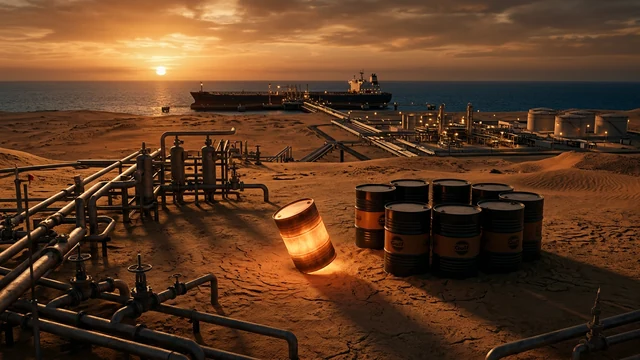
What You'll Learn
- Why Abu Dhabi walked away from the cartel after nearly six decades, and how the quota fight with Saudi Arabia fits in
- What the 3.5 million barrel headline really represents, and how much ADNOC can actually pump today
- Where Brent crude and US gasoline prices stand now, and what the EIA and JPMorgan expect next
- Why the Strait of Hormuz - not the UAE's OPEC status - still decides the direction of oil prices
The UAE exit from OPEC became official on May 1, 2026, when Abu Dhabi stepped outside a production system it had coordinated inside since 1967. The UAE was OPEC's third-largest producer behind Saudi Arabia and Iraq, and its departure is the biggest rupture in the cartel's 66-year history. For years ADNOC expanded capacity while OPEC's quota system capped how much of that oil could reach the market. That tension - layered on top of missile and drone attacks on UAE territory during the US-Israel-Iran war - is what finally pushed Abu Dhabi out the door.
This piece explains why the exit happened, what the numbers really mean, how oil prices have actually moved in the months since, and why the Strait of Hormuz remains the single biggest swing factor for crude. The short version: the UAE's departure matters enormously for OPEC's cohesion and for the long-run supply outlook, but in August 2026 it is still shipping lanes in the Gulf - not cartel membership - that move prices.
Why the UAE Left OPEC After 59 Years
The UAE announced its withdrawal on April 28, 2026 through the state news agency WAM, saying the decision followed a review of its "current and future production capacity" and was "based on our national interest." The exit took effect on Friday, May 1, and it also applied to the wider OPEC+ group that includes Russia. Energy Minister Suhail Al Mazrouei later described the move as giving the country "a sense of freedom to produce what we require," while insisting the UAE would keep cooperating with other producers bilaterally when market conditions call for it.
The Quota Dispute With Saudi Arabia
OPEC's coordinated model works by assigning each member a production quota, and the UAE's stood at roughly 3.4 million barrels per day - a number that no longer matched what ADNOC could actually pump. Crude capacity has climbed from about 3.1 million bpd in 2016 to roughly 4.4 million bpd today, alongside another 1.1 million bpd of natural gas liquids and condensate, according to the International Energy Agency. That gap left close to 30 percent of the UAE's capacity idle - the highest proportional spare capacity in the group, and a persistent source of friction with Riyadh since 2021.
The two Gulf neighbours had clashed repeatedly over baselines, production cuts and regional strategy, and the rivalry has only grown more open as both court foreign investment and compete for influence in conflict zones. Analysts read the UAE's decision less as a sudden rupture than as Abu Dhabi refusing to stay boxed in by a system it felt no longer served its interests. Saudi Arabia's de facto leadership of OPEC+ is the backdrop: with the UAE gone, the kingdom loses its most capacity-rich Gulf partner inside the group.
Iran's Attacks and a Widening Gulf Rift
The announcement also landed amid live conflict. The US-Israel-Iran war began on February 28, 2026, and Iran, a fellow OPEC member, struck the UAE with missiles and drones as part of that campaign. The same war had already forced the closure of the Strait of Hormuz, threatening the export route that underpins the UAE economy. Al Mazrouei said the UAE timed its exit for the least disruptive moment for other producers, but the timing - during active conflict with a fellow member - reflects a Gulf Cooperation Council that is fracturing along security and economic lines faster than at any point in decades. Market reaction at the time captured the scale of the surprise: analysts at CNBC called it a "shocking" exit that would rock the cartel, even as most agreed OPEC+ would retain meaningful sway over markets.
ADNOC's $150 Billion Capacity Bet
None of this happens without years of ADNOC capital spending. Abu Dhabi approved a $150 billion capital plan for 2026 to 2030 in November 2025, and after the OPEC exit ADNOC moved to fast-track up to $55 billion (200 billion UAE dirhams) of project awards between 2026 and 2028. ADNOC Drilling had already deployed 142 rigs by 2025, well ahead of an earlier target of 127, and has said it stands ready to push capacity beyond the 5 million bpd target. Every barrel of that expansion sat partly idle under OPEC's quota math - which is precisely the constraint the exit removes.
Inside the Numbers: What 3.5 Million Barrels Actually Changes
The headline figure attached to this story is the UAE's old OPEC quota of about 3.4 million barrels per day. Outside OPEC's constraints, ADNOC can now sell closer to its real capacity instead of a negotiated ceiling - though the Strait of Hormuz disruption means the country cannot fully cash in on that freedom yet. The table below lays out the shift in plain numbers.
| Metric | Under OPEC (Pre-May 2026) | Outside OPEC (Now) |
|---|---|---|
| Production quota | ~3.4 million bpd | No quota - output set independently |
| Crude capacity | 4.85 million bpd (ADNOC); ~4.4 million bpd (IEA) | Same capacity, now unconstrained by quota |
| Capacity target | 5 million bpd by 2027 | 5 million bpd by 2027, beyond if asked |
| Investment | $150 billion capex plan (2026-2030) | Plus $55 billion fast-tracked awards (2026-2028) |
| OPEC+ coordination | Bound by group cuts and hikes | Sets its own output policy |
The practical effect is gradual rather than instant. Wood Mackenzie estimates UAE production could rise to about 4.4 million bpd from next year and reach 5 million bpd by the end of the decade, but analysts note there is a hard cap on exports as long as the Strait of Hormuz stays closed. Energy Intelligence's pre-exit modelling puts the scale of the freed-up upside in context: in a world where oil flows freely through Hormuz, an unshackled UAE could add roughly 1.36 million bpd on short notice from spare capacity alone, with another 240,000 bpd of near-term potential from the push toward 5 million bpd by 2027 - and Abu Dhabi has even floated lifting capacity to 6 million bpd in the years beyond.
The UAE does have an escape route that most Gulf producers lack: the Habshan-Fujairah pipeline, which bypasses the strait entirely and is already moving about 1.5 million bpd toward its 1.8 million bpd capacity. In the medium term, that is ADNOC's bridge to the open market - and one reason the country can keep selling to customers in Asia even while the waterway stays shut.
ADNOC's Post-Exit Spending Splurge
Days after the exit took effect, ADNOC announced the accelerated award of up to $55 billion in upstream and downstream projects between 2026 and 2028, folding into the broader $150 billion capital plan approved in November 2025. The company framed the push as entering "a new phase of world-scale project execution," with brownfield expansions at existing fields such as Adnoc Onshore, Upper Zakum, Umm Shaif and Nasr expected to deliver most of the growth.
The economics are straightforward: unshackled from quotas, every barrel of spare capacity becomes a revenue option. ADNOC's flagship Murban crude is already one of the world's most efficient barrels on carbon intensity, which helps it clear environmental screens for European and Asian buyers. The catch is timing - with Hormuz effectively closed since the war began, none of this extra capacity can actually reach customers yet, which is why the market has priced the exit's supply impact into 2027 and beyond rather than into today's front-month prices.
How Oil Prices Have Moved Since the Exit
Brent crude was trading near $87 to $88 a barrel on August 13, 2026 - down more than 2 percent on the day to about $87.12 after the OPEC and IEA both slashed their 2026 demand growth forecasts. The market's own price curve tells the story: October 2026 Brent futures were near $88.98, November at $86.82, December at $84.68, and January 2027 at $82.91 - a clear downward slope, meaning traders expect supply to recover and prices to ease as Gulf shipping normalises.
| Contract / Forecast | Price | Signal |
|---|---|---|
| Brent Oct 2026 futures | $88.98 | War-risk premium still priced in |
| Brent Nov 2026 futures | $86.82 | Market expects easing |
| Brent Jan 2027 futures | $82.91 | Supply recovery priced in |
| EIA forecast, Q3 2026 average | $85 | Down from $119+ peak |
| EIA forecast, 2027 average | $69 | In line with pre-war trajectory |
The US Energy Information Administration's Short-Term Energy Outlook, released August 11, forecasts Brent averaging around $85 a barrel in the third quarter of 2026, falling to about $78 in the fourth quarter and averaging $69 in 2027 as inventories rebuild and most Middle East production recovers by early next year. JPMorgan Global Research is on the same page: Brent at $86 in Q3 2026, $80 in Q4 and $78 at year-end. Notably, OPEC itself cut its 2026 global oil demand growth forecast to 780,000 barrels per day in July, down from 970,000 - weaker demand, not just more supply, is doing part of the work.
None of these forecasts single out the UAE exit from OPEC as the dominant price driver, and the EIA expects US commercial crude inventories to stay below the five-year low through the end of 2026 even as stocks build. For context on how far prices have come, Brent traded above $119 a barrel at its 52-week high during the peak of the war scare, and the current backwardated curve reflects a market that expects the Gulf - UAE included - to eventually push more oil out.
The Strait of Hormuz Wildcard
Iran shut the Strait to routine commercial shipping on February 28, 2026, and despite a June 17 ceasefire memorandum, a toll-free reopening window and 60 days of US sanctions relief on Iranian oil, the waterway remains effectively closed to commercial traffic. As of August 13 - day 165 of the closure - only about 1 ship transited on August 9 against a normal baseline of roughly 73 vessels a day, according to straits.live tracking, with CNN's live tracker showing traffic "plummeting" again through early August after a brief recovery in late June. A 60-day US Treasury waiver issued on June 22, originally due to run through August 21, was revoked after renewed US strikes on Iran in early July, and the US-Iran talks appeared deadlocked this week even as Iran-Oman negotiations over a new transit arrangement reportedly advanced. Shipping has moved in guarded convoys under naval escort, and insurers have priced the risk accordingly - one reason freight and war-risk premiums remain embedded in delivered crude prices.
Just how much oil is moving is itself a contested number. US Energy Secretary Chris Wright claimed on August 12 that the seven-day average for oil leaving the Strait was "almost 9 million bpd," with pipelines adding another 5 to 7 million bpd. Vessel-tracking firms disagree sharply: Kpler shows crude exports through Hormuz at 2.77 million bpd for the week beginning July 27 and just 1.74 million bpd for the week beginning August 3 - the best week since the war started was 6.98 million bpd in late June. This gap between official claims and tracker data is exactly why traders keep watching Hormuz shipping counts far more closely than OPEC's membership list. Roughly a fifth of global oil supply normally moves through that single chokepoint, and its status - not the UAE's cartel status - is what has driven most of the volatility in oil prices in 2026.
What the Exit Means for OPEC+ and Global Oil Politics
The UAE is now the largest producer ever to leave OPEC or OPEC+. Qatar exited in January 2019 to focus on LNG, Ecuador left in 2020, and Angola departed in 2024 over quota disputes - but none of those carried the UAE's production weight. OPEC members still account for about 36 percent of global crude production and OPEC+ for roughly 44 to 45 percent, so the cartel is far from finished, but losing its third-biggest producer removes the group's most capacity-rich member and hands Riyadh a harder coordination problem.
| Country | Year Exited | Primary Reason |
|---|---|---|
| Qatar | 2019 | Refocus on LNG exports over crude quotas |
| Ecuador | 2020 | Budget pressure and quota constraints |
| Angola | 2024 | Dispute over OPEC+ production allocation |
| UAE | 2026 | Quota vs capacity mismatch, Gulf rivalry, war-driven disruption |
Whether other members follow is the open question. Saudi Arabia still anchors OPEC+ and has shown no sign of loosening its grip, but the UAE's departure removes any illusion that a founding Gulf member is untouchable - and it comes at a moment when the OPEC+ group has been raising output even as the war disrupts regional supply. The deeper reading, shared by analysts at the Middle East Institute and the Arab Center, is that this is less about oil economics alone and more about a broader reordering of Gulf security alignments playing out alongside the fight over barrels.
What remains inside the group matters too. Energy Intelligence's pre-war estimates put Saudi Arabia's potential spare capacity at 2.16 million bpd - by far the largest cushion in the cartel - with Russia at 728,000 bpd and Iran, Iraq, Kuwait, Algeria and Oman holding about 973,000 bpd combined. With the UAE's own spare capacity now outside the system, the group's ability to surge output in a crisis is thinner, and the burden of market management falls more heavily on Riyadh alone.
What It Means for India and Your Gas Bill
For India, which imports most of its crude and counts the UAE among its largest suppliers, the exit is broadly positive over time: an unshackled ADNOC adds a competitive, quota-free seller to the market, and Indian refiners - already major buyers of Murban crude - stand to gain as UAE output rises toward 5 million bpd. Indian analysts at ORF and Moneycontrol have framed the exit as an opportunity rather than a risk, and government broadcaster DD News devoted a full explainer to what the exit means "for the world and India." The Times of India went further, arguing the shake-up of the world oil order could ultimately benefit India as a top importer, while NDTV's analysis focused on the direct question most households care about: what it means for India's oil prices and fuel bills. New Delhi's bigger worry remains the Hormuz closure itself, which has disrupted the sea lanes that carry Gulf crude and LPG to Indian ports and forced longer, costlier supply routes.
For drivers and households, the UAE's exit is not the reason pump prices moved this year - the Strait of Hormuz standoff and the broader Iran war are. The US national average for regular gasoline stood at $4.07 per gallon on August 13, 2026, after touching $4.09 in late July and easing three cents to $4.06 in early August, with gas and diesel at record seasonal highs for mid-August. Retail prices track crude plus refining, taxes and local margins, so the path back to cheaper fuel runs through Hormuz transit volumes - not through any single producer's OPEC status.
Winners, Losers and What to Watch Next
ADNOC and the UAE treasury are the clearest near-term winners on paper, gaining the freedom to price and sell output on their own schedule once shipping normalises. Saudi Arabia is the clearest loser of authority, having lost the ability to bind its most capacity-rich Gulf neighbour to a shared quota. Consumers sit in between: any extra UAE supply reaching global markets is a mild long-term price dampener, but it is dwarfed in the near term by the Hormuz disruption. Other OPEC+ members with capacity ambitions - Kuwait and Iraq among them - are the ones market watchers expect to study this playbook most closely. And for anyone wondering about an outright oil price war, the Guardian's assessment is worth remembering: the UAE-Saudi standoff is more likely to produce greater volatility for years than a deliberate crash in prices, because neither side has an interest in flooding a war-disrupted market.
Four signals will tell the story over the next quarter: the Iran-Oman transit talks and whether the strait reopens to routine shipping; the August 21 expiry of the revoked sanctions waiver window and what Washington does next; ADNOC's actual output prints - UAE crude output surged in June right after the exit, and the IEA expects production above 5 million bpd next year; and the next EIA and OPEC monthly outlooks, which will show whether demand forecasts keep falling. Any one of these moves faster than expected could repaint the price deck that currently points Brent gently downward through 2027.
Conclusion
The UAE's exit from OPEC after 59 years is a genuine turning point for how the Gulf's biggest oil producers coordinate supply, and it hands ADNOC room to eventually sell closer to its real capacity instead of a negotiated quota. But the number actually moving oil prices in August 2026 isn't the UAE's OPEC status - it's whether ships can safely transit the Strait of Hormuz. Until that chokepoint stabilises, expect Brent to keep taking its cues from Tehran and Washington first, and from Abu Dhabi's cartel membership a distant second. The UAE's freedom to produce is real; the market's ability to buy that oil is still hostage to the strait.
Frequently Asked Questions

SK Jabedul Haque
Building India's most trusted finance education platform — simplifying news, schemes and market trends so anyone can understand and invest confidently.
Read full bio

Never miss an update
Get our clearest explainers on schemes, markets and money — read what matters, without the noise.
Explore more articles