Strait of Hormuz Reopening: Iran Sets New Conditions for the US
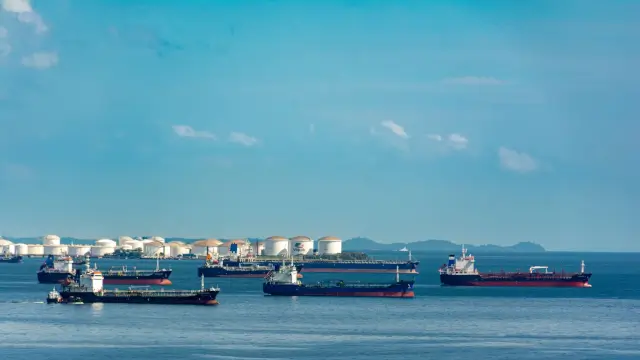
The August 8 report belongs to a fast-moving geopolitical timeline. This article separates Iranian demands, a proposed shipping framework, US objections and any later physical evidence of passage. It does not treat a deal being close as a signed agreement or a political statement as proof that every commercial vessel could use the waterway.
The central question is not only whether officials use the word reopening. It is what reopening means in practice, who controls access, which ships qualify and whether insurance, ports and operators can rely on the arrangement. Those distinctions matter to energy markets and to readers tracking the regional conflict.
What You'll Learn
- What Iran reported on August 8, 2026 about conditions for reopening the Strait of Hormuz
- How the Iran-Oman shipping proposal differs from a completed reopening agreement
- Why the US position and unresolved terms still matter for commercial passage
- How oil, freight, insurance and market risk could respond without a confirmed reopening
What the Hormuz Reopening Claim Means
The Strait of Hormuz reopening story on August 8, 2026 was about negotiations and conditions, not a confirmed return to normal shipping. Reports described an Iran-Oman effort to manage commercial traffic through the waterway. Iranian officials presented demands that the United States would need to meet before the strait could reopen to maritime traffic. The wording matters because a proposed framework, a draft arrangement and a physical reopening are different events.
The most useful starting point is the timeline. Reuters reported on August 5 that a proposed arrangement could give Tehran control over ships entering the Gulf through the strait. Reuters also reported on August 7 that a US official expected a deal soon. The New York Times then reported on August 8 that an Iranian national-security official issued conditions for reopening. Those reports describe movement in diplomacy alongside unresolved disagreements.
Readers following Markets coverage should resist the shortcut that turns progress into completion. A shipping-management proposal may address routes, permissions or coordination without guaranteeing that every vessel can pass. A statement that a deal is close may describe an expectation rather than a signed document. The August 8 report is best read as evidence that talks had reached a difficult stage, not as proof that the waterway had fully reopened.
| Report date | Development | Certainty level |
|---|---|---|
| August 5, 2026 | Reuters reported an Iran-Oman proposal involving inbound traffic | Reported proposal |
| August 7, 2026 | A US official told Reuters a deal was expected soon | Attributed expectation |
| August 8, 2026 | New York Times reported Iranian conditions for reopening | Reported demands |
The August 8 Conditions
The New York Times reported on August 8 that Mohammad Bagher Zolghadr, secretary of Iran's Supreme National Security Council, issued a list of demands carried by Iranian state media. The fetched report identified lifting the US naval blockade and sanctions on Iran, withdrawing the US military from around Iran, and paying war reparations among the conditions described before the strait could reopen.
These were Iranian requirements, not mutually accepted terms. The article must not present them as a final agreement, an American concession or a binding rule for all commercial vessels. Their significance is political and negotiating. They show that reopening the waterway was connected to larger questions about military presence, sanctions, compensation and the outcome of the war.
The language also explains why the headline needs qualification. A condition is a statement about what one party says must happen. It is not evidence that the other party accepts the condition. For readers using geopolitical analysis, this distinction helps separate a position, a proposal and an implemented policy. It also keeps a reported demand from becoming a fabricated treaty term.
What Iran and Oman Were Discussing
Reuters described bilateral talks between Iran and Oman over a possible arrangement for shipping through the strait. CNBC likewise reported on August 5 that the countries were in the final stages of drafting an agreement about commercial shipping and a safe traffic route. The reports indicate that Oman had a role in discussions, but they do not establish that a final document had been signed or that all parties had accepted its provisions.
Reuters reported that a proposal would give Tehran control over ships entering the Gulf through the Strait of Hormuz. That is a substantial commercial and political change from the pre-war description of the waterway as open to ships without fees. It should be written as a reported proposal attributed to sources, not as a settled operating rule.
The talks can also be understood as an attempt to turn a security crisis into a traffic-management framework. Such a framework would need to identify who authorizes passage, how vessels are identified, what happens to ships moving in opposite directions, and how disputes are handled. Until those details are public and accepted, an oil-price coverage is a negotiation signal rather than a shipping guarantee.
The US Position and the Unresolved Gap
The US position was an important part of the reporting. Reuters said US officials had repeatedly insisted that Washington would not accept Iranian control of access to the waterway. That position conflicts directly with the proposal described by Iranian and regional sources. The existence of a proposal does not resolve the gap between the proposed authority and the US objection.
The New York Times account adds another layer by describing Iranian demands that included lifting a naval blockade and sanctions, withdrawing US forces and paying war reparations. Those demands are broader than a simple shipping timetable. They link the opening of a maritime route to military and political settlements that may require separate negotiation.
This conflict of positions is why a cautious article should avoid words such as guaranteed, final or fully agreed. Reuters also reported that regional sources pushed back against suggestions that reopening was imminent. Readers of current-affairs coverage should see both progress and resistance in the same timeline. The evidence supports active talks with major unresolved issues, not a completed US-Iran settlement.
Why Commercial Passage Matters
The strait is important because commercial passage affects energy supply, freight planning and the cost of moving goods. A vessel operator needs more than a political statement. It needs a route, a security assessment, a recognized authority, insurance that remains available, port coordination and a reasonable expectation that the vessel will not be attacked or detained.
A reopening announcement can also mean different things. It might permit a limited class of vessels, create a temporary corridor, allow escorted passage or establish rules that apply only after additional approvals. None of those outcomes is identical to unrestricted commercial traffic. The phrase reopening should be paired with a description of who can pass, under what terms and from what date.
For importers and energy users, uncertainty may remain even if some vessels move. Freight routes can be longer, contracts can contain war-risk provisions and delivery schedules can remain fragile. CurrentAffair.today's global trade coverage can provide wider context, but this article should keep its claim narrow: negotiations over passage matter because the commercial cost of uncertainty can persist after a political announcement.
| Concept | Meaning | What it does not prove |
|---|---|---|
| Demand | One party's stated requirement | Other-party acceptance |
| Draft proposal | Terms being discussed or prepared | Signed agreement |
| Partial passage | Limited or conditional vessel movement | Full reopening |
| Full reopening | Broad stable commercial access | Permanent security |
Partial Passage Versus Full Reopening
Partial passage would be a limited operational development. It could mean that selected commercial vessels are permitted to use a designated route while other traffic remains restricted. It could also mean that ships move under special notification or security arrangements. A full reopening would imply a much broader and more stable return to ordinary commercial access, subject to the actual terms of any agreement.
The August reports did not establish that broad outcome. Reuters described a proposed deal and unresolved issues. CNBC described drafting around commercial shipping. The New York Times reported conditions that complicated expectations of an imminent reopening. These sources are compatible with talks continuing, but they do not establish that every lane, vessel type or destination was available.
The distinction is useful when evaluating shipping and logistics coverage. A headline may use reopening as shorthand while the underlying document discusses a controlled corridor. Editors should preserve the source's level of certainty and name the operational scope. Doing so avoids misleading shippers, investors and households who may interpret a broad word as proof that energy flows and insurance conditions have already normalized.
Oil Risk and Shipping Costs
Oil prices can respond to a perceived change in supply risk before physical flows change. If traders believe a safer route is more likely, part of the risk premium in crude contracts may decline. If the proposed arrangement looks fragile or military threats return, that premium can rise again. This is an explanation of market mechanism, not a claim about a live Brent price on August 23, 2026.
Shipping costs can react through several channels. A vessel may face higher insurance, a longer route, extra security requirements or delays while authorities clarify passage. The price of crude is only one part of the delivered cost. Refiners, traders, transport firms and importers may each face different exposures depending on their contracts and locations.
The August 8 story should therefore be read as a risk update. The possibility of an Oman-linked shipping framework may reduce some uncertainty, while Iranian conditions and the US objection keep the outcome unsettled. Readers using energy-market coverage should distinguish a benchmark price, a freight charge and a war-risk premium. They can move together, but they are not the same instrument or cost.
How Markets Read Negotiation Signals
Markets often react to statements before agreements are signed. A report that a deal is close can change expectations about supply, conflict duration and economic disruption. It can also produce a reversal if later information contradicts the earlier signal. The direction of any reaction depends on what investors expected before the report and how credible they judge the proposed arrangement.
Reuters' August 7 report that a US official expected a deal soon is an example of an attributed expectation. It is useful information, but it is not the same as a signed document. The August 8 Iranian conditions report added information that made the path more complicated. A careful timeline records both developments instead of selecting only the more optimistic statement.
This framework is relevant to market analysis, where readers may encounter rapid headlines about ceasefires, sanctions or shipping. The proper questions are what was said, by whom, on what date and with what operational effect. A market response can be genuine even when the diplomatic outcome is uncertain. Price movement does not upgrade a proposal into a completed agreement.
| Participant | Reported position or role | Evidence status |
|---|---|---|
| Iran | Set conditions and discussed control over traffic | Attributed reports |
| Oman | Participated in shipping discussions | Drafting reported |
| United States | Opposed Iranian control according to Reuters | Reported US position |
| Ship operators | Need practical route and security rules | Operational requirement |
What a Reopening Deal Would Need to Clarify
A credible reopening arrangement would need to define the authority that manages traffic. It would need to say whether Iran, Oman, a joint body or another mechanism identifies eligible vessels and resolves disputes. It would also need to explain how information is shared with ship operators, ports, insurers and naval forces operating in the region.
The document would need practical terms as well as political language. These could include the corridor, vessel eligibility, notification procedures, security assurances, fees if any, treatment of cargoes, liability for delay and what happens when a party alleges a violation. The fact that these questions exist does not mean a particular term has been agreed. It shows why a draft cannot be treated as a full reopening.
Readers following business coverage should also look for implementation evidence. A statement can announce intent, while a later operational notice can show that ships are actually moving under the new arrangement. The strongest confirmation would combine a dated agreement, official notices from relevant authorities and independent evidence of commercial passage. Until then, the safe description remains proposed or expected.
Why the Timeline Remains Uncertain
The August 5 Reuters report described significant progress but also reported that regional sources cautioned against suggestions that a deal was imminent. The August 7 report described a US expectation that a deal would come soon. On August 8, the New York Times reported conditions that complicated those expectations. Taken together, the sequence shows why negotiation timelines can change within days.
The uncertainty has several sources. The parties may disagree over who controls access, what the United States must do, how sanctions are treated and whether war-related compensation belongs in the same package. Even when diplomats agree on broad principles, operational arrangements can delay physical passage. Security incidents or new military statements can also alter the negotiating environment.
A dated update should not be mistaken for a permanent status page. The article reference date is August 23, 2026, while the central reports are from August 5, August 7 and August 8. CurrentAffair.today's world news coverage can be checked for later developments, but this article should preserve what was knowable in the cited reports and mark later information separately.
How to Read the Latest Reports
Start with the publication date and the type of source. Reuters reports attributed details from Iranian and regional sources and described the US position. The New York Times reported an Iranian official's list of demands. CNBC reported drafting around commercial shipping. These sources answer related questions, but each has a different evidentiary position and should not be blended into one anonymous claim.
Next, classify each statement. A demand is not an agreement. A proposal is not an operating rule. A prediction that a deal is near is not proof of a signature. A reported signing is not automatically proof that every vessel can pass. This vocabulary allows readers to follow a fast-moving story without over-reading any individual sentence.
Finally, look for independent operational confirmation. A genuine reopening would be visible in notices, vessel movement, insurance availability and port activity over time. Those indicators may lag political statements. For more finance explainers, readers should compare each new report with the dated baseline in this article instead of treating every headline as a complete replacement for the prior timeline.
| Reader check | Question | Safe interpretation |
|---|---|---|
| Date | When was the claim reported? | August 5, 7 or 8, 2026 |
| Source | Who made or reported the statement? | Keep attribution visible |
| Status | Was it a demand, draft or agreement? | Do not upgrade certainty |
| Operation | Did commercial vessels actually pass? | Look for later confirmation |
Conclusion
The August 8, 2026 Strait of Hormuz reopening story described Iranian conditions and an Iran-Oman shipping-management effort, not a confirmed full reopening. Reuters reported a proposal that could give Tehran control over inbound traffic and separately reported a US expectation that a deal was near. The New York Times reported demands involving the naval blockade, sanctions, US military presence and war reparations.
The evidence supports a careful conclusion. Talks were active, but the proposed framework faced an unresolved gap between Iranian demands and the US position. Commercial passage could change in stages, and any announcement would need to be matched with practical rules and operational evidence. Oil and shipping markets may react to expectations, but those reactions do not prove that the waterway has normalized.
Readers should attach a date, source and scope to every claim about Hormuz. The reports reviewed here belong to August 5, August 7 and August 8, 2026, while the editorial update is August 23, 2026. This article is information only and does not provide personalized financial advice.
Frequently Asked Questions

SK Jabedul Haque
Building India's most trusted finance education platform — simplifying news, schemes and market trends so anyone can understand and invest confidently.
Read full bio

Never miss an update
Get our clearest explainers on schemes, markets and money — read what matters, without the noise.
Explore more articles