ADNOC Tanker Attack in Strait of Hormuz: Iran Blamed for Missile Strike
What You'll Learn
- What Reuters reported about the August 8 ADNOC vessel incident
- How UAE attribution differs from independently confirmed responsibility
- What Resolution 2817 says about regional attacks and maritime trade
- How to assess possible market channels without making a price forecast
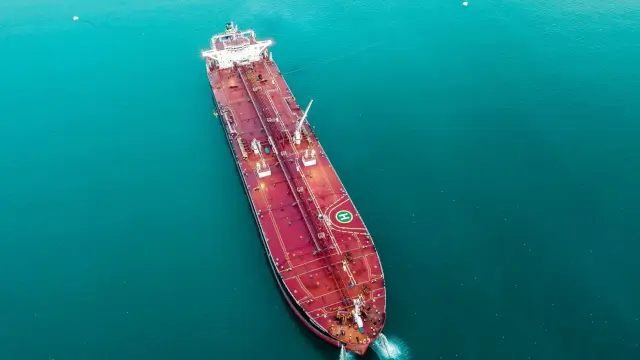
The ADNOC tanker attack reported on August 8, 2026, adds another security event to an already disrupted Strait of Hormuz. Reuters reported that the UAE condemned what it said was an Iranian attack on a carrier linked to its state oil company as it passed through the waterway. The report said no injuries were reported.
The available record is narrower than the original headline suggests. Reuters said the initial report from state news agency WAM described one ADNOC vessel being targeted by a missile early Saturday and that the situation was under control. A later UAE Foreign Ministry statement called it a hostile Iranian attack. Neither statement, as reported by Reuters, identified the tanker, its cargo, or possible damage.
This article keeps the protected title and subtitle unchanged. Its body distinguishes a government attribution from independently established responsibility, separates the August 8 event from ADNOC's earlier attack count, and treats the market implications as possible channels rather than confirmed price outcomes.
What Reuters Reported on August 8
Reuters reported that the UAE condemned what it said was an Iranian attack on a carrier connected to ADNOC while the vessel was passing through the Strait of Hormuz. The report attributed the initial vessel information to WAM, which said ADNOC had reported that one of its vessels was targeted by a missile early on Saturday and that the situation was under control.
The Reuters report did not identify the vessel by name. It did not provide the tanker class, cargo, position within the waterway, damage assessment, or details about the missile. It reported that no injuries were reported. Those omissions are material because a vessel incident can carry different commercial and market implications depending on whether a ship was laden, damaged, delayed, or forced to divert.
The UAE Foreign Ministry later described the event as a hostile Iranian attack. Reuters also reported that the ministry accused Iran's Revolutionary Guards of acts of piracy and called on Iran to halt attacks and reopen the strait fully and unconditionally. Those are statements by the UAE government and should remain attributed as such.
| Element | What the full Reuters report says | Evidence status |
|---|---|---|
| Date | August 8, 2026 | Reported event date |
| Vessel | A carrier linked to ADNOC | Identity and cargo not provided |
| Weapon description | WAM initially reported a missile targeting | Source-attributed report |
| Casualties | No injuries were reported | Reported outcome |
The full Reuters report on the August 8 incident is the primary news source used for the event details in this repair.
What the UAE and ADNOC Statements Said
The incident record contains several statements with different speakers and different scopes. WAM initially reported ADNOC's account of a vessel being targeted. The UAE Foreign Ministry then condemned what it called an Iranian attack. Reuters separately summarized an ADNOC statement issued on Friday about earlier attacks on the company's personnel and assets.
That sequence means the statement about the August 8 vessel and the statement about 15 prior vessel attacks are not the same disclosure. The first concerns the incident reported on August 8. The second describes ADNOC's wider account of attacks since the conflict began. Combining them without a date and speaker would make the August 8 event appear more fully documented than it is.
Reuters said ADNOC described itself as significantly affected by unprovoked attacks on its personnel and assets while continuing to meet customer requirements in an exceptionally challenging environment. The report said ADNOC did not identify those responsible for the earlier attacks in its Friday statement.
The UAE's allegation about responsibility is therefore important news, but it is still an allegation by a party to the conflict. Responsible market reporting can state what the UAE said, note what Reuters reported, and avoid converting an attribution into a proven finding.
Why the 15-Vessel Figure Needs Context
The protected subtitle calls the August 8 event the sixteenth strike on an ADNOC ship since the war began. Reuters reported that ADNOC said 15 of its vessels had been attacked by missiles and drones while transiting the strait since the start of the conflict, including three that week. The source also said those earlier attacks killed one crew member and injured 20 others.
The 15-vessel figure is an ADNOC-reported count of earlier attacks. It is not an independently verified incident ledger in the Reuters report. The August 8 event is separately described as an attack the UAE said was Iranian. The body therefore does not state as an independently confirmed fact that this event was definitively the sixteenth attack or that Iran was proven responsible.
The earlier casualty figures also require careful placement. Reuters attached one death and 20 injuries to the prior group of 15 attacks reported by ADNOC. They should not be presented as casualties from the August 8 vessel. For the specific August 8 event, Reuters reported no injuries and no details on damage.
| Number or statement | Who supplied it | How this article uses it |
|---|---|---|
| One vessel targeted on August 8 | WAM report of ADNOC account, via Reuters | Specific incident description |
| 15 earlier vessels | ADNOC statement, via Reuters | Prior-attack history, not independent count |
| Three earlier attacks that week | ADNOC statement, via Reuters | Company-reported context |
| One death and 20 injuries | ADNOC statement, via Reuters | Prior-attack casualties, not August 8 outcome |
Readers comparing this event with our earlier Strait of Hormuz coverage should check the date, vessel, speaker, and evidence status for each report.
What Resolution 2817 Actually Says
The UAE Foreign Ministry said the attack violated a UN Security Council resolution on freedom of navigation. The full UN release on Resolution 2817 says the Security Council adopted the measure on March 11, 2026, by 13 votes in favour, none against, and two abstentions.
The UN release says the resolution condemned attacks against Bahrain, Kuwait, Oman, Qatar, Saudi Arabia, the United Arab Emirates, and Jordan. It also says the Council demanded that Tehran halt threats, provocations, and actions aimed at interfering with maritime trade, along with support to proxy groups.
That language establishes the general subject and scope of Resolution 2817. It does not by itself determine who attacked the ADNOC vessel on August 8, identify the missile, or provide an incident-specific investigation. The UAE's legal and political characterization must therefore remain distinct from the contents of the resolution.
| Resolution 2817 point | UN release summary | Limit for this incident |
|---|---|---|
| Adoption | 13 in favour, none against, two abstentions | General Council action |
| Regional scope | Attacks against seven named regional states | Not an August 8 incident report |
| Maritime language | Demand to halt actions interfering with maritime trade | Does not identify the vessel attacker |
| Political status | Resolution adopted during the wider conflict | Does not replace an investigation |
The United Nations release on Resolution 2817 is used here to describe the resolution's text and vote, not to adjudicate the August 8 attack.
Why the Strait of Hormuz Matters to Markets
The Strait of Hormuz connects the Persian Gulf with the Gulf of Oman and the wider Arabian Sea. Reuters reported that about one-fifth of the world's oil and liquefied natural gas passed through the waterway before the conflict. In this article, that figure is historical context from Reuters, not a current live-flow measurement.
A major energy chokepoint can transmit a security event through several channels. A vessel may be delayed, rerouted, or subjected to additional security procedures. Freight and insurance costs may rise if underwriters or operators perceive greater risk. Energy prices may respond if market participants believe that supply or transit capacity is threatened.
Those channels are not the same as a confirmed market outcome. Reuters said shipping had already been repeatedly disrupted since the conflict began on February 28, raising freight rates and security concerns. It did not say that the August 8 incident alone caused a specific oil-price move, insurance rate, or supply shortfall.
Our oil-market coverage addresses separate events and should not be treated as a price forecast for this incident.
What Is Known About Damage and Casualties
The strongest verified statement about the August 8 outcome is limited. Reuters reported that no injuries were reported. It also said neither the initial statement nor the UAE statement provided details on the tanker, its cargo, or possible damage.
That means the public record used here does not establish whether the vessel continued its voyage, whether cargo operations were affected, whether a fire occurred, or whether the ship required assistance. It also does not establish a specific financial loss for ADNOC or a measurable change in deliveries.
The absence of reported injuries should not be expanded into a conclusion that the event was operationally harmless. A vessel can suffer delay or damage without reported injuries. Conversely, the absence of damage details is not evidence that severe damage occurred. Both claims would go beyond the source.
The earlier ADNOC statement about one crew member killed and 20 injured belongs to the prior group of attacks. It should not be attached to the August 8 event in a headline, FAQ, market comment, or social post.
Why Attribution Must Remain Qualified
The UAE said Iran attacked the vessel. Reuters reported that attribution and also noted that ADNOC did not identify those responsible for the earlier attacks in its Friday statement. These two facts can be presented together without pretending that the evidentiary record is more conclusive than it is.
Attribution matters for markets because it can affect expectations about escalation, diplomatic responses, sanctions, shipping rules, and the duration of disruption. But a government allegation, a company statement, a witness account, a military claim, and an independent investigation carry different evidentiary weight.
The careful wording is therefore: the UAE blamed Iran for the August 8 attack, while Reuters reported the UAE and ADNOC statements and the available limitations. The careful wording is not: Iran was independently proven to have launched the missile. The latter conclusion is not established by the full sources used in this repair.
Our coverage of an earlier reopening report shows why market narratives can change as official statements and shipping conditions develop.
How a Shipping Shock Can Reach Energy Markets
Energy-market effects would depend on what happened after the report. If the vessel continued normally and no wider disruption followed, the direct supply effect could be limited even if the security significance remained high. If more ships were attacked or operators avoided the route, the effect could become larger through delays, rerouting, freight costs, and risk premiums.
Crude oil and liquefied natural gas should not be treated as one uniform flow. Cargo type, destination, vessel availability, alternative routes, storage, and contract terms all influence the commercial effect of a shipping disruption. Reuters' statement about one-fifth of oil and LNG passing through the waterway before the conflict does not specify the effect of this single vessel incident.
Markets also distinguish between a threat and a realized outage. A threat can lift risk perception without removing barrels from the market. A confirmed closure, sustained diversion, or physical damage to infrastructure would be different events requiring separate evidence.
| Possible channel | What would need verification | What this report establishes |
|---|---|---|
| Freight disruption | Ship delays, diversions, or higher freight assessments | Reuters reported repeated disruption during the conflict |
| Insurance risk | Current quotes or broker data after the incident | No August 8 rate is verified here |
| Energy prices | A dated price move and event attribution | No incident-specific price move is claimed |
| Customer deliveries | ADNOC or buyer confirmation of delay or rerouting | No such August 8 detail is in the Reuters report |
The possible channels are useful for reading future updates, not for assigning a price target or predicting a return.
What the Incident Does Not Prove
The August 8 report does not prove that the vessel carried crude, LNG, or refined products. Reuters said the cargo was not identified. It does not prove that the vessel was damaged, that a fire occurred, or that ADNOC missed a customer delivery.
It also does not prove that the 15 earlier attacks were all carried out by the same actor. Reuters said ADNOC did not identify those responsible for the earlier attacks in its Friday statement. The August 8 UAE attribution and the earlier company-reported history must remain separate.
The report does not establish a current closure of the Strait of Hormuz, a new toll arrangement, an insurance rate, a pipeline-capacity response, or a specific oil-price threshold. Those claims appeared in the legacy body but were not supported by the full source pass used for this repair.
These limits are not a judgment that the incident was unimportant. They are the difference between a verified report and a chain of plausible but unverified consequences.
What to Watch After the Report
Future reporting should first clarify the vessel's identity, cargo, location, damage, and voyage status. A statement from ADNOC, the UAE authorities, a maritime security center, or a naval authority could add facts that were not available in the August 8 Reuters report.
Second, readers should watch whether the UAE provides evidence supporting its attribution and whether Iran responds. A response can change the political risk assessment, but a claim from either side remains a claim unless independently corroborated.
Third, market readers can track documented changes in vessel traffic, freight rates, security advisories, and energy prices. Each metric needs a timestamp and a comparison window. A move that occurs on the same day is not automatically caused by the incident.
Our market-reaction reporting illustrates the importance of separating a reported event from the market's later response.
Questions for Market Readers
A disciplined reading of this event starts with five questions. What was directly reported? Which speaker made each claim? Does the figure refer to August 8 or to earlier attacks? Is the claim a fact, an allegation, or a scenario? Has a market effect been observed or merely suggested?
The answers keep the article within the evidence. Directly reported facts include the date, the missile-targeting account attributed through WAM, the UAE's condemnation, the absence of reported injuries, and the lack of public tanker, cargo, and damage details in the Reuters report. The 15 earlier vessels and related casualties are company-reported context.
The market question is open. A shipping incident can matter even when the direct physical loss is unclear, but the size and duration of any effect require later data. Readers should not treat a geopolitical report as a trading instruction.
For related context, see our earlier analysis of a reported Hormuz arrangement. It covers a separate report and does not verify the August 8 event.
Conclusion
Reuters reported that the UAE said Iran attacked an ADNOC-linked vessel with a missile while it transited the Strait of Hormuz on August 8, 2026. No injuries were reported, and the available statements did not identify the tanker, its cargo, or possible damage. Those are the strongest event-specific facts in the full source used here.
The protected title retains its original direct attribution and sixteenth-strike framing. The verified body narrows those claims: the UAE blamed Iran, while ADNOC separately reported 15 earlier vessel attacks. Resolution 2817 provides general language about attacks and interference with maritime trade, not an incident-specific investigation.
The market implications remain conditional. The Strait's importance means shipping disruption can affect freight, insurance, energy prices, and deliveries, but this report does not claim a specific August 8 price move, cost, outage, or customer impact. Future updates should be judged by new operational evidence and independently corroborated attribution.
Frequently Asked Questions

SK Jabedul Haque
Building India's most trusted finance education platform — simplifying news, schemes and market trends so anyone can understand and invest confidently.
Read full bio


Never miss an update
Get our clearest explainers on schemes, markets and money — read what matters, without the noise.
Explore more articles