
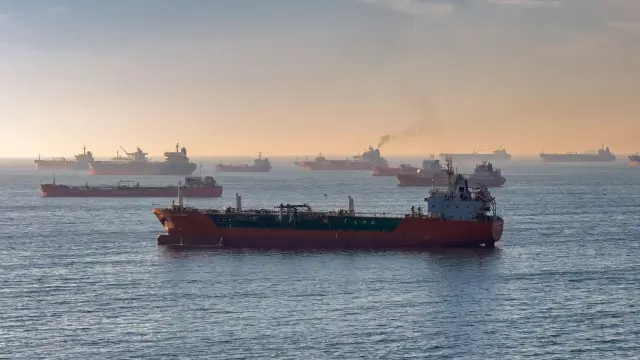
Iran has announced the closure of the Strait of Hormuz, one of the world's most critical oil shipping lanes, following fresh United States military strikes on Iranian targets. The announcement, made on June 10, 2026, sent shockwaves through global energy markets and revived fears of a prolonged Middle East conflict disrupting world oil supplies.
According to Iranian state media, the country's top joint military command issued the closure order after Washington launched a new round of strikes against Iran. Two vessels that attempted passage through the strategic waterway were hit, Iranian officials said. The United States military, however, stated that commercial ships continued to transit the area despite Iran's declaration.
Oil prices surged more than $2 a barrel on the news. Brent crude futures rose $2.30, or 2.47%, to $95.40 per barrel, while US West Texas Intermediate (WTI) crude climbed $2.60, or 2.89%, according to market data reported on June 10. The Strait of Hormuz handles roughly 20% of the world's seaborne oil trade, making any closure a matter of global economic consequence.
Oil Prices Surge on Hormuz Closure
Markets reacted sharply to Iran's announcement. Brent crude futures rose $2.30, reaching $95.40 a barrel — a 2.47% gain — while WTI crude climbed $2.60 to settle at $92.40 a barrel, a 2.89% increase. The jump came as traders priced in the risk of a prolonged disruption to one of the world's most critical energy chokepoints.
Industry analysts have long warned that a sustained closure of the Strait of Hormuz could push oil prices above $100 a barrel. Experts told CNBC that a prolonged disruption could spark a supply shock comparable to the oil crises of the 1970s. As of early May 2026, approximately 1,550 vessels and 22,500 mariners had already been stranded by the ongoing crisis, according to shipping reports.
The Pentagon had earlier informed the US House Armed Services Committee that fully clearing the Strait could take up to six months, underscoring the logistical complexity of any resolution.
Global Shipping Crisis Deepens
The Strait of Hormuz is the world's most important oil shipping corridor, linking the Persian Gulf to the Gulf of Oman and the open ocean. Approximately 20% of global seaborne oil trade passes through the 21-mile-wide waterway, which has been at the centre of escalating US-Iran tensions since February 2026, when President Donald Trump announced major combat operations against Iran.
The conflict has forced major shipping companies to reroute vessels around the Cape of Good Hope, adding 10-14 days to journey times and significantly increasing freight costs. Insurance premiums for ships transiting the region have also soared, adding further pressure on global trade.
The latest closure announcement follows a pattern of oscillating tensions. On April 17, 2026, Iran had announced the strait would be "completely open" to commercial ships during a ceasefire period, causing oil prices to plummet. That brief respite has now ended, with Tehran declaring the waterway closed once again following the fresh US strikes that pushed oil prices sharply higher.
What Comes Next for Global Energy Markets
Global energy markets now face a period of acute uncertainty. The US military has maintained that commercial shipping continues despite Iran's declaration, but the mere threat of naval confrontation has kept traders on edge. Iran's top joint military command warned that any vessel violating the closure would be targeted.
The conflict traces back to February 28, 2026, when Trump announced major combat operations against Iran. Since then, the two nations have engaged in an escalating exchange of military strikes, with the Strait of Hormuz becoming a focal point of the dispute. The potential for further escalation remains high if diplomatic efforts fail to produce a ceasefire.
According to analysis from Bloomberg, the ongoing Hormuz closure has become the biggest oil supply shock in history, with growth forecasts being cut worldwide. Markets are expected to remain volatile as investors assess the likelihood of a prolonged closure versus a negotiated reopening of the vital shipping lane.