West Bengal Women Free Travel & Durga Surokha: Safety & Mobility Guide 2026
By SK Jabedul Haque | Published on Current Affair Today | Govt Schemes
What You'll Learn
- When the West Bengal women’s free-bus benefit started and which state-run operators are reported to be covered.
- How the Pink Card and identity-verification process is described in the latest available report.
- Why pending applications, interim ID travel and issued cards must not be treated as the same status.
- What the Durga Suraksha Squad actually does and why it is not a monthly cash scheme.
What Changed on June 1, 2026?
West Bengal introduced free travel for women on state-run buses from June 1, 2026. The Indian Express reported that a West Bengal Transport Department notification issued on May 21 described the policy as free transportation for women of the state in all state-run buses. The stated purpose was to improve women’s access to public transport and support mobility.
This is a transport-fare benefit. It is not the same thing as a monthly allowance deposited into a bank account. The old version of this page mixed the bus policy with an alleged Durga Surokha cash scheme and then added invented widow, BPL and income rules. No reliable source checked for this rewrite supports that monthly-payment story.
The policy also matters beyond a daily Kolkata commute. The Telegraph reported that women were using state-run buses for long-distance trips to places such as Digha, Bakkhali and Durgapur. Its report identified WBTC, SBSTC and NBSTC as the state transport operators covered in the reported route network.
The official West Bengal Transport Department identifies the same operating structure. WBTC serves Kolkata and suburban areas. SBSTC serves South and South-Western Bengal. NBSTC primarily serves North Bengal. Route-level operation can still vary, so a private bus, contract vehicle or non-state service should not be assumed to qualify.
| Question | Verified answer from the checked sources | Do not assume |
|---|---|---|
| When did the benefit start? | June 1, 2026 | That every private bus is free |
| What is free? | Reported travel on eligible state-run buses | A monthly cash payment |
| Who is the core beneficiary group? | Women travelling on covered state-run bus services | That any person can use another passenger’s card |
| What proves the latest process? | Transport notification and later card or ID instructions | A copied social-media form or broker promise |
The safest reading is simple. Women may have a zero-fare journey on an eligible state-run bus under the notified policy, but the exact proof and ticketing process must follow the latest instruction accepted by the operator.
Which Buses and Routes Are Reported to Be Covered?
The June 9 Telegraph report says the benefit was available on state-run buses operated by WBTC, SBSTC and NBSTC, including long-distance routes. It mentioned travel to Digha, Bakkhali, Durgapur and Darjeeling as examples. That reporting is useful because it corrects the idea that the policy is limited to short city rides.
Coverage is still not a licence to board any vehicle without checking. State-run buses operate under different corporations and routes. A bus that looks similar may be privately operated, hired for a special service or outside the fare instruction being applied. Ask the conductor or the operator whether the service is covered before planning a trip around a zero fare.
The Transport Department’s public website links WBTC, SBSTC and NBSTC and describes their regional roles. Its accessible notifications list did not show the new June 2026 women’s travel order in the extracted page. That does not cancel the policy reported by the Indian Express and Telegraph. It means the reader should use the department and operator links for the latest operational clarification instead of treating an old website listing as the final travel manual.
City buses and long-distance buses
Reported coverage includes city services as well as long-distance state buses. This distinction is important for students, workers and women travelling between districts. The free-fare benefit still depends on the vehicle being part of an eligible state-run service and on the passenger meeting the identity or card instruction in force.
What about AC buses?
The reports do not create a universal rule that every AC or premium service is free. Do not infer coverage from the word “state-run” alone when a route has a special fare class or a separate operating arrangement. Confirm the service with the operator before boarding.
What happens at the end of the journey?
Earlier reporting described a ticket being issued even when the passenger paid no fare. The ticket is useful because it records the journey and lets the operator account for the concession. Keep it when a dispute occurs. It is better evidence than an argument at the bus door.
Pink Card, Documents and Current Application Position
The term Pink Card refers to a later identity-card process reported for women using the free-bus benefit. The August 7 Indian Express report calls it an official identification card for eligible women and says the card is intended to validate free travel on government-operated city and long-distance buses.
The same report lists Aadhaar, Voter ID, a passport-size photograph and an active mobile number as application inputs. It describes online and offline routes. The online route is linked to the West Bengal Government website. The offline route is described through the local Block Development Office in panchayat areas or the municipality office in urban areas. Transport officials are reported to verify the information before issuing the card.
That later report changes how the old page’s Aadhaar sentence should be read. It is not safe to say that a woman can always show Aadhaar at any time and receive a free journey. The current reported process ties the benefit to a verified physical or digital Pink Card. The same report says passengers with pending applications may have to pay regular fare until they receive the card.
| Status | What the later report says | Practical caution |
|---|---|---|
| No application or card proof at hand | Do not assume free boarding | Ask the operator before starting the journey |
| Application pending | Regular fare may be required until the card is received | Carry money or another payment method |
| Verified physical Pink Card | Reported as accepted for free travel | Keep the card and follow conductor validation |
| Verified digital Pink Card | Reported as an accepted card format | Keep the phone charged and use the official record |
There is a real evidence conflict between early June interim-travel reports and the later August card explainer. The Telegraph reported that women could show a government photo ID and collect a ticket while cards were being rolled out. The later Indian Express report says pending applicants may need to pay. Because the later source is closer to this update date, this article does not promise a free ride during a pending application.
Do not pay a middleman to “activate” a Pink Card. The official Transport Department website is the starting point for institutional links and contact details. Our ADIGRAMS portal guide explains the same source-first rule for a different government portal.
Durga Suraksha Squad Is Not a Cash Scheme
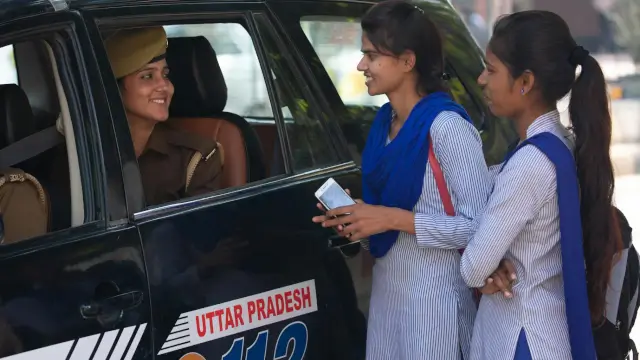
The legacy article calls the second topic “Durga Surokha Yojana” and describes a monthly payment for widows and vulnerable BPL women. That description is not supported by the sources checked. The reported initiative is called the **Durga Suraksha Squad**. It is a women’s safety and policing programme.
Akashvani News reported on July 2 that West Bengal initiated the Durga Squad for women’s security and safety in municipal and commissionerate areas. The same report said cyber help desks were initiated in 500 police stations and 24×7 Women Help Desks were initiated in all police stations. The report discussed police modernisation, cybercrime and bank-fraud response. It did not describe a monthly payment, widow pension, BPL grant or skill-development cash benefit.
The name correction matters. “Suraksha” means safety in this context. It is not evidence of a bank-transfer scheme. A reader searching for a financial-assistance programme under “Durga Surokha” should not submit Aadhaar, bank details or a fee to a page that promises approval.
What the Durga Suraksha Squad Actually Does
A July 20 DD India report provides a clearer operational picture. It says Kolkata Police’s Durga Suraksha Squad ran a month-long awareness campaign at 120 locations under 60 police stations. The campaign addressed crimes against women and cyber fraud through outreach in neighbourhoods and public places.
The report describes scooter-based patrols and joint patrol teams involving local police stations, the Cyber Police Station, the Women’s Police Station and women’s cells. It says the teams distributed leaflets, spoke with residents and used public communication at key intersections. It also reports 10 scooters and a dedicated vehicle for the campaign.
That is a safety response, not a welfare application. The squad may help create visibility, outreach and faster police attention in public spaces. It does not replace emergency reporting, a formal complaint, medical care or legal assistance where those are needed.
Cyber-fraud and online safety
Both Akashvani and DD India connect the programme to cybercrime and bank fraud. If money is taken through an online scam, preserve transaction records and contact the relevant official cybercrime channel quickly. Do not wait for a social-media “Durga scheme” agent who asks for an advance fee.
Women’s help desks
The Akashvani report says 24×7 Women Help Desks were initiated in all police stations. A help desk is a policing or assistance channel. It is not proof that a cash benefit exists under the same name.
Patrols and public-space safety
DD India reports that women police personnel continued motorbike patrols in Kolkata and that similar arrangements were introduced in parts of the Presidency Range. Patrol presence can support prevention and outreach. It does not guarantee that every incident will be prevented or that a complaint will receive a particular outcome.
What Is Not Verified Under “Durga Surokha”
No reliable source checked for this rewrite verifies a statewide monthly amount, widow-only eligibility, BPL eligibility, an 18-plus age rule, automatic bank transfer, skill-development benefit or BDO application form under the name “Durga Surokha Yojana.” Those details are removed instead of being repeated with softer wording.
| Legacy claim | Evidence-based treatment |
|---|---|
| Monthly financial assistance | Removed. No verified amount or payment order was found. |
| Widow and BPL eligibility | Removed. The reported Durga initiative concerns policing and safety. |
| Skill-development benefit | Removed. No verified scheme rule was found under this name. |
| BDO or municipality application | Not used for Durga Suraksha. Local offices are mentioned in Pink Card reporting, which is a different transport process. |
| New safety helplines | Reframed as Women Help Desks and cyber help desks reported by public sources, not an invented payment helpline. |
Readers should not combine the Pink Card transport process with the Durga Suraksha Squad. One concerns bus-fare validation. The other concerns police patrols, help desks and cyber-safety outreach.
How Women Can Verify the Current Travel Rule
Before travelling, check the latest instruction from the West Bengal Transport Department or the relevant state transport operator. The department’s public contact page lists head-office number 033 2442 0278 and transportdeptt.wb@gmail.com. These are department contacts, not a promise that every enquiry will be resolved immediately.
Ask four practical questions. Is this bus operated by WBTC, SBSTC or NBSTC? Is the route included in the current fare instruction? Is a verified physical or digital Pink Card required today? If the card application is pending, must the passenger pay the normal fare?
Keep a valid government photo ID and a payment method when the current card status is unclear. Do not hand over an OTP, bank PIN or internet-banking password to a conductor, agent or website. A transport concession does not require access to private banking credentials.
For a separate official-process example, our PM Kisan e-KYC guide explains why readers should use a verified government route instead of a copied form. The same discipline applies to Pink Card applications. For another official-status workflow, see our PM Kisan beneficiary-status guide.
Common Claims That Should Be Rejected
Posts about new women’s schemes often merge a real announcement with a fictional payment process. The claims below are the shortcuts that can cost a reader money or lead to a failed journey.
| Claim | What the checked evidence supports |
|---|---|
| “Every bus in West Bengal is free for every woman.” | Reported benefit applies to eligible state-run bus services, not automatically every private or special service. |
| “Aadhaar alone always guarantees free boarding.” | Early reports described interim ID travel, while later reporting ties free travel to verified Pink Card status and says pending applicants may pay. |
| “Durga Surokha gives widows a monthly payment.” | Not verified. The reported Durga Suraksha initiative is a policing and safety programme. |
| “Pay a fee to activate the Pink Card.” | Reject the request and verify through the Transport Department or operator. |
| “A social-media helpline can collect your bank details.” | Do not share OTPs, PINs or passwords. Use official contact and complaint channels. |
These distinctions make the article less exciting than a guaranteed-payment headline. They also make it safer and more useful. A reader needs to know whether the next action is to board a bus, apply for a card, contact an operator or report a safety issue.
What Women Should Do Next
As of August 19, 2026, the verified picture has two separate parts. Free travel for women on reported state-run bus services began June 1. The Pink Card and identity-verification process was later described in more detail, with pending applicants potentially required to pay regular fare until the card is received. Durga Suraksha is a police safety and cyber-fraud response initiative, not a verified monthly cash scheme.
Use the official Transport Department and state-operator routes for the current bus rule. Carry a valid photo ID and a payment method when card status is uncertain. For an incident or cyber fraud, use police and cybercrime channels. Do not search for a “Durga Surokha payment form” and do not pay an agent for approval.
This page is an evidence-based status guide. Transport instructions and police programmes can change. Recheck the official source before travelling, applying or sharing personal information.
Frequently Asked Questions

SK Jabedul Haque
Building India's most trusted finance education platform — simplifying news, schemes and market trends so anyone can understand and invest confidently.
Read full bio

Never miss an update
Get our clearest explainers on schemes, markets and money — read what matters, without the noise.
Explore more articles