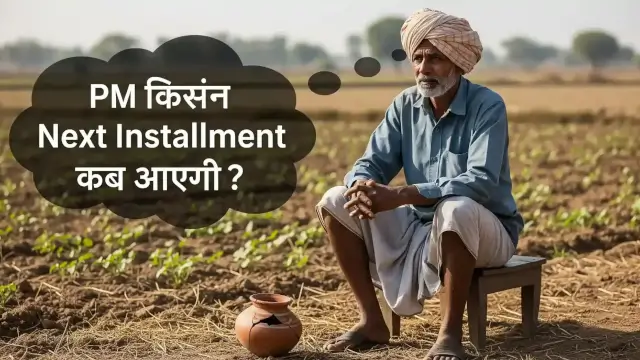
PM Kisan Next Installment Kab Aayegi?
What You'll Learn
- What the latest verified PM-KISAN instalment date means
- How to check public list inclusion and private payment status separately
- How eKYC, land seeding and Aadhaar-based bank routing affect payment
- Which official route to use when a payment is pending or missing
PM Kisan Next Installment 2026: Latest Verified Position
PM Kisan next installment 2026 is a search phrase that now needs a date check. The 23rd PM-KISAN instalment was released on 20 June 2026 from Tarakeswar, Hooghly, West Bengal. A page that still says the 23rd instalment was expected in July 2026 is carrying an old prediction.
The next question is not simply “when will the money come?” It is “which official record shows my position?” A public beneficiary list shows location-based inclusion. The private Know Your Status page shows payment fields linked to a registration record. A bank statement shows what finally reached the account. These are three different checks.
No future 24th instalment date is used in this article because no new official release notice was verified for it. A video thumbnail, social-media post or copied date is not an announcement.
The current article replaces an older 2025 prediction page. It does not promise that a farmer will receive money, and it does not treat an eKYC tick as a payment guarantee.
How Much Does PM-KISAN Pay?
PM-KISAN provides ₹6,000 per year to eligible landholding farmer families. The amount is divided into three equal instalments of ₹2,000. State and Union Territory administrations identify and verify beneficiaries, while the payment moves through the government transfer system.
| Point | Verified detail | What it does not prove |
|---|---|---|
| Annual support | ₹6,000 | It does not prove that every applicant is eligible |
| Each instalment | ₹2,000 | It does not create a fixed future release date |
| Latest verified release | 20 June 2026 | It does not confirm every bank account was credited |
| Payment route | Government transfer system | It does not remove land, identity or bank checks |
The scheme follows three four-month payment windows in its official description. That pattern helps explain the programme. It should not be turned into an exact future date without a fresh official notice.
The site’s PM Kisan beneficiary list guide explains the difference between a public list entry and a private payment record. Read both pages together when a search result mixes them.
Who Qualifies for the Next PM-KISAN Payment?
PM-KISAN is meant for eligible landholding farmer families. The scheme should not be reduced to an old small-farmer rule or a universal two-hectare ceiling. Land records, family details, exclusions and State or Union Territory verification all matter.
Registration is only the start. A name in an application form is not the same as a final benefit decision. The government can review the land record, identity details, family relationship, eKYC and payment account before releasing an instalment.
Official exclusions cover specified higher-economic-status categories, income-tax payers, constitutional post holders, certain serving or retired government officers and employees, and practising registered professionals. The professional list includes doctors, engineers, lawyers, chartered accountants and architects. Pension rules and service categories should be checked against the current official FAQ because the wording matters.
The scheme treats a farmer family as husband, wife and minor children. If more than one family member receives the benefit, the record can be held for verification. Land acquired after 1 February 2019 can also be part of an official review condition. A review hold is not the same as a final fraud finding.
The official Revised FAQ is the right place to read the exclusion language. Do not rely on a short list copied into a social post.
How to Check the Official PM-KISAN Beneficiary List
Use the official PM-KISAN Beneficiary List for public inclusion. Select State, District, Sub-District, Block and Village. The list is location based and may not display the same information as your private payment record.
- Open the official PM-KISAN Beneficiary List page.
- Select the State and District linked to the land record.
- Choose Sub-District, Block and Village.
- Submit the form and read the published list for that location.
- Use Know Your Status separately if you need payment or bank details.
A list entry is not a bank-credit receipt. It tells you that the name appears in the published list for the selected location. It does not show whether the latest instalment reached the account, whether the UTR is valid or whether a later payment check is pending.
For an official-date comparison, see the site’s PM Kisan status and beneficiary guide. The links use the current live category path rather than an obsolete alternate path.
How to Check PM-KISAN Payment Status
Use the official Know Your Status page for a personal payment record. The page asks for a registration number, captcha and an OTP sent to the registered mobile number. It can show payment status, bank name, UTR number, payment mode, credited-account information and the credited-on date.
That route is different from the public list. Do not claim that any Aadhaar number, bank account number or mobile number always replaces the registration number and registered-mobile OTP.
| Record | Official check | Best use |
|---|---|---|
| Public inclusion | Beneficiary List | Check whether the name appears for the selected location |
| Private payment record | Know Your Status | Read payment, bank, UTR and credit-date fields |
| Bank receipt | Bank statement or passbook | Confirm the amount actually reached the account |
| Payment-system signal | PFMS where applicable | Cross-check a supported payment record |
If the registration number is missing, use the recovery or registration tools shown on the official portal. Do not enter an OTP into a copied website that hides its domain.
The site’s PM Kisan status without OTP explainer is useful for understanding why public and private records should not be mixed. It does not create an unofficial shortcut around the official status flow.
Is eKYC Required for PM-KISAN?
Yes. The official PM-KISAN homepage states that eKYC is mandatory for registered PM-KISAN farmers. Depending on the authorised route, eKYC may be completed online, through the official mobile application or through an approved biometric channel such as a Common Service Centre.
eKYC proves that an identity check has been completed. It does not, by itself, prove that the land record is clear, the family is eligible or the bank account is correctly mapped. Those checks can fail independently.
- Open the official PM-KISAN portal and use its eKYC route.
- Complete the identity step and the OTP or other authorised verification requested.
- Use an approved biometric route if the online route cannot be completed.
- Return to the official status page and read the current eKYC field.
- Check land and payment-routing fields separately.
Do not follow a message that promises payment within 48 hours after eKYC. No such universal release promise is made here.
The site’s UP Farmer ID guide covers a different farmer-record process. It is relevant only as a reminder that local identity and land records can affect scheme work.
Why Can a PM-KISAN Payment Fail?
Many payment problems occur in the route between a verified beneficiary record and the bank account. Think of the Aadhaar and NPCI mapper connection as a routing address. If the address points to a closed account, a different account or no mapped account, the transfer can fail even when registration exists.
Official guidance identifies land seeding, Aadhaar-based payment and eKYC as important checks. It also describes Aadhaar de-seeding from the NPCI mapper, Aadhaar not mapped to the account number and account closure as failure categories.
| Problem shown or suspected | First check | Possible action point |
|---|---|---|
| Land not seeded | State land record and beneficiary record | Revenue or agriculture office |
| Aadhaar not mapped | Bank’s Aadhaar-based payment mapping | Bank and beneficiary |
| KYC pending | Official eKYC status | Portal, CSC or authorised channel |
| Account closed or changed | Active bank account recorded for payment | Bank and relevant record office |
Fixing one issue may not fix another. A farmer can complete eKYC and still have a land mismatch. The bank can correct mapping while State verification remains pending. Do not promise a fifteen-day or thirty-day release.
How Registration and Land Records Affect Payment
The official new farmer registration form says an applicant can proceed only after Aadhaar authentication. That is an identity gate, not final benefit approval. The form and the scheme record still depend on the land and family information submitted for verification.
Enter names, land details and identity information exactly as they appear in the relevant records. A spelling mismatch can create a review problem. A bank account update may also need to be reflected in the payment system before a release can be processed.
If the land record is wrong, the correct office is usually the relevant State revenue or agriculture authority. The national portal cannot rewrite every local land record from a single status request.
Keep the registration reference and the displayed error message. A clear record makes a grievance more useful than a screenshot with no date, State or registration detail.
Where PFMS and DBT Fit
Direct Benefit Transfer is the framework used to move government support toward a beneficiary account. PFMS can provide a supplementary payment lookup for supported systems and identifiers. It does not replace the PM-KISAN portal, beneficiary verification or the bank statement.
The official PFMS Know Your Payment page shows the fields required for its route. Use the form as a cross-check when it supports the relevant payment record. Do not interpret an empty PFMS result as automatic proof that the PM-KISAN application was rejected.
When PM-KISAN and bank records disagree, save the visible status, UTR and date. Then use the official grievance or help-desk route. Avoid private agents who ask for an OTP to “release” a pending amount.
For a broader government-scheme context, read the site’s government schemes overview. This article remains the specific guide for PM-KISAN dates and beneficiary status.
How to Raise a PM-KISAN Grievance
Use the official PM-KISAN grievance page to raise or check a complaint. The form may request a temporary number or registration number and captcha. Keep the reference shown after submission.
The official PM-KISAN contacts page links to Help-Desk and State Nodal Officer information. Use the route that matches the problem. Land issues may need the State administration. Bank mapping may need the bank. A portal-status issue may need PM-KISAN support.
Write the complaint with the State, village, registration number, exact status message, affected instalment and action already taken. Do not paste an OTP, PIN, full password or complete banking credentials into a complaint.
No universal resolution time is promised here. The duration depends on the type of mismatch and the authority that must correct it.
What the Latest Date Does and Does Not Tell You
The 20 June 2026 release date answers the historical question of when the 23rd instalment was released. It does not tell you whether your record was eligible, whether the account was mapped or whether the bank actually credited your amount.
Search pages often compress the whole process into “date, list and payment”. That makes a fast headline. It also hides the checks that decide the outcome. Read the status fields instead of assuming that a date on the homepage equals a successful credit for every farmer.
If a future instalment date appears online, look for a fresh official PM-KISAN notice before treating it as confirmed. This page intentionally leaves the 24th date open because an unverified forecast is not useful information.
What to Do Now
Start with the official PM-KISAN portal. Use the public Beneficiary List for location-based inclusion. Use Know Your Status for your registration’s payment fields. Check eKYC, land seeding and Aadhaar-based bank mapping when the record shows a problem.
If your question is about the 23rd instalment, the verified release date is 20 June 2026. If your question is about a future instalment, wait for an official announcement rather than using an old 2025 prediction or a copied date.
Save the registration reference, status message, UTR and date. Then take the issue to the correct official route. That creates a usable record and reduces the risk of handing personal banking information to a stranger.
Frequently Asked Questions

SK Jabedul Haque
Building India's most trusted finance education platform — simplifying news, schemes and market trends so anyone can understand and invest confidently.
Read full bio


Never miss an update
Get our clearest explainers on schemes, markets and money — read what matters, without the noise.
Explore more articles