Brookfield Bloom Energy: AI Infrastructure Partnership Expands to $25 Billion
What You'll Learn
- What the USD 25 billion Brookfield-Bloom framework actually says.
- Why onsite fuel cells can help when grid connections take years.
- How Bloom's Q2 2026 results changed the commercial picture.
- Why natural-gas fuel cells need an emissions caveat.
Introduction
Bloom Energy AI infrastructure partnership expansion is a financing and deployment story, not a single construction contract. Bloom Energy and Brookfield said on June 30 that Brookfield had increased its framework for financing AI-infrastructure power projects from USD 5 billion to USD 25 billion. The companies described the change as a fivefold expansion since October 2025.
The rationale is straightforward. Large AI facilities need dependable electricity, but new grid connections can take years in places where transmission, generation and interconnection queues are already full. Bloom's solid oxide fuel-cell systems can be installed onsite and can operate in grid-parallel or microgrid arrangements. That can create a faster project path, but it does not eliminate permitting, fuel supply, construction, financing or data-center demand risk.
Bloom's July 28 Q2 release adds an important commercial data point. The company reported USD 1,065.4 million of quarterly revenue, up 165.5 percent from Q2 2025, and raised full-year 2026 revenue guidance to USD 3.9 billion to USD 4.2 billion. Those results support the view that demand is strong. They do not prove that every dollar in Brookfield's framework will become Bloom revenue.
There is also an environmental distinction. Bloom's own technical note says systems running on hydrogen or biogas can produce carbon-neutral or zero-carbon power, while systems fueled by natural gas produce carbon emissions. The technology can reduce emissions relative to less efficient centralized generation in some settings, but calling every fuel-cell installation clean or zero-emission would overstate the evidence.
What the Brookfield-Bloom Agreement Actually Expanded
Bloom's official June 30 release says Brookfield increased its framework to finance power projects for AI infrastructure from USD 5 billion to USD 25 billion. The release describes the framework as helping grow the fuel-cell partnership globally. It also says the two companies are combining Brookfield's AI-infrastructure development, access to capital and operating scale with Bloom's onsite power platform.
The wording matters. A financing framework is a capacity for future project financing, not necessarily a purchase order, recognised revenue, installed megawatts or an unconditional corporate commitment. The release does not say that the full USD 25 billion has been drawn, that all sites are selected or that all projects have reached final investment decision.
The companies say the partnership targets hyperscalers and AI-infrastructure developers that need fast and reliable power. They describe a model in which power, compute, data-center infrastructure and capital are considered together. That integrated approach may shorten coordination time, but the actual schedule remains dependent on site selection, engineering, fuel availability, local approvals and customer demand.
The release places the agreement inside Brookfield's dedicated AI Infrastructure Fund. Brookfield says that fund launched in November 2025 with a target to deploy USD 100 billion. It also says Brookfield had more than USD 100 billion already invested in digital infrastructure and clean-power assets. Those statements describe Brookfield's strategy and reported asset base. They are not a guarantee that the Bloom framework will reach its maximum size.
The S&P 500 AI infrastructure analysis provides broader context for the power demand behind the deal. The AI investment cycle can create suppliers for chips, buildings, cooling and electricity. Each supplier still needs its own order, margin and cash-flow evidence.
Why Onsite Power Is Attractive to AI Data Centers
AI data centers are power-dense facilities. A project can have land, servers and a customer, yet still wait for a grid connection, substation upgrade or transmission project. Onsite generation can change the sequence by allowing the facility to secure a local power source while the wider grid work continues.
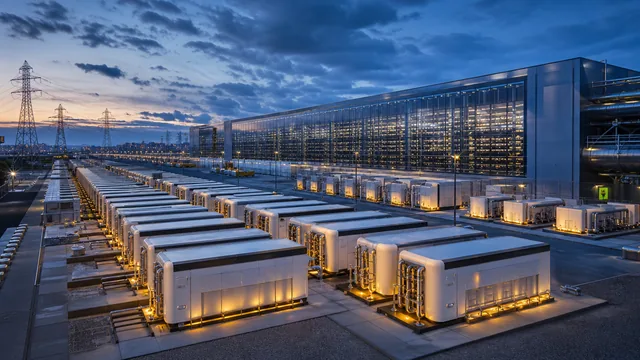
Bloom's Energy Server data sheet describes a solid oxide fuel-cell platform that converts fuels directly to electricity without combustion. The system can use natural gas, blended hydrogen, biogas or hydrogen. Bloom says the platform is modular, can operate 24x7 and can run in grid-parallel or microgrid architecture. It also says the system uses no water during normal operation and can capture heat from flue gas for another application.
These features address specific engineering constraints. A modular system can be staged as load grows. A microgrid arrangement can support resilience. A fuel-flexible platform can provide a pathway to different fuels over time. None of those features guarantees lower total cost, faster commissioning or lower lifecycle emissions at every location.
Onsite generation also introduces its own dependencies. Natural gas must be delivered reliably. Hydrogen and biogas availability varies by site. Fuel-cell stacks and balance-of-plant equipment require maintenance. A project must still meet local air, noise, safety and building requirements. Customers may also need a long-term plan for the relationship between onsite generation and the utility grid.
What Bloom's Q2 2026 Results Show
Bloom's July 28 release reported record Q2 2026 revenue of USD 1,065.4 million, compared with USD 401.2 million in Q2 2025. The company reported product revenue of USD 935.4 million, compared with USD 296.6 million a year earlier. The product figure grew faster than total revenue, which shows that equipment demand was a major part of the quarter.
GAAP gross margin was 33.4 percent, compared with 26.7 percent in Q2 2025. GAAP operating income was USD 182.2 million, compared with a USD 3.5 million operating loss a year earlier. Operating cash flow was USD 226.4 million, compared with negative USD 213.1 million in Q2 2025. GAAP diluted EPS was USD 0.62, compared with a USD 0.18 loss in Q2 2025.
Bloom raised full-year 2026 revenue guidance to USD 3.9 billion to USD 4.2 billion. The company described the midpoint as 100 percent year-over-year growth. Guidance is a management outlook, not realised performance. It can change because of customer timing, supply constraints, installation delays, pricing, financing and the pace at which AI data-center projects move forward.
The Q2 report also says Bloom's solutions had been validated and approved by all major US hyperscalers and more than a dozen US neoclouds, AI labs and colocation data-center operators. This is a company statement about validation and approval. It does not mean that each operator has signed a purchase order or that each approval will produce immediate revenue.
Our Hexaware AI partnership analysis illustrates the same distinction between a partnership announcement and measurable commercial impact. An announcement can improve a company's positioning while financial results remain the test of execution.
Deal Scope Compared With Bloom's Operating Evidence
| Item | Verified reading | What it does and does not prove |
|---|---|---|
| Brookfield framework | USD 25 billion, up from USD 5 billion | Expanded financing framework, not booked revenue or installed capacity |
| Brookfield AI fund | USD 100 billion target, launched November 2025 | Strategic fund target, not a Bloom-specific commitment |
| Bloom Q2 2026 revenue | USD 1,065.4 million | Reported quarterly revenue for the company, not partnership revenue |
| Bloom Q2 product revenue | USD 935.4 million | Reported product sales, not a measure of future project drawdown |
| Bloom Q2 GAAP gross margin | 33.4 percent | Quarterly margin that can vary with product mix and costs |
| Bloom full-year guidance | USD 3.9 billion to USD 4.2 billion | Management outlook subject to execution and demand risks |
| Bloom reported deployment | More than 1.5 GW across more than 1,200 sites | Company-wide deployment, not Brookfield project capacity |
| Natural-gas operation | Produces carbon emissions, according to Bloom's note | Fuel choice changes the emissions profile |
The table is designed to prevent a common reading error. The largest number in a partnership release is not automatically the company's next quarter revenue. Operating evidence must be traced to financial statements, while deployment claims must be dated and attributed to the company reporting them.
The Bitcoin market analysis uses a similar flow-versus-price distinction. A large capital or demand headline still needs confirmation in the operating data that follows.
How Fast Can Bloom Deploy Power?
Bloom's data sheet says the Energy Server platform is modular and designed for distributed power. It reports more than 1.5 GW deployed across more than 1,200 sites. That figure demonstrates existing commercial deployment, but it does not answer how quickly the Brookfield partnership can add capacity.
Deployment speed depends on the scope of each project. A customer may need a few megawatts for an interim load or a much larger installation for an AI factory. Equipment manufacturing, site preparation, fuel connection, electrical interconnection, permitting and commissioning each have their own timetable. A financing framework can support those steps, but it cannot remove them.
Bloom's Q2 release lists supply constraints, manufacturing capacity, installation cycles, utility interconnection and construction delays among the risks that can affect results. These company disclosures are especially relevant to a partnership built around speed. If project demand rises faster than production or installation capacity, the framework may be larger than near-term deliveries.
The right metric is therefore not the headline framework alone. Track recognised product revenue, order backlog, cash flow, manufacturing capacity, customer deposits, project milestones and the number of systems installed. Those measures provide a more grounded view of whether the partnership is moving from strategy to execution.
The Emissions Caveat
Bloom's emissions technical note makes a distinction that should remain central to any AI-power article. Systems operating on hydrogen or biogas can produce carbon-neutral or zero-carbon power under the conditions described by Bloom. Systems using natural gas produce carbon emissions.
Fuel cells generate electricity without combustion, which can reduce some local pollutants compared with combustion-based generation. Bloom also says its systems can displace electricity from less efficient centralized power plants and reduce water use. That comparison depends on the local grid mix, fuel source, system efficiency, methane leakage, construction footprint and the boundary used for the emissions calculation.
A natural-gas fuel cell is not the same as wind or solar. It can provide power around the clock and use less land in some configurations, but it still depends on a carbon-containing fuel. A future blend of hydrogen or biogas may change the emissions profile, yet availability and lifecycle accounting must be checked for the actual project.
Bloom says its greenhouse-gas inventory and avoided-emissions methods are third-party verified by Ramboll. Its note reports 7.8 million metric tonnes of CO2e reduction from commercial deployments through the end of 2025, along with reductions in sulfur oxides and nitrogen oxides. Those are company-wide historical claims. They should not be assigned directly to the Brookfield framework without project-specific data.
What Could Go Wrong
The first risk is framework conversion. A large financing framework can take years to convert into final investment decisions, equipment orders and recognised revenue. Customer demand may change before a project closes. AI infrastructure plans can also be resized when chip availability, power prices or model economics change.
The second risk is project execution. Onsite power needs land, equipment, fuel, controls and maintenance. A delay in any one component can delay the data center's usable capacity. The same is true for grid coordination, even when the project is designed to operate independently for part of its load.
The third risk is financial. Bloom's Q2 results were strong, but the company still carries manufacturing, working-capital, debt and customer-concentration risks. Its release warns that demand, supply constraints, installation cycles, utility interconnection and the ability to recognise backlog as revenue can affect actual results.
The fourth risk is environmental and regulatory. Local authorities may scrutinise emissions, water, noise, fuel supply and land use. A project described as clean power can attract challenge if it uses natural gas and its accounting boundary is not explained. Precise language protects the analysis from confusing lower emissions with zero emissions.
The fifth risk is valuation and expectation. A large market narrative can move a stock faster than the underlying project cash flow. Our Treasury yield guide explains how rates can affect long-duration growth valuations. Energy infrastructure projects need to be evaluated on both demand and the cost of capital.
The Bottom Line
The Brookfield Bloom Energy partnership expanded a power-project financing framework from USD 5 billion to USD 25 billion. It reflects the need for faster electricity solutions as AI data centers compete for grid capacity. Bloom's Q2 2026 results show a company with strong revenue growth, improved GAAP profitability and higher full-year guidance.
The agreement should still be described precisely. It is not USD 25 billion of booked Bloom revenue, guaranteed installed capacity or a promise that every project will be completed immediately. Bloom's own disclosures point to manufacturing, supply, installation, utility interconnection, financing and demand risks.
The emissions issue also needs plain language. Fuel cells can generate electricity without combustion and may reduce emissions compared with a local alternative. Natural-gas systems still produce carbon emissions. Hydrogen and biogas can change the profile, but only the fuel and project boundary can establish the actual result.
The best way to follow the story is to compare future project milestones with Bloom's revenue, cash flow, backlog, capacity and guidance. That converts a large partnership headline into an execution test.
Frequently Asked Questions

SK Jabedul Haque
Building India's most trusted finance education platform — simplifying news, schemes and market trends so anyone can understand and invest confidently.
Read full bio


Never miss an update
Get our clearest explainers on schemes, markets and money — read what matters, without the noise.
Explore more articles