Big Tech AI Demand: USD 650B Spending Spree Meets Customer Reality Check
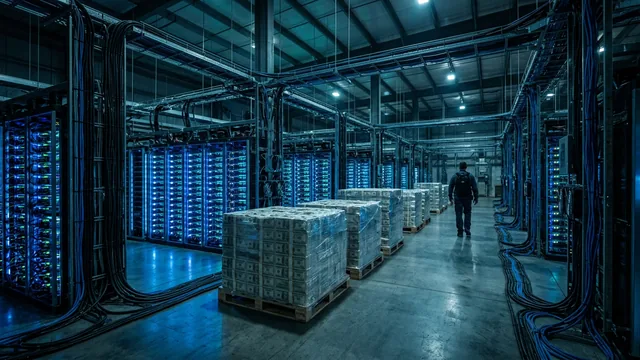
Big Tech AI demand is facing a critical test in 2026 as the industry's $650 billion infrastructure spending spree collides with slower-than-expected enterprise adoption. Alphabet, Amazon, Meta, and Microsoft are collectively deploying record capital on data centers, chips, and energy infrastructure, yet investors are increasingly questioning when these investments will translate into sustainable revenue growth. The gap between buildout pace and customer uptake has widened, triggering a selloff in major tech stocks as Wall Street demands tangible payoffs rather than long-term promises.
What Happened
The numbers reveal a stark divergence. Bridgewater Associates estimates Big Tech will spend approximately $650 billion on AI infrastructure in 2026 alone, up from roughly $405 billion in 2025. Meanwhile, Deloitte's 2026 State of AI in the Enterprise report shows that while 88 percent of companies now use AI in at least one function, only 29 percent report significant returns on their investments. Worker access to AI tools rose 50 percent in 2025, but the number of organizations with 40 percent or more of their AI projects in production remains low. Nvidia's $58.3 billion profit in the latest quarter underscores insatiable infrastructure demand, yet Amazon's cloud beat on AI demand contrasted with Microsoft's share decline after its earnings failed to convince investors of near-term payoff. The FT reported that Big Tech stocks sold off heavily after companies unveiled $660 billion capex plans, with Google and Microsoft set to lose market value as patience wears thin.
Why It Matters
This infrastructure-demand mismatch has global implications. The AI market is projected to reach $617.62 billion worldwide in 2026, but the capital intensity required to serve it — estimated at $1.4 trillion in utility spending by 2030 per Business Insider — means the payback period stretches years beyond typical investment horizons. Goldman Sachs notes AI agents could boost tech cash flow as usage scales, but the timeline remains uncertain. For enterprises, the challenge is moving from experimentation to production: Ecosystm's 2026 trends highlight that AI projects will survive by near-term impact, not big promises. Countries investing in AI sovereignty, from India's tax breaks for hyperscalers to U.S. nuclear power deals for data centers, are betting on demand that has yet to fully materialize at the application layer.
What's Next
The next earnings cycle will be decisive. Analysts expect Big Tech to demonstrate that AI revenue growth can match capex intensity, or face continued multiple compression. Key signals to watch include enterprise software attachment rates for AI features, cloud AI service revenue breakdowns, and whether the 50 percent surge in worker AI access translates into measurable productivity gains. Deloitte projects the number of companies with high AI production maturity will double in six months, suggesting an inflection point may be near. Meanwhile, the WSJ's "Will It Ever Pay Off?" question hangs over the sector: if 2026 earnings fail to show clear AI-driven revenue acceleration, the $650 billion bet could mark the peak of the infrastructure supercycle rather than its midpoint.
August 2026 Update: Earnings Season Split the Difference
Infrastructure demand is undeniably real. Micron's fiscal Q3 revenue more than quadrupled to USD 41.46 billion, with Q4 guided to a record USD 50 billion and USD 22 billion in customer cash deposits — while TSMC said its A14 node is ahead of schedule on AI/HPC demand. Nvidia sits near USD 200.75, up 7.6% year-to-date, and the SMH semiconductor ETF is up 49.6% this year.
But the payoff question got louder, not quieter. Apple hit an all-time closing high of USD 340.08 on July 28, then slid 7.35% on July 31 as memory-cost margin fears resurfaced. OpenAI's ad revenue reportedly missed internal targets by 90%, pushing its IPO timeline toward mid-to-late 2027 — a reminder that application-layer revenue still trails the buildout.
The tape, for now, sides with the builders. The S&P 500 ended July at 7,489.72 with the Nasdaq at 25,373.85 — holding double-digit three-month gains — after the Fed held rates on July 29. The verdict on the USD 650 billion bet now shifts to the quarterly prints landing through August.
Related coverage: Global Tech Sell-Off: KOSPI Crashes 10% as AI Spending Fears Trigger Panic, Micron Earnings June 24: AI Rally Critical Test, Oracle Shares Plunge 10% on AI Spending, Bitcoin Slides to $62,300: Tech Selloff Cracks $63K Support, Sensex Nifty Rally: Oil Slips to Pre-War Levels, Sensex Nifty Rally: Banking Stocks Drive Indices Higher.
Frequently Asked Questions

SK Jabedul Haque
Building India's most trusted finance education platform — simplifying news, schemes and market trends so anyone can understand and invest confidently.
Read full bio

Never miss an update
Get our clearest explainers on schemes, markets and money — read what matters, without the noise.
Explore more articles