Global Tech Sell-Off: KOSPI Crashes 10% as AI Spending Fears Trigger Panic
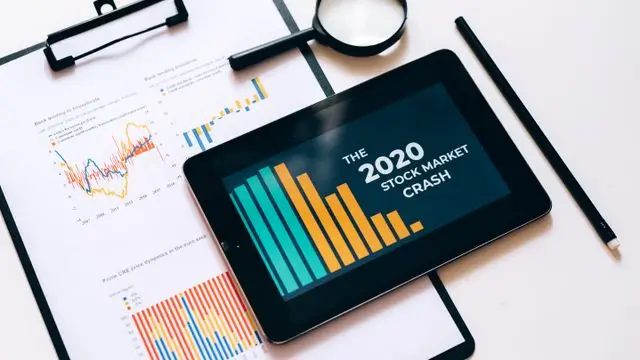
A global tech sell-off intensified on June 23, 2026, wiping out nearly $1 trillion in market capitalization across major exchanges. South Korea’s KOSPI index crashed 9.99%, its steepest single-day decline since March 2020, forcing a 20-minute circuit breaker halt. The selloff originated from a Monday session on Wall Street where megacap technology stocks retreated, then cascaded through Asian and European markets before reaching U.S. futures Tuesday morning.
What Happened
The KOSPI 200 plunged 9.99% to close at 2,351.12, marking its worst session since the COVID-19 crash in March 2020. The index triggered a Level 1 circuit breaker at 11:25 a.m. local time, pausing trading for 20 minutes as the benchmark breached an 8% intraday decline threshold. Samsung Electronics, which accounts for roughly 23% of the KOSPI’s market weight, fell 12.3% to close at 68,400 won. SK Hynix, the world’s second-largest memory chipmaker, dropped 12.7% to 145,600 won. Together, the two chip giants represent nearly half of the KOSPI’s total market capitalization, amplifying the index’s sensitivity to semiconductor sentiment.
In Japan, the Nikkei 225 surrendered 3.55% to end an eight-day winning streak, with Advantest and Tokyo Electron leading chip-related declines. Europe’s Stoxx 600 Technology index tumbled 3.2%, dragged by STMicroelectronics and ASM International. Hong Kong’s Hang Seng Index slid more than 2%, while mainland Chinese tech gauges also retreated. Nasdaq 100 futures pointed to a 2.8% gap-down open, with S&P 500 futures down 1.4%. Premarket movers included Intel and Marvell Technology, both sliding more than 4% ahead of the U.S. cash session. SpaceX shares also extended losses, sliding 24% from recent peaks as the AI trade unwound.
Why It Matters
Tuesday’s rout exposes a structural vulnerability in the global equity rally: an outsized dependence on a handful of AI-linked semiconductor names. The KOSPI’s 90% surge since January 2024 was powered almost entirely by Samsung and SK Hynix, whose combined market value approached $500 billion at the peak. When sentiment shifts, the concentration risk becomes acute—a dynamic that played out across every major market Tuesday. The selloff also rippled into cryptocurrency, with Bitcoin sliding below $63,000 as risk-off flows drained liquidity from digital assets.
For institutional allocators, the episode raises urgent questions about AI capital expenditure sustainability. Hyperscalers including Microsoft, Meta, Amazon, and Alphabet have committed over $200 billion in annual AI infrastructure spending through 2026. Yet revenue attribution from generative AI remains opaque, and Tuesday’s price action suggests investors are growing impatient with the payback timeline. The Financial Times noted that “the market is pricing in a scenario where AI capex growth decelerates before revenue inflects.” This recalibration could reshape sector allocations for the second half of 2026. Recent departures like Alphabet’s Nobel-winning AI scientist John Jumper to Anthropic underscore the talent war intensifying beneath the capex debate.
What’s Next
Market attention now turns to Nvidia’s earnings report in late August, which will provide the first hard data on whether AI demand remains intact at the infrastructure layer. Wedbush Securities’ Dan Ives characterized Tuesday’s selloff as a “gut check” rather than a trend reversal, arguing that enterprise AI adoption curves are still in early innings. However, the circuit breaker event in Seoul may prompt exchanges globally to review single-stock concentration limits for index-heavy names. The Korean Financial Services Commission has already signaled it will examine whether Samsung and SK Hynix’s combined weight warrants regulatory intervention.
For retail investors, the episode underscores the risk of chasing momentum in concentrated themes. Diversification across the AI value chain—from semiconductor equipment to software applications and energy infrastructure—may offer better risk-adjusted exposure than pure-play chip bets. As one Seoul-based portfolio manager told CNN, “The AI trade is not over, but the easy money has been made. The next leg requires earnings delivery, not narrative.” Meanwhile, Oracle’s 21,000 job cuts and Bitdeer’s $205M Bitcoin sale to fund AI data centers signal the workforce and capital reallocation already underway. The Quantum Computing executive orders signed by Trump add another dimension to the long-term technology investment thesis.
Frequently Asked Questions

SK Jabedul Haque
Building India's most trusted finance education platform — simplifying news, schemes and market trends so anyone can understand and invest confidently.
Read full bio
Never miss an update
Get our clearest explainers on schemes, markets and money — read what matters, without the noise.
Explore more articles