UAE Excise Tax: Dh1 per ml Minimum Price for E-Cigarette Liquids from September 2026
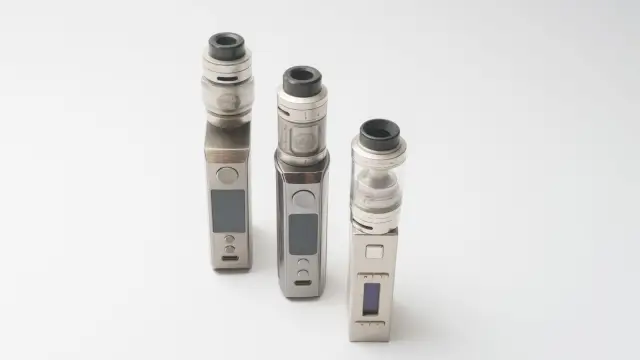
The UAE Ministry of Finance announced a new minimum excise price for liquids used in electronic smoking devices and tools. Gulf News reported the decision on August 6, 2026, and said it takes effect on September 1, 2026. The rule assigns a floor of Dh1 per millilitre when excise tax is calculated, so the declared retail price is not the only number that matters for low-priced liquids.
This distinction is the core of the policy. A minimum excise price is a tax-calculation value. It is not a minimum retail price that forces a shop to sell every bottle above a fixed shelf price. The official WAM release, the UAE Government excise-tax page, and the Gulf News explanation establish the source basis used here.
The practical effect depends on the product’s volume, declared value, supply-chain role, and excise records. This article explains the rule without turning a public announcement into individualized tax advice. Businesses should confirm their reporting position with the Federal Tax Authority or a qualified UAE tax adviser.
What You'll Learn
- What the UAE minimum excise price changes from September 1, 2026
- Why the Dh1 per millilitre floor is not a minimum retail price
- How the calculation works for 10 ml, 30 ml, and 60 ml bottles
- Which businesses carry registration and record-keeping responsibilities
What the UAE Excise Decision Changes
The Ministry of Finance decision introduces a minimum excise price of Dh1 per millilitre for liquids used in electronic smoking devices and tools. Gulf News reported that the measure enters into force on September 1, 2026. The announced scope is the liquid used in the devices and tools, not a general price rule for every consumer product sold in the UAE.
The policy changes the minimum value used to calculate excise tax when the relevant liquid would otherwise be assigned a lower value. It does not, based on the fetched reporting, create a new percentage rate for the liquid category. The UAE Government’s excise page lists liquids used in electronic smoking devices and tools among excise goods and states a 100% rate for that category.
The announcement therefore has two separate elements. The first is the existing percentage rate. The second is the new minimum value used in the calculation. Keeping those elements separate prevents a common error in which a tax base floor is described as a new 100% tax increase.
| Policy element | What the sources say | How to read it |
|---|---|---|
| Minimum excise price | Dh1 per millilitre for covered e-liquids | Minimum value used for excise calculation |
| Effective date | September 1, 2026 | Use this date for the new floor |
| Excise rate | 100% for liquids used in electronic smoking devices and tools | Existing percentage rate listed by the UAE Government |
| Retail pricing | Not set by the minimum excise price itself | Retail price can still reflect commercial decisions and other costs |
For related context on how policy changes interact with market prices, see the site’s commodity-price analysis. The subjects differ, but the same discipline applies. A policy input, a market price, and a tax calculation should not be treated as one measure.
Why the Effective Date Matters
The Ministry of Finance announcement was reported on August 6, 2026, while the new minimum excise price starts on September 1, 2026. That gap creates an implementation window for importers, distributors, retailers, warehouse operators, and systems teams to update product records and reporting processes.
The date also matters because the rule is not described as a historical change to every prior transaction. Businesses need to identify which stock, movement, declaration, or tax period falls under the new floor according to the applicable FTA process. A public article can state the effective date. It should not infer a transition method that the fetched sources do not specify.
A practical implementation review should keep three dates separate: the announcement date, the legal effective date, and the date on which a business changes its own system or inventory workflow. Conflating them can produce incorrect invoices, inconsistent product masters, or a report that applies the new floor too early.
Who Is Covered by the Rule
The UAE Government states that excise tax applies to specific goods, including tobacco and tobacco products, liquids used in electronic smoking devices and tools, electronic smoking devices and tools, carbonated drinks, energy drinks, and sweetened drinks. The post 1042 decision adds a minimum excise-price rule for the covered liquids.
The business impact is concentrated in the supply chain rather than limited to a single retail counter. Importers, producers, stockpilers in the circumstances covered by UAE rules, and warehouse keepers can have excise responsibilities. The government page says businesses involved in importing excise goods, producing excise goods released for consumption in the UAE, or stockpiling excise goods in certain cases are responsible for registration obligations.
That does not mean every employee, consumer, or online visitor becomes an excise taxpayer. It means the business role and movement of excise goods determine which compliance duties need review. Registration, declarations, records, and payment processes should be mapped to the entity’s role and the FTA’s current guidance.
| Business role | Why it may matter | Control to review |
|---|---|---|
| Importer | Brings covered excise goods into the UAE | Product classification, import records, and tax reporting |
| Producer | Produces excise goods released for UAE consumption | Volume data, product master, and release records |
| Stockpiler | Holds excise goods in cases covered by UAE rules | Inventory status and designated reporting treatment |
| Warehouse keeper | Oversees an excise warehouse or designated zone | Movement controls and supporting records |
| Retailer | Sells products after upstream tax and pricing inputs | Supplier data, shelf price communication, and invoices |
The exact liability for a particular business depends on its facts and the current FTA framework. The government page says there is no registration threshold for excise tax and that businesses involved in the listed activities must register before the relevant activity. This is general public information, not a determination of a company’s filing position.
How the Dh1 Per Millilitre Floor Works
Gulf News explains that the minimum excise price is the minimum value used to calculate excise tax regardless of how much the product is sold for. It is different from a minimum retail price. A shop can make its own commercial pricing decision, but the excise calculation for a covered liquid cannot use a value below the applicable floor.
For a 10 ml bottle, the minimum excise price is Dh10. For a 30 ml bottle, the minimum excise price is Dh30. For a 60 ml bottle, the minimum excise price is Dh60. These are calculation-floor examples reported by Gulf News. They do not by themselves state the final consumer price or every invoice component.
The 100% excise rate remains a separate input. The UAE Government page lists a 100% rate for liquids used in electronic smoking devices and tools. A business should therefore model the floor and the rate as separate fields, then confirm how its reporting system applies the relevant rules to its product category and transaction.
| Bottle volume | Minimum excise price at Dh1 per ml | What the example shows |
|---|---|---|
| 10 ml | Dh10 | The calculation value cannot fall below Dh10 |
| 30 ml | Dh30 | The calculation value cannot fall below Dh30 |
| 60 ml | Dh60 | The calculation value cannot fall below Dh60 |
| Other volume | Volume multiplied by Dh1 per ml | Use the applicable product and reporting rules |
For example, a liquid sold below the floor is not automatically required to be advertised at Dh1 per millilitre. The floor affects the value used for excise calculation. Retail price, import value, logistics, margin, VAT treatment, and other commercial inputs should not be invented from the announcement.
Why This Is Not a New 100% Tax Rate
The baseline article correctly identified that the UAE’s excise rate for liquids used in electronic smoking devices and tools is 100%, but it risked making the price floor sound like a fresh rate increase. The fetched UAE Government page supports the distinction. It lists the category and the existing rate. Gulf News describes the new rule as a minimum excise price.
In tax-system terms, a rate and a base are different fields. A rate is the percentage applied under the applicable rule. A base is the value to which that rate is applied. The new decision changes the minimum value for covered liquids. It does not, in the sources reviewed, change the 100% category rate.
This distinction is also important for data design. A product master should not overwrite the tax-rate field when the policy change belongs in a minimum-price or excise-value field. A reporting engine should preserve the effective date and the source of the floor, then apply the rate according to the applicable category.
Readers following policy-linked markets can review the site’s UAE and commodity policy coverage. That article concerns a different policy area and is not evidence for the excise rule.
What the Decision Does Not Say
The announcement does not state that every vape liquid will have the same retail price after September 1, 2026. It also does not provide a universal consumer-price increase, a demand forecast, or a revenue estimate. Those outcomes depend on product characteristics, commercial decisions, compliance behavior, and later market evidence.
The decision does not replace the general FTA framework. It adds a minimum excise-price rule for a defined liquid category while the published UAE Government page continues to describe registration, filing, and payment responsibilities under the wider excise system.
It also does not establish that every business has the same tax treatment. Importers, producers, stockpilers, warehouse keepers, distributors, and retailers can occupy different roles. The relevant obligations should be confirmed against current UAE rules and the business’s facts.
What Importers and Sellers Should Check
Businesses should begin with product classification. The new decision refers to liquids used in electronic smoking devices and tools. A product inventory that stores only a brand name or a marketing description may not be enough to determine whether the new floor applies.
Next, capture volume in a normalized unit. The announced floor is per millilitre, so a system that stores bottle size only as free text can create conversion and reporting errors. The product master should preserve the package volume, unit, taxable category, minimum excise price, effective date, and source record.
Finally, test the calculation with low-priced and higher-priced products. A low-priced liquid tests whether the floor is applied. A product above the floor tests whether the system is incorrectly replacing the declared value with the floor for every product. The test should cover import, stock, sale, return, and adjustment flows where those events are part of the business process.
For adjacent tax-compliance context, see the site’s tax-law reporting. The legal setting is different, so it should not be used to infer UAE excise obligations.
How the Rule Could Affect Retail Prices
The direct policy input is the excise calculation floor. The final consumer price is a separate commercial outcome. A business may pass higher duty through to buyers, absorb part of the change in margin, alter product mix, or make another pricing decision. The official announcement does not establish the size of any retail-price increase.
Gulf News says the new floor can raise the tax value assigned to low-priced liquids. That creates a channel through which some products may become more expensive, but the article should not claim a uniform price increase across all brands or bottle sizes. Retail impact depends on the gap between the prior tax value and the new floor, as well as business decisions after the rule takes effect.
Consumers comparing bottles should therefore distinguish volume, shelf price, and tax treatment. A larger bottle may have a higher minimum excise value because the floor is calculated per millilitre. That does not prove that the retail price rises in direct proportion or that the total checkout price can be inferred from the Dh1 floor alone.
Why the Ministry Says the Rule Was Introduced
Gulf News attributes the policy rationale to the Ministry of Finance. The ministry said the decision supports the effectiveness of excise-tax implementation and tax compliance. It also said the rule helps keep pace with market developments and ensures consistent application of unified standards across tobacco and electronic smoking products.
The UAE Government describes excise tax more broadly as an indirect tax on selected goods typically considered harmful to human health or the environment. Its stated purposes include reducing consumption and raising government revenue for public services. Those are policy objectives. They are not evidence that the new floor will produce a specific reduction in vaping or a specific revenue amount.
That boundary matters in public-policy writing. It is reasonable to explain the stated objective. It is not reasonable to convert the objective into a forecast without evidence about demand, substitution, compliance, and enforcement.
What the FTA Registration Framework Says
The official UAE Government page says businesses can register for excise tax through the Federal Tax Authority’s e-services after creating an account. It also says there is no registration threshold for excise tax. Businesses involved in importing excise goods, producing covered goods released for consumption in the UAE, stockpiling in specified cases, or overseeing an excise warehouse or designated zone should review their obligations.
The same page says excise returns are filed by the 15th day following the end of each tax period. It describes EmaraTax as the online platform for registration, filing returns, paying taxes, and seeking refunds. These general framework points help businesses identify the systems and records that may need review, but they do not replace a current FTA determination.
The new minimum price should be added to the compliance calendar as an effective-date change. It should not be treated as proof that every business must use the same workflow. The entity’s role, goods, warehouse status, and filing process remain relevant.
| Compliance item | Public UAE Government guidance | Implementation note |
|---|---|---|
| Registration | No registration threshold is stated for excise tax | Review the listed business activities before trading |
| Registration channel | FTA e-services after account creation | Keep access and authorization records controlled |
| Return timing | By the 15th day after the tax period ends | Confirm the business tax period and filing calendar |
| Payment platform | EmaraTax supports tax services | Confirm current FTA workflows before filing |
The site’s international tax-policy coverage gives a separate example of why rates, dates, and taxpayer scope should be reported distinctly. It does not determine the UAE treatment of e-cigarette liquids.
What the Baseline Article Needed to Clarify
The inherited article had the correct central announcement but compressed several different ideas into one tax explanation. It described the Dh1 floor, the 100% rate, retail examples, supply-chain roles, and policy rationale without consistently separating the tax-calculation base from the consumer price.
The rewrite removes unsupported claims that the decision would create a uniform retail increase, close every pricing loophole, or produce a measurable health outcome. It also avoids presenting a particular business as compliant or non-compliant. The official UAE Government page provides general registration information, while the Ministry of Finance announcement provides the policy change.
The corrected article also uses source-attributed examples for 10 ml, 30 ml, and 60 ml bottles. Those examples explain the floor. They do not estimate final invoices, VAT, margins, or consumer demand.
For related coverage on regulatory change and financial products, see the site’s Tether Gold policy analysis. It is context only and not a substitute for UAE FTA guidance.
Conclusion: Track the Floor Separately from the Rate
The UAE’s September 1, 2026 rule creates a minimum excise price of Dh1 per millilitre for liquids used in electronic smoking devices and tools. The UAE Government lists the existing excise rate for that category as 100%. The policy change is therefore best understood as a calculation-floor update rather than a newly announced percentage rate.
For a 10 ml bottle, the reported minimum excise value is Dh10. For 30 ml, it is Dh30. For 60 ml, it is Dh60. Those figures help explain the mechanism, but they do not establish a final retail price or a business’s individual filing result.
Importers, producers, qualifying stockpilers, warehouse keepers, distributors, and retailers should review product classification, volume data, effective-date handling, records, and FTA registration responsibilities. Consumers should understand that a tax-calculation floor is not the same as a minimum shelf price.
Frequently Asked Questions

SK Jabedul Haque
Building India's most trusted finance education platform — simplifying news, schemes and market trends so anyone can understand and invest confidently.
Read full bio


Never miss an update
Get our clearest explainers on schemes, markets and money — read what matters, without the noise.
Explore more articles