Brent Crude at $72.51: US-Iran Halt Attacks Ahead of June 30 Talks
What You'll Learn
- Why the protected $72.51 headline differs from the fetched CNBC Brent quote
- What the reported halt in US-Iran hostilities meant for commercial shipping
- Why the June 30 Doha meeting was not confirmed as a direct negotiation
- Which oil and diplomatic signals should be monitored after a temporary pause
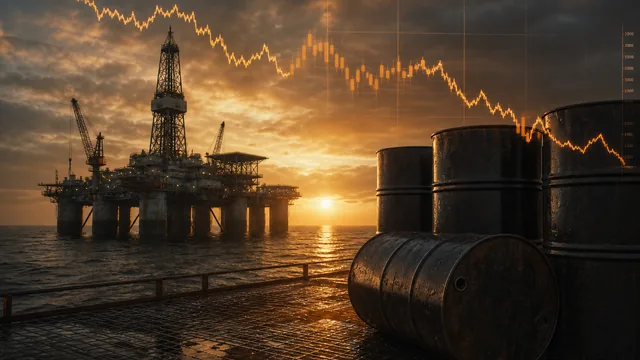
Brent crude moved higher after the United States and Iran announced a pause in recent hostilities, but the price move did not settle the wider conflict. The fetched June 29 CNBC report said Brent futures gained 1.3% to $72.91 and WTI futures gained 1.9% to $70.56. The protected title uses $72.51, so the article keeps that headline unchanged while showing the source discrepancy.
The diplomatic signal was also narrower than the original subtitle suggested. CNBC said U.S. officials described a stand-down and free commercial-vessel movement through the Strait of Hormuz. On June 30, CNBC, NBC News carrying Reuters reporting, and the BBC reported mixed messages about whether U.S. and Iranian officials would meet directly in Doha. Qatar said U.S. envoys would meet mediators rather than Iranian officials.
The central question for oil markets was therefore not whether a final peace deal had arrived. It was whether the temporary pause would reduce the immediate threat to supply routes, allow technical discussions to continue, and prevent another round of attacks from disrupting the waterway.
What Happened to Brent Crude
The available price record describes a market reacting to a reported reduction in immediate conflict risk. CNBC's June 29 article said Brent futures gained 1.3% to $72.91, while WTI futures gained 1.9% to $70.56. Those figures are separate from the protected $72.51 headline number and should not be merged into one quote.
CNBC linked the move to an agreement between the United States and Iran to halt recent hostilities. The report said officials described a pause in fighting and a return to commercial-vessel movement through Hormuz. It also said military tensions continued to unsettle energy markets, which is why the price reaction cannot be read as proof of a durable settlement.
The market had to process two signals at once. The reported pause reduced the probability of an immediate supply interruption. The weekend strikes, tanker incident, and conflicting diplomatic messages showed that the risk could return quickly. That combination helps explain why oil moved higher without producing a clear, final direction for the next phase.
| Market observation | Reported figure | Source and boundary |
|---|---|---|
| Protected headline Brent figure | $72.51 | Protected title, retained without treating it as the fetched CNBC quote |
| CNBC June 29 Brent quote | $72.91, up 1.3% | CNBC report, date and contract context required |
| CNBC June 29 WTI quote | $70.56, up 1.9% | CNBC report, per-barrel futures figure |
| CNBC June 30 Brent quote | $72.92 | August delivery futures, one day later |
| CNBC June 30 WTI quote | $69.50, down 1.8% | August delivery futures, one day later |
The Bitcoin ETF outflow analysis uses a similar separation between a headline figure and the exact source timestamp. Energy prices need the same treatment because contract month, observation time, and settlement method can change the number.
Why the Title Figure and CNBC Quote Differ
A protected title is not a license to erase a source conflict. The title says Brent crude at $72.51, while CNBC's fetched June 29 report says Brent futures gained 1.3% to $72.91. The difference may reflect a different intraday observation, provider, contract, or update time. The retrieved material does not identify the source of the $72.51 title quote.
The June 30 CNBC report then quoted August Brent futures at $72.92. That is close to the June 29 CNBC figure but is still a separate observation. The report also quoted August WTI at $69.50, down 1.8%. A clean article should name the date and contract whenever it uses a price.
This is more than a formatting issue. A small price gap can change the stated percentage move, the description of a support level, or the implied market reaction. The body therefore keeps the protected title for continuity and uses the fetched CNBC values for the evidence-backed market record.
Direct fetches of the baseline Reuters links returned HTTP 401 in this research pass. Reuters search results were used only to find leads. The full-text evidence used here comes from the fetched CNBC report and from NBC News and the BBC pages that carried Reuters reporting with clear publication dates.
What the US-Iran Halt Actually Covered
CNBC reported that U.S. officials said both sides would stand down for now and that commercial vessels could move freely through the Strait of Hormuz. The same report said technical talks would continue on all areas of a June 17 memorandum of understanding. That wording describes an interim operating arrangement, not a final treaty.
The pause mattered for oil because the Strait of Hormuz is a narrow route connecting the Persian Gulf with the Gulf of Oman. CNBC said the waterway typically handles around 20% of global oil traffic. The BBC, also carrying Reuters reporting, gave a similar estimate of about 20% of global oil and gas shipments.
What the pause did not establish was a full reopening, an end to all military activity, or a verified timetable for normal shipping. The reports described the arrangement as fragile. The June 29 CNBC report said renewed violence had already threatened negotiations, and the June 30 reports described mixed statements about the next diplomatic meeting.
That distinction matters for the oil market. A temporary reduction in attack risk can lower the immediate supply premium. It does not remove the cost of insurance, routing, naval protection, delays, or the possibility that a vessel movement statement changes after another incident.
Why Hormuz Moves Oil Markets
Hormuz is important because a disruption affects a route used by a large share of global oil and gas shipments. The 20% figure in this article is attributed to CNBC and Reuters-syndicated reporting. It is not a daily volume estimate for the exact date of the article, and it should not be used to calculate a precise loss of supply without separate shipping and production data.
The waterway also affects expectations beyond the barrels that physically pass through it. If vessels hesitate, loading schedules can change, insurance costs can rise, and refiners can seek longer routes. Even when cargoes eventually arrive, the market can react to the risk of delay before a measured shortage appears in inventory data.
The June 29 CNBC report said commercial vessels could move freely after the reported pause. The BBC reported that an earlier communication line had been formed to enable safe passage. Neither report establishes that every vessel had resumed normal movement or that all maritime risks had disappeared.
The inherited body treated a possible reopening as a direct path toward fixed Brent ranges. The fetched evidence does not support that conclusion. A route can be technically open while traffic remains cautious, and an agreement can be politically announced while operational details remain unsettled.
The Tether Gold reserves article shows the same scope rule. A reserve statement, a product feature, and a future service are different evidence categories. In the Hormuz case, a stand-down statement, a communication line, and normal shipping are also different states.
What Traders Were Watching on June 29
The first market signal was the response of the two main crude benchmarks. CNBC reported Brent at $72.91 and WTI at $70.56 after the hostilities pause. That response suggested immediate supply anxiety had eased relative to the weekend escalation, but it did not demonstrate that the conflict had ended.
The second signal was the status of vessel movement. Officials said commercial vessels could move freely, while the reports also described a tanker incident and continued military tension. This created a gap between the policy statement and the operational risk that shipping companies had to assess.
The third signal was the language used by market analysts. ING strategists told CNBC that the market was treating a temporary ceasefire as a permanent deal, which they said was not the case. That is an attributed interpretation of market behavior, not a claim that traders were wrong about the eventual outcome.
The fourth signal was the diplomacy calendar. A June 30 meeting in Doha could have provided evidence that technical discussions were continuing. Instead, statements from Washington, Tehran, and Doha differed over whether direct talks were scheduled. That uncertainty kept the geopolitical price buffer from disappearing simply because an interim pause had been announced.
| Signal | What the source reported | Why it matters |
|---|---|---|
| Benchmark prices | Brent $72.91 and WTI $70.56 on June 29 | Shows the immediate market response to the reported pause |
| Shipping language | Officials said vessels could move freely through Hormuz | Tests whether the policy statement reaches physical flows |
| Military activity | CNBC reported a Central Command account of 10 targets | Shows why the halt remained vulnerable to renewed incidents |
| Diplomatic follow-through | Technical talks were said to continue, but direct Doha talks were disputed | Separates an interim pause from a completed political settlement |
The S&P 500 market report also separates price movement from its proposed explanation. A benchmark reaction can be measured directly. The cause still needs a source and a time window.
What Changed in the June 30 Doha Story
The Doha story became less certain than the title's wording implies. CNBC reported that President Donald Trump said talks would take place in Qatar's capital on Tuesday. It also reported that an Iranian Foreign Ministry spokesperson denied talks were scheduled over the coming days and said Iran's technical delegation visit was unrelated to the U.S. officials' visit.
CNBC said U.S. special envoys Jared Kushner and Steve Witkoff arrived in Doha and that a Qatari government spokesperson said they would meet mediators, not Iranian officials. The BBC reported the same distinction and said no direct meetings were scheduled in the coming days.
NBC News carried Reuters reporting that Iran's technical delegation was going to Qatar but that Iran's Foreign Affairs Ministry said there would be no negotiation meetings with the U.S. side in the coming days. The report also said other officials expected technical teams to meet separately with Qatari and Pakistani mediators.
This is why the correct description is mixed diplomatic messaging around possible mediator meetings. The sources do not support saying that a direct June 30 U.S.-Iran negotiation took place. They support saying that envoys and technical delegations were in or heading toward Doha while the format and participants remained disputed.
The Meta and Cred transaction report uses the same distinction between a named announcement and an event that has actually closed. In both cases, the article should identify the source's wording instead of turning a plan into a completed event.
Why the Memorandum Was Temporary
The June 30 CNBC report described a 14-point memorandum of understanding agreed on June 17. NBC News and the BBC, carrying Reuters reporting, said the United States and Iran gave themselves at least 60 days to implement the memorandum, discuss Iran's nuclear program, and negotiate a permanent truce.
The time window matters because it shows that the June 17 arrangement was a process framework. It created a period for implementation and further discussion. It did not mean that every provision had already been carried out, that the parties had resolved the nuclear issue, or that the waterway had returned to normal.
The BBC reported that the memorandum brokered by Pakistan and Qatar committed the parties to halt military operations and immediately reopen Hormuz. It also said technical talks could continue and later move to a senior level. These are reported provisions and mediation statements, not independent evidence that all terms had been implemented.
The interim structure also explains the market's sensitivity to each new incident. If the pause fails, the expected path for shipping and supply changes. If technical discussions continue, the probability of a longer period without attacks may improve. The price response must therefore be read alongside implementation evidence, not in isolation.
| Diplomatic element | Reported position | What remains unresolved |
|---|---|---|
| June 17 memorandum | 14-point plan to pause fighting and continue implementation | The retrieved reports do not show that every provision was completed |
| Implementation window | At least 60 days for implementation and further talks | A permanent truce and nuclear settlement were still under discussion |
| Doha role | U.S. envoys met or planned to meet Qatari and regional mediators | Direct U.S.-Iran talks were disputed on June 30 |
| Shipping communication line | Reportedly formed to support safe commercial-vessel passage | Normal traffic and lower insurance risk were not independently established |
How Shipping Risk Enters the Price
Crude pricing responds to more than current production. It also reflects the chance that cargoes may be delayed, rerouted, or exposed to higher insurance and security costs. A reported stand-down can reduce that risk for a period. It cannot demonstrate that the full logistics chain has returned to its earlier state.
CNBC reported that the U.S. military struck Iranian targets after a commercial tanker in Hormuz was reportedly hit by a projectile. It said Central Command reported strikes on 10 Iranian military targets and said the Panama-flagged M/T Kiku carried more than 2 million barrels of crude. These details are included as a sourced account, not as a standalone investigation of the incident.
The BBC reported that a communication line had been formed to support the safe passage of commercial vessels. A communication channel can reduce uncertainty, but it does not replace navigation notices, deconfliction procedures, mine clearance, insurance decisions, or the behavior of individual vessels.
That is why fixed future price zones are excluded. The retrieved sources do not provide a validated model for those prices. Any later forecast would need a dated supply balance, a clear contract basis, and explicit assumptions about shipping and diplomacy.
What the Oil Futures Data Shows
The June 29 and June 30 figures show that oil remained near the low $70 range while the diplomatic story changed. CNBC reported June 29 Brent at $72.91 and WTI at $70.56. On June 30 it reported August Brent at $72.92 and August WTI at $69.50, with WTI down 1.8%.
CNBC also said Brent declined roughly 21% in June, its largest monthly decline since March 2020, while WTI declined more than 20%, its weakest monthly performance since late 2021. These are monthly performance figures quoted by CNBC and should not be compared with the protected title quote as though they were the same measurement.
A futures price contains expectations about future supply, demand, storage, transport, and risk. It does not provide a direct probability for a peace deal. The fact that Brent was close to the June 29 level on June 30 does not prove that traders had accepted a permanent halt or that the diplomatic risk had vanished.
The Bitcoin outflow report illustrates why a reported percentage needs its exact window. The same discipline applies here. A daily move, a monthly decline, and a contract quote answer different questions.
| Date and contract | Price or move | Interpretation limit |
|---|---|---|
| June 29 Brent futures | $72.91, up 1.3% | Immediate response reported by CNBC after the hostilities pause |
| June 29 WTI futures | $70.56, up 1.9% | Separate U.S. benchmark response |
| June 30 August Brent | $72.92 | Next-day contract observation, not the protected $72.51 figure |
| June 30 August WTI | $69.50, down 1.8% | Next-day contract observation |
| June Brent performance | Down roughly 21% | Monthly figure quoted by CNBC, not a peace probability |
| June WTI performance | Down more than 20% | Monthly figure quoted by CNBC, not a supply guarantee |
Which Baseline Claims Need Correction
The inherited body said the ceasefire was holding and that a June 30 Qatar meeting had been scheduled. The research changes both statements. The reported halt was temporary, and the direct Doha meeting was disputed. Qatar's position was that U.S. envoys would meet mediators rather than Iranian officials.
The baseline also described a durable deal as a path toward fixed Brent ranges and a large risk-premium reference. Those unsupported projections were not supported by a direct source in this research pass and have been removed. The article does not replace them with new forecasts.
The baseline cited an IEA spare-capacity warning. No direct IEA source was fetched for this post, so the claim is removed rather than presented as a verified institutional view. The body keeps the CNBC and Reuters-syndicated accounts that can be inspected through the linked pages.
The baseline had several internal links using generic `/blog/2/{id}` paths. Those links were replaced with seven exact paths resolved from the Batch B manifest. The link set includes nearby digital-asset, corporate-finance, and market-selloff coverage without changing the current post's title or slug.
The Bitcoin warning analysis models the same correction method. A forecast or warning can be attributed to its source. It should not become an observed fact merely because it appears in a headline.
A Source-Based Monitoring Checklist
The first check is the physical route. Look for dated evidence that commercial vessels are moving through Hormuz, not just a statement that passage is permitted. A route declaration and normal traffic are separate conditions.
The second check is the diplomatic format. Confirm whether U.S. and Iranian officials meet directly, whether technical teams meet through mediators, and whether either side says the memorandum provisions are being implemented. The June 30 sources show why these categories must not be merged.
The third check is the security record. Review official or attributable reports of attacks on ships, naval facilities, ports, and routes. A single incident can change the expected supply path even when a temporary pause remains formally in place.
The fourth check is the futures curve and the physical market. Compare Brent and WTI by contract month, observe whether price changes are concentrated in the front of the curve, and review inventories, freight, insurance, and loading data when available. A single daily quote cannot answer all of these questions.
The fifth check is the wording of the agreement. Track whether the parties say pause, ceasefire, technical talks, interim arrangement, or permanent truce. These terms describe different stages. The retrieved sources repeatedly used temporary or interim language, which is why the article does not declare the conflict resolved.
Conclusion: Oil Repriced a Pause, Not a Peace Deal
The protected title's Brent crude $72.51 figure remains unchanged, but the fetched evidence gives a more precise account of the market move. CNBC reported Brent at $72.91 and WTI at $70.56 on June 29 after U.S. and Iranian officials described a pause in hostilities. On June 30, Brent was quoted at $72.92 and WTI at $69.50 while the Doha meeting story remained contested.
Hormuz explains the sensitivity. CNBC and Reuters-syndicated reports said the waterway typically carries around 20% of global oil traffic or shipments. A communication line and a reported stand-down can reduce immediate route risk, but they do not prove that every vessel has returned to normal movement or that the temporary arrangement will become permanent.
The evidence-backed conclusion is therefore limited. Oil prices responded to a reported pause and the prospect of continued technical discussions. The diplomatic process remained uncertain, direct Doha talks were not confirmed, and the retrieved sources did not justify fixed price targets or a full reopening claim. Later updates should be checked against dated shipping and official diplomatic evidence.
Frequently Asked Questions

SK Jabedul Haque
Building India's most trusted finance education platform — simplifying news, schemes and market trends so anyone can understand and invest confidently.
Read full bio

Never miss an update
Get our clearest explainers on schemes, markets and money — read what matters, without the noise.
Explore more articles