Ayushman Bharat & PM Vishwakarma WB: Full Implementation Guide
By SK Jabedul Haque | Published on Current Affair Today | Govt Schemes
What You'll Learn
- What West Bengal’s June 2026 PM-JAY agreement changes for eligible families.
- How to check Ayushman beneficiary and card status through the National Health Authority route.
- Who can register for PM Vishwakarma and which traditional trades are included.
- Why a ₹3 lakh PM Vishwakarma figure means loan tranches, not free cash.
What Changed in West Bengal in 2026?
West Bengal’s Ayushman Bharat story changed on June 8, 2026. The National Health Authority and the West Bengal Department of Health and Family Welfare signed a Memorandum of Understanding to implement Ayushman Bharat Pradhan Mantri Jan Arogya Yojana, or AB PM-JAY, in the state. The Hindu and ET Healthworld reported that West Bengal became the 36th State or Union Territory to implement the scheme.
This matters because old articles often say either “West Bengal has no Ayushman Bharat” or “every resident already has a card.” Both shortcuts are unsafe. The implementation agreement brings the state into the PM-JAY system, but a person still needs to check beneficiary status and follow the applicable verification route. The scheme is not a universal cash payment.
PM Vishwakarma is separate. It is a national programme for eligible traditional artisans and craftspeople. A person can read both scheme names in one search result, but the administration is different. PM-JAY checks a health-assurance beneficiary record. PM Vishwakarma checks a trade, age, family and prior-credit condition.
This separation is the main correction to the old version of this page. The earlier article combined the schemes, used unsupported West Bengal card and treatment counts, and described PM Vishwakarma’s possible loan support as if it were a free ₹3 lakh grant. The updated guide keeps the two routes apart and sends readers to the correct official portals.
Ayushman Bharat PM-JAY: What the Scheme Provides
AB PM-JAY is a government-funded health-assurance scheme. The National Health Authority beneficiary portal displays treatment support of up to ₹5 lakh and lets a person check beneficiary status, card status and available self-service options. The cover is described for covered secondary and tertiary hospitalisation at empanelled hospitals. It is not a promise that every medical expense or every hospital is automatically covered.
Eligible beneficiaries can use the portability feature when they work or live outside West Bengal. The Hindu reported that the portability feature would help migrant workers from the state and their families access cashless treatment at nearby empanelled hospitals in other states. The hospital must be part of the relevant network, and the treatment must fall within the scheme’s rules and package conditions.
| PM-JAY point | Current verified position | What a reader must check |
|---|---|---|
| State status | West Bengal signed the implementation MoU on June 8, 2026 | Beneficiary record and local rollout instructions |
| Headline cover | Up to ₹5 lakh per family per year for covered hospitalisation | Eligibility, package and empanelled-hospital status |
| Portability | Eligible beneficiaries can seek cashless treatment in empanelled hospitals across India | Whether the chosen hospital and treatment are covered |
| Beneficiary portal | National Health Authority portal supports beneficiary and card-status checks | Mobile or member-ID verification and e-KYC prompts |
| Senior citizens | People aged 70 and above are reported as eligible regardless of income under the senior-citizen route | The current portal instructions and identity verification |
The reported West Bengal rollout figures are large. The Hindu said approximately 1.24 crore eligible families in the state would be able to use the scheme, with the number rising to 1.43 crore when ASHAs, Anganwadi workers and senior citizens were included. Those are reported implementation figures. They should not be confused with a claim that 1.43 crore cards have already been generated or that every household qualifies without a check.
For the source of the beneficiary workflow, use the official NHA beneficiary portal. It displays a beneficiary login, empanelled-hospital search, card-status tools, Aadhaar linking, add-member and redo e-KYC features. The portal also displays the NHA call centre number 14555.
How to Check an Ayushman Card in West Bengal
Start with the beneficiary route, not a private “registration” page. Open the NHA portal and use the beneficiary login with the mobile number requested by the site. If the family is already present in the system, the portal provides a member-ID self-service route. The exact screen can change, so follow the current prompt rather than copying a form from a video.
Step 1: Check beneficiary status
Use the official NHA beneficiary login to find whether the person or family appears in the scheme record. A result that says the record is not found does not prove that a private agent can add the family by taking a fee. Ask the helpline or the authorised local channel what verification route applies.
Step 2: Complete the requested verification
The portal shows Aadhaar linking and redo e-KYC features. Follow only the verification method shown after the beneficiary record is found. Keep the mobile number active and check that the name, address and family member details match the identity record. Do not share an OTP with another person on a phone call.
Step 3: Confirm the hospital and treatment
Use the portal’s empanelled-hospital search before planning treatment. A hospital name on a poster is not enough. Ask the hospital help desk whether the specific procedure is available under PM-JAY and whether pre-authorisation is required.
Step 4: Use the official support route
If the card status, family record or e-KYC result is unclear, use the NHA call centre number shown on the portal, 14555, or ask the hospital’s authorised help desk. Keep the application or member reference number. It is the routing address for a follow-up query.
PM Vishwakarma: Who Can Register?
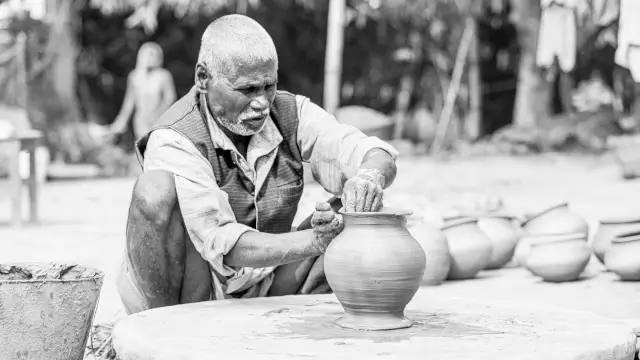
PM Vishwakarma is for a specific person, not a general small-business applicant. The official portal says an artisan or craftsperson must work with hands and tools in one of the 18 family-based traditional trades and operate in the unorganised sector on a self-employed basis.
The minimum age is 18 on the registration date. The applicant must be engaged in the concerned trade and must not have taken a loan under a similar central or state self-employment or business-development scheme, such as PMEGP, PM SVANidhi or Mudra, during the previous 5 years. Registration and benefits are restricted to one member of a family. A government employee and the employee’s family members are not eligible under the scheme.
That list is narrower than “anyone who wants a toolkit.” A tailor, carpenter or potter may fit the trade requirement. A general retailer, salaried office worker or new entrepreneur with no qualifying traditional trade should not assume eligibility.
The 18 eligible trade families
The official portal lists carpenter, boat maker, armourer, blacksmith, hammer and toolkit maker, locksmith, sculptor or stone breaker, goldsmith, potter, cobbler or shoesmith, mason, basket or mat or broom maker, coir weaver, traditional doll and toy maker, barber, garland maker, washerman, tailor and fishing-net maker. Some entries cover related craft descriptions, so applicants should read the exact trade label on the official registration screen.
Use the official PM Vishwakarma portal for the current trade list and guidelines. Do not treat a blog’s shortened trade list as the final eligibility document. For a separate government-grant workflow, see our ADIGRAMS portal guide.
PM Vishwakarma Benefits: Grant, Training and Credit Are Different
The old article’s “up to ₹3 lakh” line needed a correction. PM Vishwakarma does not describe ₹3 lakh as a free cash grant. The official portal describes recognition, training, a toolkit incentive, digital-transaction support, marketing help and collateral-free enterprise-development loans in two possible tranches.
| Benefit | Official PM Vishwakarma position | What it means |
|---|---|---|
| Recognition | Certificate and ID Card as a Vishwakarma | Formal recognition after the scheme’s verification route |
| Basic training | 5-7 days or 40 hours after skill verification | Initial skill-upgrade stage with a stipend |
| Advanced training | Optional 15 days or 120 hours | Further training for interested beneficiaries |
| Training stipend | ₹500 per day | Linked to the approved training participation |
| Toolkit incentive | ₹15,000 grant | Support for modern tools, subject to scheme rules |
| First credit tranche | Collateral-free ₹1 lakh loan with 18 months repayment | Credit, not a direct grant |
| Second credit tranche | ₹2 lakh loan with 30 months repayment | Separate stage with its own conditions |
| Digital incentive | Re 1 per transaction for up to 100 transactions monthly | Digital-payment incentive under the scheme |
The portal also lists a 5% beneficiary interest rate, an interest-subvention cap of 8% paid by the Ministry of MSME and credit-guarantee fees borne by the Government of India. These are financing terms, not a reason to borrow without a repayment plan.
Marketing support can include quality certification, branding, promotion, e-commerce linkage, trade fairs and publicity through the National Committee for Marketing. The benefit is meant to improve the artisan’s route to customers. It does not guarantee a sale, a government order or a fixed income.
How to Apply for PM Vishwakarma
The official portal shows applicant and beneficiary login routes, along with India Post and CSC paths. The exact local process can involve registration, trade verification, local-body or institution checks and training enrolment. Follow the route shown by the official portal or an authorised CSC. A private “consultant” is not required simply because the form looks technical.
Keep the trade evidence consistent
The applicant should describe the trade actually performed. A person who registers as a mason but cannot establish the concerned work may face a verification problem. Do not choose a more valuable-looking trade just to chase the toolkit incentive or loan.
Read the credit condition before accepting a loan
The first and second tranches are loans. Check the repayment period, interest treatment, lender instructions and any further eligibility condition before accepting credit. A “collateral-free” loan still has to be repaid.
Use the training route, not a random download
Training is part of the official design. The portal lists basic and advanced training durations and a stipend. Ask the authorised centre how attendance, assessment and payment are recorded. Do not pay a website that sells a fake certificate or promises automatic approval.
For a separate education-support route, our PM Vidyalaxmi guide explains why a government-backed loan or support programme must be read as a financing process, not free money. The same discipline applies here.
What the Earlier Guide Got Wrong
The earlier version had useful topic selection but it compressed two complicated schemes into a few generic paragraphs. That made the page easy to scan and hard to trust. Several claims were either stale, too broad or not tied to a current official source.
| Old claim or shortcut | Updated treatment |
|---|---|
| West Bengal had already implemented both schemes in the same way | PM-JAY’s June 8, 2026 MoU and the separate national PM Vishwakarma process are explained independently |
| Over 50 lakh Ayushman cards in West Bengal | Removed because no dated official source was verified for that exact current count |
| SECC categories were presented as a complete current list | Replaced with beneficiary-status checking and current portal verification |
| PM-JAY package count and fixed pre- or post-hospitalisation claims | Removed because the source trail did not verify a current West Bengal-specific package statement |
| PM Vishwakarma offered a free ₹3 lakh benefit | Corrected to the official ₹1 lakh and ₹2 lakh loan tranches plus the ₹15,000 toolkit incentive |
| Generic portals and broad application advice | Replaced with NHA beneficiary portal and PM Vishwakarma official portal routes |
That is why a full rewrite was safer than a small patch. The page needed a new distinction between health coverage and artisan credit, not just updated numbers.
Scam Checks Before You Share Aadhaar or Pay a Fee
Government schemes attract copycat forms because the names are familiar and the benefits sound large. The safe response is not to avoid every online process. It is to verify who operates the page and what action the official portal actually asks you to take.
For PM-JAY
Use the NHA beneficiary portal and its displayed support route. A hospital or CSC may help with an authorised process, but no person needs your bank PIN or one-time password to prove that you are eligible. Check the empanelled hospital through the official route before paying a broker.
For PM Vishwakarma
Use the official portal, an authorised CSC, India Post route or the local channel identified by the scheme. A message that promises a ₹15,000 toolkit grant without trade verification is incomplete. A message that promises instant ₹3 lakh cash is wrong because the official figure relates to staged credit support and other benefits.
Keep a screenshot of the page, the notice date and the contact name. Do not install a screen-sharing app. If the website uses a misspelled domain or asks for a “release fee,” close it. You can also review our government-benefit scam verification guide before submitting personal information.
What to Do Next
For Ayushman Bharat, check the NHA beneficiary portal first. If a beneficiary record appears, follow the card, e-KYC and hospital instructions shown there. If the record does not appear, use the official support route rather than paying a private operator who promises to add your family.
For PM Vishwakarma, compare your actual work with the official 18-trade list, confirm that you meet the 18-year minimum and family-member rule, and read the credit conditions before accepting a loan. Keep the distinction clear: PM-JAY is health assurance, while PM Vishwakarma is recognition, training, toolkit support, credit and marketing assistance for qualifying artisans.
West Bengal’s PM-JAY entry is a major status change, but it does not remove beneficiary checks. PM Vishwakarma’s benefit list is real, but ₹3 lakh is not free cash. The correct portal and the correct scheme name matter more than a viral headline.
Frequently Asked Questions

SK Jabedul Haque
Building India's most trusted finance education platform — simplifying news, schemes and market trends so anyone can understand and invest confidently.
Read full bio

Never miss an update
Get our clearest explainers on schemes, markets and money — read what matters, without the noise.
Explore more articles