PM SVANidhi Scheme 2026
What You'll Learn
- The 2026 loan tranches, repayment path and changes approved by the Union Cabinet.
- Who can apply, which vending records matter and how the ULB route fits in.
- How to apply, track a survey record and handle common application problems.
- How the interest subsidy, digital cashback and UPI-linked RuPay card work without assuming automatic approval.
PM SVANidhi Scheme 2026 is a Central Sector micro-credit programme for street vendors who need formal working capital. The scheme was launched in June 2020 after the COVID-19 disruption and is jointly implemented by the Ministry of Housing and Urban Affairs and the Department of Financial Services. Its current lending period runs until March 2030 under the restructuring approved in August 2025.
The basic idea is simple. A vendor who may not have collateral or a long formal credit record can seek a small bank loan, repay it on time and become eligible for a larger tranche. The programme also tries to move daily business activity into formal digital payments and connect vendor families with wider welfare support. That does not mean every application is approved automatically. A vendor still needs to meet scheme conditions, complete verification and work with the relevant bank or Urban Local Body.
The official portal currently shows separate counters for eligible applications, sanctioned loans, disbursed loans and repaid loans. Those counters change as applications move through the system. This guide explains the stable rules and tells you where to check the latest status instead of treating an old article or social-media message as final.
PM SVANidhi Scheme 2026: What the Scheme Provides
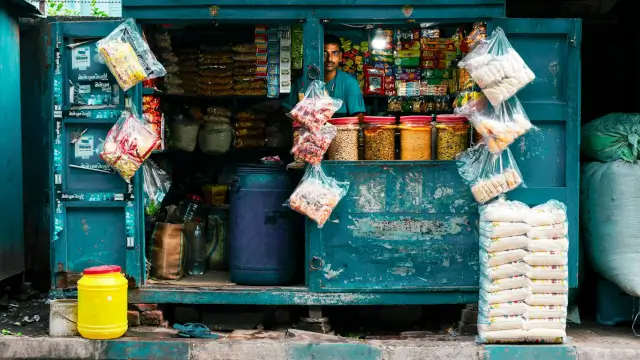
PM SVANidhi supports people who sell goods or provide services from streets, footpaths, pavements, temporary structures or mobile vending locations. Examples named in the latest PIB FAQ include vegetable and fruit sellers, ready-to-eat food vendors, barbers, cobblers and laundry-service providers. The scheme is designed around working capital, so the money is meant to help a vendor buy stock, maintain daily operations or restart a small vending activity.
The programme has three linked parts. First, it provides progressive collateral-free loans. Second, it rewards timely or early repayment through an interest subsidy and access to higher loan tranches. Third, it encourages digital transactions and connects eligible second-tranche borrowers with a UPI-linked RuPay Credit Card facility. These benefits have different conditions, so they should not be described as one automatic package.
MoHUA and the Department of Financial Services share responsibility for delivery. Banks and financial institutions process credit, while States and ULBs help identify vendors, support applications and verify local records. The Government Schemes guide can help readers compare this programme with other public-benefit articles, but the official portal remains the correct place to begin an application.
PM SVANidhi Loan Amounts and Progressive Tranches
The restructured scheme increased the first two loan limits. The first tranche is now up to ₹15,000, the second is up to ₹25,000 and the third is ₹50,000. The word “up to” matters. It describes the scheme limit, not a guaranteed sanction for every applicant.
| Loan stage | Current amount | Earlier amount | How the next stage works |
|---|---|---|---|
| First tranche | Up to ₹15,000 | ₹10,000 | Start with an eligible application and lender verification |
| Second tranche | Up to ₹25,000 | ₹20,000 | Available after the first loan is repaid as required |
| Third tranche | ₹50,000 | ₹50,000 | Progression depends on repayment and scheme conditions |
The August 2025 Cabinet decision kept the third tranche at ₹50,000 while raising the first and second limits. A vendor should therefore compare the amount shown in the current portal or lender process with the scheme limit, rather than relying on a 2020 article that still lists ₹10,000 as the first loan.
Repaying a loan does not by itself remove the need for verification. Banks may review the application, the vendor record and required formalities before sanction. The official PIB FAQ describes higher tranches as an outcome for vendors who repay on time, not as an unconditional promise.
Who Can Apply for PM SVANidhi
The target applicant is a street vendor or hawker who sells goods or provides services to the public from a street, footpath, pavement, temporary structure or mobile location. The latest PIB FAQ says a valid Certificate of Vending or Letter of Recommendation can support an application. The official portal also asks applicants to check their eligibility and survey status through the ULB or municipality process.
Eligibility is tied to the scheme’s local implementation rules. The portal says the programme is available to beneficiaries belonging to States and Union Territories that have notified rules and the scheme under the Street Vendors (Protection of Livelihood and Regulation of Street Vending) Act, 2014. The restructured scheme is also being expanded in a graded manner beyond statutory towns to Census Towns and peri-urban areas.
| Applicant situation | Record or route to check | Practical next step |
|---|---|---|
| Vendor has a Certificate of Vending | Keep the valid CoV details ready | Apply through the portal, mobile app or ULB assistance |
| Vendor has a Letter of Recommendation | Keep the valid LoR details ready | Ask the ULB how the record should be entered |
| Vendor is unsure about survey coverage | Use the official survey-status facility | Save the Survey Reference Number for later checks |
| Vendor has moved to another vending area | Check the portal’s ULB Transfer or Vendor Mobility facility | Update the ULB details before pursuing a new application |
Do not pay an agent simply because someone claims that a private website can guarantee a sanction. The scheme portal is the official starting point. A ULB help desk, bank branch or authorised ground-level functionary can explain a missing local record without asking you to share an OTP with an unknown person.
How to Apply Online or Through a ULB
The official portal presents the application journey in three broad steps. First, check eligibility and understand the loan requirements. Second, apply online after ensuring that the mobile number is linked to Aadhaar. Third, wait for digital approval and status movement after the scheme checks are completed.
Open pmsvanidhi.mohua.gov.in directly. Avoid look-alike domains and links forwarded through social media. The portal also supports application assistance through the mobile app and ULBs. A vendor with a CoV or LoR can use those channels according to the latest PIB FAQ.
Once the application is submitted, the lender and local verification process may still require time. PIB reports an average processing and approval period of about 23 days, subject to verification and completion of formalities. That figure is an official average, not a fixed deadline. If the record does not move, check the displayed status first and then contact the ULB or lender connected to the application.
Keep screenshots or written details of the application reference, but do not share your Aadhaar OTP, bank PIN or UPI PIN with any intermediary. A legitimate application process can require identity verification. It does not require handing over the secret credential used to authorise a payment.
Documents, Aadhaar Link and Survey Status
The exact document screen can vary with the application route and the local vending record. The safest preparation is to keep the identity and contact details used for the portal consistent with the vendor record, confirm that the mobile number is linked to Aadhaar and keep the CoV or LoR information available when applicable.
The portal’s survey-status feature is useful when a vendor is not sure whether the ULB or municipality included the vending activity in its survey. Save the Survey Reference Number after checking. It gives the applicant a specific reference for a later conversation with the ULB instead of relying on a verbal assurance.
| Before applying | What to verify | Why it matters |
|---|---|---|
| Identity and mobile | Mobile number linked to Aadhaar | The portal lists this as an online application requirement |
| Vending record | CoV, LoR or survey information | It helps the ULB and lender connect the application to the vendor |
| Current location | Correct ULB details | The portal provides Vendor Mobility or ULB Transfer support for migration |
| Application reference | Survey or application number saved privately | It makes status follow-up more precise |
Do not invent a document or upload a modified certificate. If a record is missing, ask the ULB what evidence is accepted under its notified process. The official portal’s eligibility and survey pages should be checked again because local implementation can change.
Interest Subsidy and Timely Repayment
Under the latest PIB FAQ, PM SVANidhi provides a 7% per annum interest subsidy for timely or early repayment. The subsidy is an incentive attached to repayment behaviour. It should not be described as a promise that the entire loan becomes interest-free or that every borrower will pay no interest.
Repayment also matters because it is linked to progression. A vendor who repays the first loan as required may become eligible for the second tranche, and timely repayment of the second loan is part of the eligibility path for higher credit facilities. The lender’s repayment schedule remains important. Missing a payment can affect the record even if the applicant later catches up.
Before accepting a loan, read the lender’s sanction terms, repayment dates, charges and the way the subsidy will be processed. Keep receipts or digital confirmations. If the subsidy is not reflected, first ask the lender for the account-level explanation, then approach the relevant ULB or scheme support channel with the application and loan reference.
Digital Payment Cashback: Retail and Wholesale Rules
The restructured scheme uses cashback to encourage regular digital payments. Official PIB material states that the total incentive can be up to ₹1,600. The amount is split between regular sales and qualifying wholesale purchases, so the headline figure is a maximum under the published conditions, not a flat payment to every vendor.
| Transaction category | Maximum incentive | Published limit | What to remember |
|---|---|---|---|
| Regular retail sales | Up to ₹1,200 | Maximum ₹100 per month | Use the digital-payment route connected to the scheme |
| Wholesale purchases | Up to ₹400 | ₹20 per transaction for purchases of ₹2,000 or more, maximum ₹100 per quarter | Keep the transaction trail and check qualifying conditions |
| Total possible cashback | Up to ₹1,600 | Depends on eligible activity and scheme processing | Do not treat it as guaranteed cash on application |
Digital cashback is different from the 7% interest subsidy. One relates to qualifying digital transactions. The other relates to timely or early loan repayment. A vendor can ask the bank or scheme support channel which transaction types are being counted, especially when a payment appears in the UPI history but not in the scheme record.
UPI-linked RuPay Credit Card Facility
The current PIB FAQ says eligible vendors can receive UPI-linked RuPay Credit Cards with limits up to ₹30,000. The Cabinet release describes the facility as intended for beneficiaries who have repaid the second loan. The official portal also says the credit-card facility is available for second-tranche repaid street vendors.
This is a separate credit facility, not the same thing as the working-capital loan tranches. The published limit is up to ₹30,000. It is not an automatic grant. A vendor should also avoid calling it interest-free unless the issuing financial institution’s written terms say so. Credit-card charges, repayment dates and approved limits belong to the issuer’s terms.
Use the portal or the bank channel linked to the scheme to check whether the facility is available for your record. Do not assume that repaying the second tranche guarantees immediate issuance. Eligibility, lender processing and formal approval still apply.
Benefits Beyond the Loan
PM SVANidhi is broader than a small-credit product. The scheme includes financial literacy, digital literacy, entrepreneurship, marketing and food-safety support. PIB reports that around 6 lakh street-food vendors have received food-safety and hygiene training through collaboration with FSSAI.
The SVANidhi se Samriddhi component profiles beneficiary families and links them with eight selected Central Government welfare schemes. The latest PIB FAQ says more than 50 lakh families have been profiled and over 1.52 crore welfare benefits sanctioned under that initiative. These numbers describe programme-level progress. They do not mean that every vendor automatically qualifies for all eight schemes.
Vendors can read related public-benefit explainers such as PM Suraksha Bima and PM Jeevan Jyoti Bima, PM Poshan Scheme 2026 and SVAMITVA Scheme 2026. Each benefit has its own eligibility and enrollment rules. Verify them separately through the relevant official department.
What Changed in 2026 and Where Coverage Expanded
The 2026 position reflects the restructuring approved by the Union Cabinet on August 27, 2025 and the later implementation updates published by the Government of India. The lending period now runs to March 2030. The first tranche rose from ₹10,000 to up to ₹15,000, the second rose from ₹20,000 to up to ₹25,000 and the third remained at ₹50,000.
The updated programme also includes UPI-linked RuPay Credit Cards for eligible second-tranche repaid vendors, cashback for retail and wholesale digital transactions, capacity building and stronger welfare linkages. The portal says Census Town vendors are now eligible to avail loans and other benefits, while the Cabinet release describes the wider coverage beyond statutory towns and into peri-urban areas as a graded expansion.
The portal’s March 30, 2026 update also highlights Vendor Mobility or ULB Transfer. That matters for a vendor who moved to another vending location and now needs the local record corrected. It is a practical change that can prevent an old ULB entry from blocking a current status check.
Common Problems and Safe Ways to Check Them
Most delays need a status check before a new application. A vendor may be missing from the survey, may have a mobile mismatch, may have moved ULBs, or may be waiting for lender verification. Sending multiple applications through unrelated agents can create confusion. Use the official portal reference, the ULB record and the lender’s response as the three points of comparison.
Common problems have different first checks. If a vendor is not found in the survey, use the official survey-status page and then ask the ULB how the vending record can be reviewed. If an application is not moving, compare the portal status with the lender’s verification request. A vendor who moved location should check the Vendor Mobility or ULB Transfer facility before starting another application. If cashback or subsidy is missing, ask the lender or scheme support channel to review the qualifying transaction or repayment record. If an agent asks for an OTP, UPI PIN or bank PIN, stop and use the official portal, ULB or bank directly.
Never upload identity documents to a website that is not the official portal or an authorised lender channel. A result shown in a search engine is not proof that a domain belongs to the Government of India. Type the official address yourself and check the browser address before entering personal information.
PM SVANidhi Application Checklist: What to Do Next
Start with the official portal and check whether your State or Union Territory has the notified scheme rules. Confirm your vending survey status and save the reference number. If you have a Certificate of Vending or Letter of Recommendation, keep the details ready. Make sure the mobile number linked to Aadhaar is available for the online route.
After submission, watch the application status and respond to any lender or ULB request. If you are seeking a second or third tranche, check the repayment record of the earlier loan. If you are checking the credit-card facility, remember that the current official limit is up to ₹30,000 for eligible vendors and is not an automatic grant.
The most useful habit is to compare every important claim with the official source date. The Government may revise counters, instructions or implementation details. The PM Fasal Bima Yojana guide and PM Matsya Sampada Yojana guide show why scheme names alone are not enough. Read the eligibility and application conditions for the specific programme you need.
PM SVANidhi can make formal working capital easier to reach, but the applicant remains responsible for checking the record, understanding the lender terms and protecting personal credentials. Verify the current status before applying or paying anyone for assistance.
Frequently Asked Questions

SK Jabedul Haque
Building India's most trusted finance education platform — simplifying news, schemes and market trends so anyone can understand and invest confidently.
Read full bio

Never miss an update
Get our clearest explainers on schemes, markets and money — read what matters, without the noise.
Explore more articles