PM Matsya Sampada Yojana 2026
What You'll Learn
- What PMMSY covers and why assistance differs by activity.
- How the official 2026 releases describe allocations, approved activities, KCC, NFDP, and PM-MKSSY.
- Why the 40 percent and 60 percent figures must be tied to the relevant project or beneficiary category.
- How to prepare a safe application through the State Fisheries Department or District Fisheries Officer.
What is PM Matsya Sampada Yojana 2026?
Pradhan Mantri Matsya Sampada Yojana, commonly called PMMSY, is a central fisheries development scheme launched in 2020. The Department of Fisheries uses it to support production and productivity, fisheries infrastructure, post-harvest handling, value addition, technology, and the welfare of fishers and fish farmers.
The official PIB fisheries backgrounder dated 06 April 2026 describes PMMSY as a central pillar of fisheries development. It places the scheme within a wider policy framework that also includes the Kisan Credit Card for fisheries, the Pradhan Mantri Matsya Kisan Samridhi Sah-Yojana, the National Fisheries Digital Platform, and the Fisheries and Aquaculture Infrastructure Development Fund.
PMMSY is not one single cash payment. It is a collection of activities implemented through central and state institutions. A person seeking a pond, cage, transport unit, cold storage, fish market, processing unit, or other support must identify the correct activity and follow the applicable state process.
Applicants should also separate a grant or capital assistance from a loan. PMMSY assistance can reduce the eligible project burden under the relevant rules, while a Kisan Credit Card is a credit facility assessed by a bank. Neither should be described as a guaranteed payment before approval.
What kinds of fisheries activities can PMMSY support?
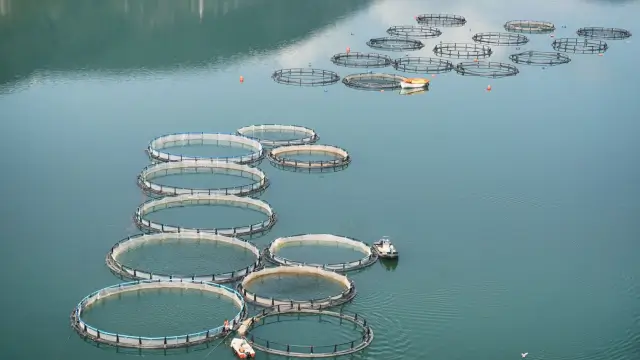
PMMSY uses a value-chain approach. It can cover production, aquaculture, handling, transport, cold-chain assets, retail points, processing, fishing infrastructure, and technology-led systems. The activity list is not a promise that every applicant can choose every item. State plans and approved project components determine what can be proposed in a particular cycle.
Examples named in the official 2026 PIB backgrounder include inland aquaculture pond area, reservoir cages, fish transportation and handling units, value-added enterprise units, fish retail markets, kiosks, fishing harbours, landing centres, feed mills, cold storages, and other value-addition facilities.
The scheme also supports water-efficient systems such as Recirculatory Aquaculture Systems and Bio-floc technology. These are production systems with different design, water, power, management, and technical requirements. An applicant should not select a technology only because a website lists it. The project should match the site, species, operating plan, and local fisheries instructions.
For a useful distinction between public payment routes and account-linked processing, readers can review the DBT link process guide. A bank-linked payment issue is not the same as an application approval issue.
Official PMMSY 2026 allocation and approved activity figures
The PIB backgrounder published on 06 April 2026 reports that the Union Budget 2026-27 proposed annual budgetary support of ₹2,761.80 crore for the fisheries sector. It states that PMMSY continues as a central pillar with an allocation of ₹2,500 crore in 2026-27. These are government-level budget figures. They are not individual subsidy entitlements.
The same release reports approved PMMSY activities as of 05 March 2026. The figures show the number or area of approved activities at that reporting date. They should not be presented as the number of applications accepted after that date or as a promise that a new proposal will receive approval.
| Official measure | Figure | Reference and meaning |
|---|---|---|
| Fisheries sector budget support | ₹2,761.80 crore | Union Budget 2026-27 proposed annual support |
| PMMSY allocation | ₹2,500 crore | PMMSY allocation reported for 2026-27 |
| Inland aquaculture pond area | 23,285 hectares | PMMSY activity approved as of 05 March 2026 |
| Reservoir cages | 52,058 | PMMSY activity approved as of 05 March 2026 |
| Fish transport and handling units | 27,189 | PMMSY activity approved as of 05 March 2026 |
| Value-added enterprise units | 634 | Includes ice plants and cold storages in the PIB description |
| Fish retail markets and kiosks | 6,896 | PMMSY activity approved as of 05 March 2026 |
How do the 40 percent and 60 percent assistance figures work?
PMMSY assistance is activity-specific. The often-repeated 40 percent and 60 percent figures should not be copied into every project description without the relevant component and official source. The official PIB release on allocation of funds for Tamil Nadu under PMMSY gives one clear example. For its deep-sea fishing sub-component, assistance is stated at 40 percent for General Category and 60 percent for SC, ST, and Women beneficiaries.
This example can explain why the original article’s phrase “up to 60 percent” needs a qualification. A higher assistance rate may apply to a defined beneficiary category or activity. It does not mean that a general applicant receives 60 percent for a pond, cold store, transport unit, or any other project automatically.
Assistance can also be released in phases. The Tamil Nadu PIB release says central assistance is released from time to time based on implementation progress, submission of Utilisation Certificates, and compliance with scheme guidelines. An approved project outlay is therefore different from money already credited to a beneficiary.
| Question | Evidence-based answer | What an applicant should confirm |
|---|---|---|
| Is 60 percent universal? | No. The rate depends on the component and category | Read the activity guideline and state notice |
| Where is a 40 percent and 60 percent example reported? | The PIB Tamil Nadu release gives it for a deep-sea fishing sub-component | Check whether the proposed project falls within that sub-component |
| Does approval equal immediate payment? | No. Releases can depend on progress, Utilisation Certificates, and compliance | Ask the implementing office for the release conditions |
| Is beneficiary contribution always the same? | Not established as one national rule in the sources used here | Use the project-specific sanctioned cost and order |
What is the KCC facility for fisheries?
The Kisan Credit Card has been expanded to cover fisheries. The official April 2026 PIB backgrounder states that the lending limit was raised from ₹2 lakh to ₹5 lakh and that KCC benefits had reached 4.39 lakh fishers. This is a credit limit statement and a programme-level beneficiary figure. It is not a promise that every applicant will receive ₹5 lakh.
A KCC is different from a PMMSY capital assistance component. A bank examines the applicant, activity, documents, repayment capacity, and applicable lending rules. The final sanctioned amount, interest terms, security requirements, and repayment schedule must be confirmed with the bank or the relevant official credit channel.
Applicants should keep the fisheries activity and the credit purpose clear. Working capital for a fishery operation is not the same as a capital project proposal for a pond, cage, cold store, or processing unit. Combining the two without checking the applicable rules can create an inaccurate application.
Readers comparing different public programmes should not use the Atal Pension Yojana guide as a source for KCC rules. It covers a retirement scheme with a different purpose and eligibility structure.
What are NFDP and PM-MKSSY?
The National Fisheries Digital Platform, or NFDP, was launched in September 2024 under PM-MKSSY. The official April 2026 PIB backgrounder reports over 30.60 lakh stakeholders registered as of 05 March 2026, integration with 12 banks, and 217 loans facilitated. These are dated programme figures, not a personal registration guarantee.
PM-MKSSY is the Pradhan Mantri Matsya Kisan Samridhi Sah-Yojana. The PIB backgrounder describes it as a Central Sector sub-scheme implemented under PMMSY. It reports an estimated financial outlay of ₹6,000 crore and operational coverage across all States and Union Territories from 2023-24 to 2026-27.
The official NFDP route linked from the PIB release is nfdp.dof.gov.in. A registration page should be checked for its current fields and notice before personal information is entered. No applicant should assume that NFDP registration by itself sanctions a loan, grant, insurance benefit, or PMMSY project.
| Digital or financial item | Official figure or date | Correct interpretation |
|---|---|---|
| NFDP launch | September 2024 | Platform launched under PM-MKSSY |
| NFDP stakeholders | Over 30.60 lakh | Registered as of 05 March 2026 |
| Bank integration | 12 banks | Reported integration in the PIB backgrounder |
| Loans facilitated | 217 | Reported platform activity as of 05 March 2026 |
| PM-MKSSY outlay | ₹6,000 crore | Estimated outlay across 2023-24 to 2026-27 |
Which infrastructure and technology activities are reported?
The April 2026 PIB backgrounder reports 12,081 approved Recirculatory Aquaculture System units with an investment of ₹902.97 crore and 4,205 approved Bio-floc units with an investment of ₹523.30 crore, both as of 05 March 2026. These figures describe approved activities and reported investment. They do not state a standard cost or assistance amount for a new applicant.
PMMSY infrastructure references include fishing harbours, landing centres, feed mills, cold storages, markets, and facilities that add value after harvest. The activity can involve different implementing authorities and project scales. An applicant should identify whether the proposal is individual, group-based, cooperative, or infrastructure-led before choosing a form.
The official PIB source also links modern aquaculture systems with resource use and value-chain development. That does not remove the need for technical design, local permissions, water assessment, power planning, environmental safeguards, and operating funds. A technology label alone is not a complete project report.
For public-service application comparisons, the India e-Passport guide illustrates why applicants should use the official department route for the particular service instead of treating every government website as interchangeable.
Who can seek PMMSY assistance?
Potential participants can include traditional fishers, fish farmers, aquaculture workers, fishery cooperatives, producer organisations, self-help groups, entrepreneurs, and other stakeholders covered by the applicable activity. The exact applicant class depends on the project component and the state implementation notice.
Women, SC, and ST beneficiaries may receive a higher assistance rate in a component where the official rule provides one. The July 2026 PIB release cited above confirms that treatment for its deep-sea fishing example. It should not be converted into a universal rate for all beneficiaries or all activities.
Eligibility is also not decided by occupation alone. The implementing office may examine residence or operation location, land or water access, lease evidence, the proposed activity, financial contribution, technical feasibility, bank linkage, and compliance with the relevant fisheries plan. A person who appears eligible in a summary article can still need project-level approval.
The Ayushman Bharat PM-JAY guide is a different public-benefit programme and should not be used to infer PMMSY eligibility. Each scheme has its own application authority and evidence requirements.
How to prepare a PMMSY application
Start with the State Fisheries Department, District Fisheries Officer, or the current official fisheries office named in the state notice. Ask which PMMSY component is open, whether the proposal is individual or group-based, whether a bank-linked structure applies, and which form or portal is accepted for the current cycle.
Prepare a project description that identifies the activity, location, water or land access, species or production plan where relevant, equipment, operating method, expected cost, own contribution if required, and source of finance. Do not copy a generic Detailed Project Report from an unrelated activity.
Keep the documents requested by the implementing office ready. Depending on the component, the office may ask for identity information, bank details, land ownership or registered lease evidence, category or organisation documents, photographs, quotations, technical details, and permissions. This is a preparation list, not a universal mandatory checklist.
| Preparation stage | What to record | Why it matters |
|---|---|---|
| Choose the component | Activity name and applicant category | Assistance and form depend on the project |
| Confirm the site | Land or water access and location evidence | Feasibility and local verification may depend on the site |
| Build the project cost | Equipment, construction, operating inputs, and finance sources | Approval is based on the applicable project norms |
| Check the documents | Identity, bank, lease or ownership, category, and technical records requested | Missing or mismatched records can delay scrutiny |
| Get an acknowledgement | Application number, receipt, or office reference | It supports later status enquiries |
What happens after submission?
The implementing office reviews the application against the relevant activity and state plan. A bank may separately assess a loan component. Technical or district-level scrutiny can request clarification, a revised estimate, proof of site access, or another document. Applicants should respond through the official office that issued the request.
If an activity is approved, the release can depend on milestones, inspection, utilisation records, and the scheme guidelines. The Tamil Nadu PIB release explains that central assistance is released in phases based on implementation progress, Utilisation Certificates, and compliance. This is why a sanctioned outlay should not be reported as money already paid.
Keep the submitted proposal, receipts, quotations, approval letter, inspection record, bank communication, and payment entries together. If a payment is delayed, ask whether the issue is at the institution, state department, bank, or central release stage. Avoid sending documents to an intermediary who promises approval for a fee.
For account and direct-transfer questions in other schemes, the Annapurna Bhandar guide may provide context, but its process should not be substituted for the Fisheries Department’s instructions.
Common PMMSY mistakes and safe verification
The first mistake is treating “up to 60 percent” as a fixed entitlement. The rate must be tied to the project activity and beneficiary class. Use the official order or state notice that applies to the proposal.
The second mistake is treating KCC as a subsidy. KCC is bank credit. The official ₹5 lakh limit is a lending-limit statement, not a sanction for each fish farmer. Ask the bank for the current product terms and keep loan documents separate from the PMMSY project file.
The third mistake is using a dated aggregate as if it were a live personal status. The PIB figures for 05 March 2026 describe approved units, NFDP registrations, loans, and reported sector activity at that date. They do not establish an individual’s approval, payment date, or current waiting list position.
The fourth mistake is using a copied portal link. Begin with the Department of Fisheries, the official PIB release, the current NFDP link, or the State Fisheries Department. Verify the domain before entering Aadhaar, bank, land, or lease information.
Conclusion: PMMSY support depends on the approved activity
PM Matsya Sampada Yojana 2026 is a programme framework rather than one universal subsidy. The official April 2026 PIB backgrounder reports a ₹2,500 crore PMMSY allocation for 2026-27, dated approved activities across aquaculture and fisheries infrastructure, KCC expansion to a ₹5 lakh lending limit, PM-MKSSY outlay of ₹6,000 crore, and NFDP activity through 05 March 2026.
The official July 2026 Tamil Nadu release gives a 40 percent General Category and 60 percent SC, ST, and Women assistance example for a deep-sea fishing sub-component. That evidence supports careful use of the 60 percent figure. It does not support a promise that every pond, cold store, cage, transport unit, or fishery project receives the same rate.
Applicants should identify the correct activity, contact the State Fisheries Department or District Fisheries Officer, prepare a project-specific proposal, and keep approval and payment records. Confirm the current guideline before spending money or sharing personal documents.
Frequently Asked Questions

SK Jabedul Haque
Building India's most trusted finance education platform — simplifying news, schemes and market trends so anyone can understand and invest confidently.
Read full bio


Never miss an update
Get our clearest explainers on schemes, markets and money — read what matters, without the noise.
Explore more articles