GPT-5.5 Instant
What You'll Learn
- What OpenAI says GPT-5.5 and GPT-5.5 Instant are designed to improve
- Which benchmark figures and context limits are stated in the official pages
- How ChatGPT, Codex, and API availability differ in the source material
- Why vendor benchmarks and user examples should not be read as universal guarantees
GPT-5.5 Instant is the everyday ChatGPT model update described by OpenAI on May 5, 2026. The separate GPT-5.5 launch page is dated April 23, 2026 and covers the broader model family, including coding, research, data analysis, computer use, safety, evaluations, and API plans. The two pages should be read together but not treated as the same announcement.
The old article combined reported facts with unsupported claims about a finance dashboard, an industry-leading token ratio, a universal 1M-token context window, an exact 30% verbosity reduction, and a cybersecurity initiative. Those claims are not repeated as facts here. The revised article uses official OpenAI pages and keeps benchmark numbers tied to the named evaluation and test conditions.
Read the official GPT-5.5 Instant update, the GPT-5.5 release page, the ChatGPT release notes, and the OpenAI API pricing page before making a current product or cost decision. For related site coverage, see our OpenAI reasoning-model comparison and our ChatGPT memory troubleshooting guide.
What GPT-5.5 Instant Is
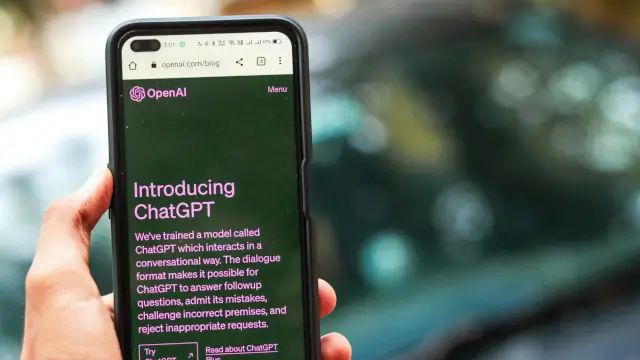
OpenAI's May 5 update describes GPT-5.5 Instant as an update to ChatGPT's default model. The stated aim is a model that is smarter and more accurate while giving clearer and more concise answers that are better tailored to the user. The page presents Instant as the daily model for ordinary interactions, not as a separate finance product.
OpenAI says the update improves everyday tasks, including image and photo analysis, STEM questions, and decisions about when web search can make an answer more useful. It also says the model uses context from past chats, files, and connected Gmail when personalization can help and when the relevant user controls are enabled.
The page includes examples showing how the model can respond more briefly and in a more natural tone. Those examples illustrate the intended response style. They do not establish that every response is shorter, that every answer is more accurate, or that a user's connected data will always be used.
GPT-5.5 Instant should therefore be understood as a product update with several stated improvements. It is not evidence that all ChatGPT surfaces, plans, limits, connectors, or model choices changed in exactly the same way. Users should check the current model picker and release notes for their account.
What Changed in ChatGPT
The GPT-5.5 Instant page says ChatGPT's default model was updated for everyone. It describes stronger factuality, more concise responses, a more natural conversational tone, better use of shared context, and improved decisions about web search. The page also gives an example of GPT-5.5 Instant producing 52.5% fewer hallucinated claims than GPT-5.3 Instant on high-stakes prompts.
That 52.5% figure is an internal evaluation claim tied to the page's comparison and prompt set. It should not be converted into a personal accuracy guarantee. A model can make a useful answer on one prompt and still make an error on another, especially when the question involves current information, ambiguous instructions, or a high-stakes decision.
| Reported update | Official page wording | Careful interpretation |
|---|---|---|
| Default model | GPT-5.5 Instant is described as ChatGPT's default update | Check the current model and plan limits in the user's account |
| Factuality | OpenAI reports improvements and internal comparisons | Do not treat the figure as an error-free guarantee |
| Personalization | Past chats, files, and connected Gmail may improve relevance | Use depends on settings, access, and the available context |
| Web search | The model is described as better at deciding when search may help | Verify current facts against the cited or opened sources |
The same page says GPT-5.5 Instant has clearer answers with less to sort through. It also says the model asks fewer unnecessary follow-up questions and avoids clutter such as gratuitous emojis. These are product-direction statements, not a formal guarantee about every interaction.
Capabilities for Coding, Research and Computer Use
The broader GPT-5.5 launch page describes a model built for complex work across tools. It names writing and debugging code, online research, data analysis, documents, spreadsheets, software operation, and multi-step tasks. The page says the model can plan, use tools, check its work, navigate ambiguity, and keep going until a task is finished.
OpenAI presents GPT-5.5 as particularly strong in agentic coding, computer use, knowledge work, and early scientific research. The page says the model matches GPT-5.4 per-token latency in real-world serving while delivering higher capability, and that it uses significantly fewer tokens on the same Codex tasks. The source does not support turning that statement into a fixed percentage for all prompts.
For coding, OpenAI reports results on Terminal-Bench 2.0, SWE-Bench Pro, and Expert-SWE. It says GPT-5.5 can handle implementation, refactors, debugging, testing, and validation in Codex. For knowledge work, it describes documents, spreadsheets, presentations, research, and computer interaction.
For scientific work, the page describes multi-stage analysis, bioinformatics, genetics, and mathematical reasoning. These examples show the kinds of tasks OpenAI is targeting. They do not replace independent testing with the user's own files, tools, policies, and error criteria.
Benchmark Evidence in the Official Release
OpenAI's release page reports several evaluation results for GPT-5.5. Terminal-Bench 2.0 is listed at 82.7%, SWE-Bench Pro at 58.6%, GDPval at 84.9%, OSWorld-Verified at 78.7%, Toolathlon at 55.6%, BrowseComp at 84.4%, and CyberGym at 81.8%. The page also reports 73.1% on its internal Expert-SWE evaluation.
The page includes comparisons with GPT-5.4 and, on selected evaluations, Claude Opus 4.7 and Gemini 3.1 Pro. It reports GPT-5.5 at 60.0% on FinanceAgent v1.1, 88.5% on internal investment-banking modeling tasks, and 54.1% on OfficeQA Pro. These are test results from OpenAI's published tables, not a personal finance or investment recommendation.
Benchmark results need their labels. Some are internal. Some use research settings. The page says GPT evaluations were run with reasoning effort set to xhigh and in a research environment, which may differ from production ChatGPT. The page also notes that some evaluations use original prompts while other published results may involve prompt adjustments.
| Evaluation | GPT-5.5 result reported by OpenAI | What the number does not prove |
|---|---|---|
| Terminal-Bench 2.0 | 82.7% | That every coding task will succeed without review |
| SWE-Bench Pro | 58.6% | That the model resolves every repository issue end to end |
| GDPval | 84.9% | That business outputs fit every organization or sector |
| OSWorld-Verified | 78.7% | That computer-use actions are safe without permissions |
The benchmark table is useful for comparing the conditions OpenAI selected. It is not a complete evaluation of reliability, cost, latency, privacy, or deployment fit. A team should reproduce a small test on representative tasks before relying on any model score.
Token Efficiency and Response Style
OpenAI says GPT-5.5 uses significantly fewer tokens than GPT-5.4 for the same Codex tasks and matches GPT-5.4 per-token latency in real-world serving. It also reports that GPT-5.5 Instant improved response style and reduced verbosity in the update examples.
The Instant page gives a specific example comparison in which the model used 30.2% fewer words and 29.2% fewer lines than GPT-5.3 Instant for a casual workplace response. Those figures belong to that page's example. They should not be reported as a universal reduction for every prompt, task type, or deployment.
Token efficiency can affect cost and speed, but the actual result depends on input length, output length, cached context, tool calls, service tier, retries, and the API route. A shorter response can also omit detail that a user needs. Measure both useful output and error correction rather than rewarding brevity alone.
Our ChatGPT Canvas troubleshooting article is a separate product reference. It should not be treated as a benchmark or as evidence about GPT-5.5 performance.
Context Windows and API Model Access
The official GPT-5.5 page distinguishes between product surfaces. In Codex, it says GPT-5.5 is available with a 400K context window. For API developers, it says gpt-5.5 is available in the Responses and Chat Completions APIs with a 1M context window. This is why the old claim that one universal GPT-5.5 Instant context window applies everywhere was too broad.
The API section reports standard pricing of $5 per 1M input tokens and $30 per 1M output tokens for gpt-5.5. It also says Batch and Flex pricing are available at half the standard API rate, Priority processing is available at 2.5 times the standard rate, and gpt-5.5-pro is priced at $30 per 1M input tokens and $180 per 1M output tokens in the API description.
| Surface | Verified source detail | Important qualification |
|---|---|---|
| ChatGPT | GPT-5.5 Instant is described as the default update for everyone | Plan, limits, and model-picker behavior still need account checking |
| Codex | GPT-5.5 is described with a 400K context window | Codex access and usage terms can differ by plan |
| API | gpt-5.5 is described with a 1M context window | Input, output, cache, service-tier, and tool costs affect bills |
| GPT-5.5 Pro API | $30 input and $180 output per 1M tokens are stated | Confirm current pricing and model availability before use |
Context length is not the same as reliable comprehension of every token. Long inputs still need clear instructions, source checks, and an evaluation plan. If a workflow depends on a specific context limit, test the exact API or product surface being used rather than copying a number from a different surface.
Availability in ChatGPT, Codex and the API
The GPT-5.5 release page says GPT-5.5 was rolling out to Plus, Pro, Business, and Enterprise users in ChatGPT and Codex. It names GPT-5.5 Pro for Pro, Business, and Enterprise users in ChatGPT. The same page says Codex access includes Plus, Pro, Business, Enterprise, Edu, and Go plans.
The release page contains two time-stamped API statements. Its April 24 update says GPT-5.5 and GPT-5.5 Pro were then available in the API. The later availability section says API access would arrive soon. Because the page contains this historical sequence, developers should use the current API model list and pricing page for present availability.
The GPT-5.5 Instant page says the ChatGPT default update is available to everyone. That statement is about the Instant ChatGPT update. It does not mean that every user has the same message limits, access to Thinking or Pro variants, API access, Codex access, or connected tools.
OpenAI product names and availability can change quickly. Our memory settings guide can help with a separate account issue, but it is not a source for current GPT-5.5 access.
Pricing and Cost Interpretation
The official GPT-5.5 API section gives per-token rates, but a single token price is not a complete deployment budget. The reported standard rates are $5 per 1M input tokens and $30 per 1M output tokens for gpt-5.5. It also describes lower Batch and Flex rates and a higher Priority or Fast route, subject to the current pricing page.
For Codex, the release page says GPT-5.5 is available in Fast mode, generating tokens 1.5 times faster for 2.5 times the cost. That statement is about the named Codex mode. It should not be rewritten as a general speed or cost multiplier for every ChatGPT response or API request.
A real cost estimate needs expected input and output volume, caching, tool calls, batch eligibility, latency needs, retries, context size, and subscription terms. The old article's claim about direct monthly savings from a fixed token reduction is not supported by the official pages as a universal result. Savings should be measured in the intended workload after error correction and human review are included.
For a broader view of infrastructure spending, read our Big Tech AI spending article. It is contextual coverage and not a quote for GPT-5.5 API usage.
Finance and Professional Work Claims
OpenAI reports GPT-5.5 results on FinanceAgent v1.1 and internal investment-banking modeling tasks. Those results are included because the official evaluation table includes them. They do not turn GPT-5.5 into a financial adviser, certify an investment decision, or guarantee that a spreadsheet or model is correct.
The official release also describes OpenAI internal workflows involving finance, data analysis, reports, and tax-form review. These are examples of how OpenAI used Codex and GPT-5.5 in its own work. They are not an independent audit of accuracy, compliance, privacy, or financial outcomes for another organization.
For professional use, add a source ledger, calculation checks, access controls, review points, and a clear record of assumptions. A model can help draft or analyze material, but a human owner remains responsible for checking the source data and the final decision. Do not use benchmark scores as a substitute for professional review.
The protected subtitle mentions a default AI model, not a finance product. The repaired body therefore removes the old AI Finance Dashboard claim and keeps financial evaluation results in their proper benchmark context.
Cyber Safety and Governance
OpenAI says GPT-5.5 was evaluated across safety and preparedness frameworks and tested with internal and external redteamers. The page describes targeted testing for advanced cybersecurity and biology capabilities and says GPT-5.5's biological and cybersecurity capabilities were treated as High under the Preparedness Framework.
The release describes tighter controls around higher-risk activity, sensitive cyber requests, and repeated misuse. It also describes Trusted Access for Cyber for verified defenders and says authenticated usage and monitoring support broader access for legitimate defensive work. These controls do not make every generated command safe or every deployment compliant.
For an organization, governance means more than turning a model on. Define which users can access it, which tools it can call, which data it may receive, which actions need approval, how outputs are logged, and how access is suspended. Test prompt injection, sensitive data exposure, unsafe code, and incorrect tool actions before production use.
Our AI cybersecurity guide offers general risk context. It does not certify GPT-5.5 or replace OpenAI's current system card and usage policies.
How Developers Should Evaluate GPT-5.5
Begin with a small set of representative tasks. Include ordinary requests, long documents, tool calls, code changes, spreadsheet work, image inputs, current-information questions, and failure cases. Record the input, output, elapsed time, token use, tool actions, corrections, and human-review time.
| Test area | Measure | Review question |
|---|---|---|
| Accuracy | Correct facts, calculations, citations, and completed requirements | Does the answer remain correct after independent checking? |
| Efficiency | Tokens, latency, retries, and human correction time | Is the workflow actually cheaper or faster after review? |
| Tool use | Correct tool selection, parameters, permissions, and stop behavior | Does the agent act only within approved boundaries? |
| Safety | Prompt-injection resistance, data handling, and escalation behavior | Does the workflow pause when the risk or uncertainty is high? |
Compare GPT-5.5 with the model that would otherwise be used, under the same prompt, tools, data, and review rules. Keep vendor benchmark numbers separate from your internal result. If the task is high stakes, add a human approval step and preserve the evidence used to reach the final answer.
The model's output style can be useful for daily work, but concise text is not automatically better. A good evaluation asks whether the answer contains the necessary reasoning, assumptions, citations, and caveats for the task. If a shorter response hides an unresolved error, token savings are not a success.
Final Evidence Limits and Update
The official pages support a narrower conclusion than the old article. GPT-5.5 Instant is described as a ChatGPT default update announced May 5, 2026, with improvements in accuracy, clarity, personalization, image understanding, STEM responses, and web-search decisions. GPT-5.5 is described in the April 23, 2026 release as a model for coding, research, data analysis, computer use, and tool-based workflows.
OpenAI publishes benchmark results, context limits, availability statements, pricing figures, and safety information. The numbers are tied to named evaluations and source conditions. They do not guarantee a result on a user's task, a fixed token reduction, a universal context window, a monthly saving, a finance dashboard, a completed cybersecurity action, or a compliant deployment.
Use current OpenAI documentation for the live model list, account access, API pricing, system card, and usage limits. Run a controlled pilot with the actual data and tools. The strongest evidence for a product decision is not a headline score. It is a repeatable test that records quality, cost, latency, safety, and human review in the workflow that matters.
Frequently Asked Questions

SK Jabedul Haque
Building India's most trusted finance education platform — simplifying news, schemes and market trends so anyone can understand and invest confidently.
Read full bio


Never miss an update
Get our clearest explainers on schemes, markets and money — read what matters, without the noise.
Explore more articles