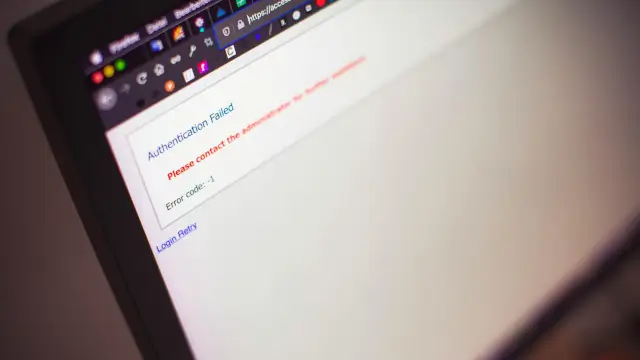
ChatGPT Canvas Mode Crashing on Code Edits
What You'll Learn
- How to distinguish a Canvas interface failure from a code or preview failure
- Which recovery steps protect your latest draft before you retry an edit
- How block size, unsupported preview content, and browser state affect diagnosis
- When to report a reproducible issue instead of repeatedly rewriting the code
What Canvas does when you edit code
OpenAI introduced Canvas as a separate workspace for writing and coding projects that need more than a chat exchange. In the original product description, users can directly edit code, highlight a section for focused feedback, use shortcuts such as Review code, Add logs, Add comments, Fix bugs, and Port to a language, then restore earlier versions with the back button. The current ChatGPT capabilities overview describes Canvas as an interactive workspace for co-writing, editing, or debugging.
That workflow creates several different failure points. The editor can fail to open, the code block can load but become unresponsive, an AI-assisted edit can fail to apply, or the Preview panel can show an error even though the text remains available. These are different symptoms. A useful fix starts by naming the failed stage rather than treating every problem as a broken script.
| Failed stage | What you see | First question |
| Open | Canvas does not appear or keeps loading | Is the conversation and browser session responsive? |
| Edit | Selection or AI change does not apply | Can you make a small manual edit? |
| Preview | Code exists but the rendered view fails | Does the source code remain readable? |
| Run | Python execution reports an error | Is the error from the code or the workspace? |
Why a code edit can look like a Canvas crash
A visible failure does not identify the root cause by itself. Canvas may be handling a large selection, updating a complex document, rendering a supported preview, or waiting for a network response. OpenAI's current help article says available actions vary by block type, device, plan, workspace settings, model, and rollout. That means two users can see different controls for what appears to be the same code block.
There is also a difference between an editor error and a code error. A syntax error should normally appear as code or execution feedback. A frozen selection, missing toolbar, blank preview, or failed save points first to the editing surface or the supported-content path. Keep those categories separate when recording the problem.
Before trying a major rewrite, copy the source into a local file or a versioned repository. If the current block still responds, use its copy action before changing the selection. The same principle applies to related failures in other AI coding tools, such as the OpenAI Codex not-supported guide. Preserve the artifact first, then experiment.
Run a safe first response before changing the code
The safest first response is a short recovery loop. Stop sending new edit requests, copy the visible code, wait briefly for the current action to finish, and record the exact point at which the interface stopped responding. If the back button or undo control is available, use it once rather than repeatedly clicking the same control.
Next, test a harmless action. Place the cursor in a small line, add a comment manually, or select a short function and ask for a narrow review. Do not begin with a full-file rewrite because that changes too many variables at once. If the small action works, the problem may be selection size, document complexity, or a specific transformation request.
Fix 1: Protect the draft and reduce the edit scope
Large edits are harder to diagnose than small edits. Split the file into a minimal reproducible section and keep a copy of the original. Start with one function, component, or code block. Ask Canvas to review or change only that unit, then compare the result with the saved source.
This does not establish a universal line limit. OpenAI's documentation does not publish a general “200-line wall” for Canvas code edits. A specific project can become difficult earlier or later depending on language, markup, embedded assets, selection size, and the requested transformation. Treat any fixed line-count claim as unverified unless OpenAI documents it for the exact feature and rollout.
If the code is a web preview, remove external resources temporarily and test a self-contained example. If it is a Python block, run a small input path first. If it is a multi-file project, move the smallest relevant file into the workspace and describe the dependency that matters.
Fix 2: Reopen the block and use the supported editing path
OpenAI's help documentation distinguishes writing blocks and code blocks. Code blocks can offer actions such as copying, editing, opening a full-screen view, switching between Code and Preview, and running supported Python. Not every action appears in every conversation. Reopen the block or full-screen editor if available, then check whether the missing control is a rollout or availability difference rather than a crash.
Use the code block's own edit action instead of pasting a very large replacement into the chat composer. For an HTML, SVG, React, Mermaid, or Vega-style preview, verify that the content is in a format the interface supports. A missing Preview button is a capability or content-path signal. It is not proof that the source code is corrupt.
When the code block is still readable, copy it and create a fresh block with a smaller request. The official writing and code block guide is the reference for current block actions and preview behavior.
Fix 3: Separate preview rendering from source correctness
Preview is a rendering step. It may involve a browser-like surface, a supported language or markup parser, and resources that are not available in the same way as your local development environment. Test the source without preview when possible. For a web page, copy the code into a local file and open it in a normal browser. For a diagram, confirm that the syntax is valid in the target renderer. For Python, run the smallest supported example and inspect the console output.
| Symptom | Isolation test | Interpretation |
| Blank HTML preview | Open the source locally | Separate markup from preview resources |
| SVG preview error | Open the SVG alone | Check XML structure and unsupported features |
| Python run failure | Use a short deterministic input | Read the exception before changing code |
| React preview failure | Reduce to one component | Check imports and supported preview rules |
Do not “fix” a preview failure by deleting functionality blindly. Preserve the original and remove one external dependency or advanced feature at a time. The goal is to identify the boundary that fails, not to make the demo look simple by destroying the application.
Fix 4: Check browser and network state without losing work
Canvas runs inside the ChatGPT experience, so a stale browser tab, interrupted network request, blocked script, or workspace rollout can affect the surface before the code is evaluated. Open a second tab and test a new small conversation. If the new conversation works, the original thread may be overloaded or holding a failed edit state.
Use a hard refresh only after copying the latest visible code. Sign out or clear site data only when you understand that local session state may be removed. If the issue occurs across browsers and conversations, record the time, device, browser version, workspace type, model, block type, and exact action. Avoid repeatedly clearing data because it can erase useful evidence without fixing a server-side or rollout issue.
Account and rollout differences matter. OpenAI says available actions depend on plan, device, workspace settings, model, and whether a feature is enabled for the account. A colleague seeing a Preview button does not prove that the same control should be present in your session.
Fix 5: Turn a failing AI edit into a controlled request
Canvas can make targeted edits when text or code is selected, while a request without a focused selection may lead to a broader rewrite. Ask for one operation and define the acceptance test. “Rename this function without changing its inputs” is easier to verify than “clean up the whole project.” Include the exact error message and ask the model to explain the proposed change before applying it when the edit is risky.
For debugging, request logs or comments before requesting a rewrite. OpenAI lists Add logs, Add comments, Review code, and Fix bugs as coding shortcuts in its Canvas launch documentation. These shortcuts are assistance modes, not a guarantee that the generated patch is correct. Review the diff, run the smallest test, and keep the original version available.
For a code conversion, specify the target language and the behavior that must remain unchanged. If a translation introduces a new error, revert and reduce the scope. The site's AI prompt engineering guide provides a broader framework for making these requests testable.
Fix 6: Recover from a failed edit with version discipline
When an AI-assisted edit fails, do not continue from a half-applied result if the previous version is available. Use Canvas's back or undo control once, copy the restored code, and create a small test request. If the version control surface is unavailable, use the copy you made before the edit and open a fresh block.
Keep a simple record of the request, selected range, model, result, and error. This record helps distinguish a repeatable failure from a one-time network interruption. It also gives support staff enough detail to reproduce the issue without access to your private project.
If a long conversation contains many failed revisions, move the minimal code and the error into a new conversation. Do not carry every previous instruction forward. A clean context can make the test easier to interpret, but it does not prove that the original Canvas surface was the root cause.
Code block and preview checks by project type
Different code types fail differently. A self-contained HTML block can often be tested locally. An SVG requires valid XML and supported elements. A React preview may require imports and a supported component surface. Mermaid and chart blocks depend on parser support. Python execution has its own sandbox and network restrictions. Match the test to the artifact instead of using one generic “restart ChatGPT” fix.
| Project type | Keep before retry | Smallest useful test |
| HTML or CSS | Source and external asset list | One page with inline styles |
| JavaScript or TypeScript | Runtime assumptions | One function with a fixed input |
| React | Imports and component props | One component without network calls |
| Python | Input data and package needs | One deterministic function call |
For technical comparisons, you can also review the site's reasoning-model guide and AI model comparison. These are context for choosing a workflow, not substitutes for testing the exact Canvas failure.
How to read common Canvas error signals
A ProseMirror or node-related message usually points to document structure or an editing operation that the current block cannot apply cleanly. It does not automatically mean that every line of code is invalid. Preserve the source, reduce the selection, and retry the smallest edit. A WebGL or rendering message suggests a preview or browser surface issue, so test the source in a local environment.
| Error signal | Likely layer to test | Safe next step |
| ProseMirror or node message | Document structure or edit operation | Reduce the selected range |
| WebGL or blank render | Preview or browser surface | Test the source locally |
| Python traceback | Code or execution input | Reproduce a small deterministic case |
A blank panel, spinner, or missing toolbar is an interface symptom. Check whether the rest of the conversation responds, then test a new block. A failed Python run is a code or execution symptom. Read the traceback and reproduce the smallest input. A response that stops halfway can be a network or generation interruption, so save the partial output before retrying.
Do not use the error label as a diagnosis without a reproduction. The same visible symptom can have different causes in different browsers, accounts, block types, and rollout states.
When clearing cache or changing browsers helps
Changing browsers can help identify a local session or extension problem. Use a private window only as a comparison test, not as a permanent workaround. If the block works there, compare extensions, content blockers, cookies, and browser updates one by one. If it fails everywhere, preserve the reproduction details and stop spending time on local cache changes.
Clearing site data is more disruptive than a refresh. Copy the code first, then use it only when the page repeatedly loads stale state or the login session is corrupted. A browser change cannot repair an unsupported code feature or a service-side rollout, so a successful comparison is evidence about the environment rather than proof of the final fix.
How to report a reproducible Canvas failure
A useful report contains the exact conversation or block type, device and browser, workspace or plan context, model selection, selected text range, request wording, visible error, and the smallest code sample that reproduces the issue. Remove credentials, private keys, customer data, and proprietary source before sharing. Add a short sequence such as “open code block, select function, choose Fix bugs, wait, preview turns blank.”
Include what did work. For example, manual edits may succeed while an AI-assisted rewrite fails, or the source may copy correctly while Preview remains blank. That distinction narrows the failing surface. Also record whether the problem persists in a new conversation and another browser.
Use OpenAI's current support route for account or product issues rather than relying on a community workaround. The official help pages state that feature availability can vary by account and rollout, so the report should include that context.
Conclusion: recover first, then debug the code
When ChatGPT Canvas Mode Crashing on Code Edits appears, protect the draft, identify the failed stage, reduce the edit scope, and separate source correctness from preview behavior. Use supported code-block actions, keep one controlled request per test, and preserve the exact reproduction. If the failure survives a clean conversation and browser comparison, report it with the smallest safe example instead of repeatedly rewriting working code.
Frequently Asked Questions

SK Jabedul Haque
Building India's most trusted finance education platform — simplifying news, schemes and market trends so anyone can understand and invest confidently.
Read full bio

Never miss an update
Get our clearest explainers on schemes, markets and money — read what matters, without the noise.
Explore more articles