India's LPG Tankers Navigate Strait of Hormuz Amid US-Iran War — What It Means for You
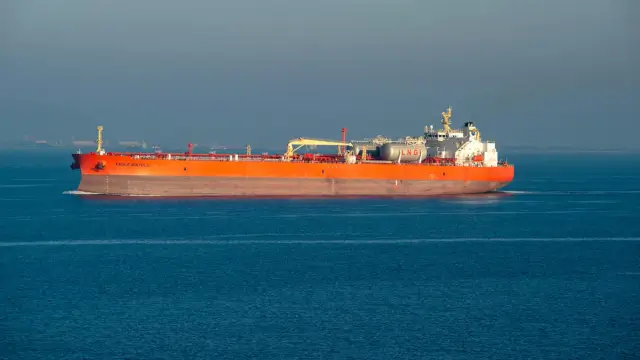
India LPG Tankers Strait of Hormuz 2026 became a major market topic after an inter-ministerial government briefing described the route's importance for India's imported LPG and reported monitoring of Indian-flagged vessels in the Persian Gulf. The briefing also described domestic production and booking measures intended to protect household supply.
The key distinction is between a shipping risk and a confirmed shortage. A vessel delay can raise freight, insurance, waiting time, or replacement-cargo costs. It does not by itself prove that domestic LPG prices will rise by a fixed amount or that every tanker is stranded.
This article uses the official PIB inter-ministerial briefing. It also links to the Ministry of Petroleum and Natural Gas. The briefing was dated March 11, 2026, while the assigned article was published on May 11, 2026. Later events must be checked separately.
What You'll Learn
- Why the Strait of Hormuz matters for India's imported LPG.
- What the Government of India reported about supply and vessel monitoring.
- How shipping disruption can affect availability, freight, and prices without guaranteeing a household outcome.
- Which official checks consumers and businesses should use during a supply alert.
What Happened to India-Flagged LPG Shipping?
The March 11 inter-ministerial briefing said that Indian-flagged vessels were operating in the Persian Gulf region and that their safety and security were being monitored. It listed 28 Indian-flagged vessels in the region, with 24 west of the Strait carrying 677 Indian seafarers and 4 east carrying 101 seafarers.
This official count is a dated operational snapshot. It does not prove that all 28 vessels were LPG tankers, that all were blocked, or that every ship faced the same route or safety condition. Vessel position and cargo status can change during a regional crisis.
The article's earlier claim that nine Indian LPG tankers had crossed the Strait and that 16 ships were stranded has not been retained as a primary-source fact. The available official briefing supports monitoring and preparedness, not that exact later count.
For related market context, read our crude oil explainer. Oil and LPG are different products, although both can be affected by route, freight, and regional risk.
Why Does the Strait of Hormuz Matter to India?
The Strait of Hormuz connects the Persian Gulf with the Gulf of Oman and wider shipping routes. For India, its importance is especially clear in LPG trade. The official March 11 briefing said India imports about 60 percent of its LPG consumption and about 90 percent of those LPG imports come through the Strait of Hormuz.
That dependency creates exposure to delays, insurance changes, port congestion, cargo rerouting, and higher replacement costs. It does not mean that all LPG supply enters through one individual ship or that a disruption automatically becomes a retail shortage. Domestic production, stored stocks, alternative cargoes, and government allocation can change the result.
| Official figure or statement | Meaning | Limit of the evidence |
|---|---|---|
| About 60 percent of LPG consumption is imported | India relies partly on overseas LPG supply | It is an aggregate national figure, not a household forecast |
| About 90 percent of LPG imports come through Hormuz | The route is important for imported LPG | It does not mean all domestic LPG depends on one vessel |
| 28 Indian-flagged vessels were monitored | Authorities were tracking maritime safety | The briefing did not say all 28 carried LPG |
| About 70 percent of crude imports used routes outside Hormuz | Crude procurement had been diversified | Crude diversification does not remove LPG route exposure |
Our US-Iran oil and market explainer covers a separate energy channel. Readers should not treat either article as a live shipping clearance notice.
What Did the Government Report on March 11, 2026?
The inter-ministerial briefing described several steps for energy security. It said domestic LPG production had increased by about 25 percent after refineries and petrochemical complexes were directed to maximise LPG production by diverting certain streams to the LPG pool. It also said the entire domestic LPG production was being directed toward household consumers.
The briefing further stated that non-domestic LPG priority was being given to essential sectors such as hospitals and educational institutions. A three-member committee from IOCL, HPCL, and BPCL was constituted to review allocations to restaurants, hotels, and other commercial users.
These measures show how supply can be managed during a route disruption. They do not prove that a future shortage has been eliminated or that all commercial users will receive normal allocations.
How Does LPG Route Exposure Affect Supply?
A route problem can affect LPG through several stages. A ship may wait for a safety clearance, a cargo may be rerouted, an alternative cargo may cost more, or a port may need to manage a different arrival schedule. Each stage has a different effect on availability and price.
| Stage | Possible pressure | What would confirm it |
|---|---|---|
| Transit | Longer voyage or waiting time | Official vessel or port update |
| Procurement | Higher freight, insurance, or replacement-cargo cost | Company, government, or market disclosure |
| Storage | Greater need to manage available stocks | Inventory or supply statement |
| Distribution | Allocation changes or delivery delays | Oil marketing company or ministry notice |
| Retail | Price or booking change | Current official price and booking instruction |
A risk assessment should therefore ask which stage has changed. A headline about a vessel does not answer the retail-price question without information about cargo replacement, stocks, distribution, and the current price order.
What Happened to Domestic LPG Production?
The March 11 briefing said domestic LPG production had increased by about 25 percent following government measures. It described a direction to refineries and petrochemical complexes to divert propane, butane, propylene, and butenes streams to the LPG pool. The stated priority was to direct domestic production toward household consumers.
Higher domestic output can reduce part of the immediate import exposure, but it does not erase the need for imported LPG. The actual balance depends on production, stocks, demand, refinery operations, import cargoes, and allocation decisions. A percentage increase in production should not be converted into a matching percentage change in household supply.
Our digital marketing guide is unrelated to energy policy, but it illustrates a general editorial rule used here: a measured input should not be presented as a guaranteed outcome.
Why Was the LPG Booking Gap Changed?
The official briefing said the minimum gap between domestic LPG bookings was temporarily increased from 21 days to 25 days as a demand-management measure. This is a policy control on booking frequency, not proof that a consumer's cylinder will be unavailable for 25 days in every case.
Consumers should follow the current instruction shown by the oil marketing company or the official government communication. Businesses should check whether commercial allocation rules apply to them. Do not hoard cylinders or pay an intermediary to obtain a booking slot.
| Issue | What the dated briefing said | Practical reading |
|---|---|---|
| Domestic bookings | Minimum gap temporarily increased from 21 to 25 days | Check the current booking rule before ordering |
| Household supply | Domestic production was directed toward households | Allocation priority is not a guarantee of instant delivery |
| Commercial users | Essential sectors received priority and a committee reviewed allocations | Businesses should confirm their current allocation channel |
| Black marketing | States and Union Territories were advised to act against hoarding | Use authorised distributors and report suspicious requests |
Rules issued during a crisis can change. A current consumer notice takes priority over a dated article summary.
Will LPG Prices Rise in India?
Supply disruption can create upward pressure on freight and replacement costs, but it does not prove a fixed retail-price increase. Domestic LPG prices are affected by the official price order, support measures, international costs, currency movements, taxes, distribution, and the product category.
The March 11 briefing reported a Delhi domestic LPG price of Rs. 913 after a recent Rs. 60 increase and a PMUY beneficiary price of Rs. 613. Those figures were a dated official snapshot and are not used here as a current price. Check the latest official price notice or oil marketing company page before making a household budget decision.
For market context, read our RBI repo rate explainer. Monetary policy and LPG pricing are separate channels, even when both affect household budgets.
What Is the Maritime Safety Position?
The official briefing said a 24-hour control room had been operating in the Ministry of Ports, Shipping and Waterways and the Directorate General of Shipping since February 28, 2026. It also said advisories had directed Indian-flagged vessels and seafarers to follow enhanced security measures and reporting protocols.
The safety of seafarers is separate from the commercial question of how much LPG reaches India and at what cost. A vessel can be monitored without the Government announcing a blanket passage arrangement. Use official shipping and ministry updates for any claim about a particular tanker, route, cargo, or clearance.
Our AI models guide is included as a site-context link only. It does not provide evidence for the shipping facts in this article.
How Can the Crisis Affect India's Economy?
Energy-route risk can affect the economy through import costs, transport expenses, industrial inputs, inflation expectations, currency demand, and consumer spending. The size and timing of the effect depend on how long the disruption lasts, how much cargo is replaced, how prices are administered, and how businesses adjust.
The PIB briefing said India imports crude from around 40 countries and that about 70 percent of crude imports were then coming through routes outside Hormuz. That diversification relates to crude oil, not a complete solution for imported LPG. The two products should not be treated as interchangeable in a supply analysis.
| Economic channel | Possible effect | Evidence needed before a firm conclusion |
|---|---|---|
| Energy imports | Higher cargo or insurance cost | Current procurement or freight data |
| Household demand | Budget pressure if retail prices change | Official price order and household usage data |
| Industry | Higher input or delivery cost | Sector-specific cost and allocation information |
| Currency and trade | Greater import-payment requirement | Current trade, price, and currency data |
| Growth | Potential demand or production drag | Updated official or research forecast with assumptions |
Do not convert a route headline into a precise GDP forecast without a dated model, clear inputs, and a source that explains the calculation.
What Is India's Energy Security Response?
The Government's reported response combined route diversification, domestic production, supply allocation, maritime monitoring, and communication. The briefing said crude procurement involved around 40 countries and that additional crude cargoes were on the way. It also described steps for LPG production, household priority, commercial allocation review, and action against hoarding.
These actions reduce some immediate pressure, but energy security is a continuing process. Import dependence, infrastructure, storage, shipping safety, refinery operations, and consumer demand all matter. No single policy step can answer every future supply scenario.
For a separate government-benefit example, read our DA Hike April 2026 explainer. It is not evidence for LPG prices or shipping conditions.
What Should Consumers and Businesses Do?
Consumers should use the official oil marketing company booking channel, follow the current delivery and booking instruction, and avoid panic booking. Businesses should ask their distributor or relevant oil marketing company for the current commercial allocation rule and maintain records of authorised orders.
Use an official government notice to check any claim about price, booking interval, supply priority, tanker clearance, or compensation. Do not share payment credentials with a person promising a priority cylinder. Report hoarding or black marketing through the official local administration and company route.
For another dated energy-market analysis, read our crude oil article. It should be read with its own reference date and source limits.
Conclusion: What the Hormuz Story Means for India
The Strait of Hormuz matters because the Government reported that about 90 percent of India's imported LPG came through the route, while India imported about 60 percent of its LPG consumption. The March 11 briefing also described 28 Indian-flagged vessels under monitoring, higher domestic LPG production, household priority, and a temporary booking-gap change.
Those facts show exposure and a policy response. They do not prove that every Indian LPG tanker was stranded, that a formal passage exemption applied to every vessel, or that household prices would rise by a fixed amount. Check the latest official ministry, company, and port information before acting on a new alert.
Frequently Asked Questions

SK Jabedul Haque
Building India's most trusted finance education platform — simplifying news, schemes and market trends so anyone can understand and invest confidently.
Read full bio

Never miss an update
Get our clearest explainers on schemes, markets and money — read what matters, without the noise.
Explore more articles