Google Gemini 3.0 vs All AI Models
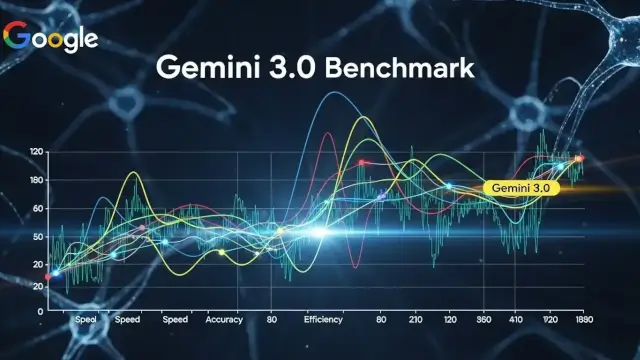
What You'll Learn
- Why the old Gemini 3.0 versus GPT-5.1 comparison is outdated
- What the current official model families say about capability and availability
- How to read vendor-published benchmark and pricing claims
- Which model profile fits coding, agents, long context, speed, or cost
What Does Google Gemini 3.0 vs All AI Models Mean in 2026?
Google Gemini 3.0 vs All AI Models is a search phrase built around a product generation, not a permanent leaderboard. Google now documents Gemini 3.7 Flash, Gemini 3.6 Flash, Gemini 3.5 Flash, Gemini 3.1 Flash-Lite, Gemini 3.1 Pro, and Gemini 3 Flash in different release stages. OpenAI, Anthropic, and xAI also publish families that change the comparison.
A useful comparison asks which model is available, on which API, at what price, with what context and tool support, for which task. A benchmark result can inform that choice, but it cannot replace a small test set from the user's own work.
| Comparison lens | Why it matters | Common mistake |
|---|---|---|
| Model identity | Version and release stage affect behaviour | Mixing an old model with a current family |
| Task fit | Coding, agents, research, and chat need different strengths | Using one overall rank for every workload |
| Price | Input and output tokens can have different rates | Comparing only a headline rate |
| Availability | Stable, preview, and invitation-only access differ | Assuming every model is open to every user |
Which Model Families Are Current?
Google's Gemini API documentation, last updated August 14, 2026, lists stable Gemini 3 Flash variants and preview reasoning or agentic variants. It recommends the Interactions API for the latest features and models. The documentation distinguishes stable, preview, latest, and experimental names, which matters when a production application needs predictable routing.
OpenAI's current developer guide has moved to GPT-5.6. Anthropic's overview lists Claude Fable 5, Claude Opus 5, Claude Sonnet 5, and Claude Haiku 4.5. xAI's July 16, 2026 announcement introduces Grok 4.5 for coding, agentic tasks, and knowledge work.
For a simpler explanation of model selection, see the current AI model guide and treat this post as the dated comparison layer.
What Does the Official Evidence Actually Prove?
Official pages are strong sources for model names, endpoints, availability, published prices, and the scope of a vendor's own claims. They are not neutral head-to-head laboratories. Google describes its Gemini capabilities, OpenAI describes GPT-5.6 migration and reasoning controls, Anthropic publishes a model table, and xAI publishes Grok benchmark charts with competitor figures drawn from developer system cards or leaderboards.
The correct editorial wording is therefore “the developer reports” or “the official table lists.” It is not “this model is objectively best.” The same benchmark can change with harness, prompt, reasoning effort, tool access, and scoring policy.
Where Does Gemini 3 Fit?
Google describes Gemini 3.7 Flash as its latest and most capable Flash model for complex coding, agentic workflows, and reliable multi-step execution. It lists Gemini 3.1 Pro as a preview model for advanced intelligence, complex problem solving, and agentic or vibe coding. Gemini 3.5 Flash-Lite and Gemini 3.1 Flash-Lite target speed or high-throughput cost control.
That mix gives Google a portfolio rather than one answer. A stable Flash endpoint may be a better production choice than a stronger preview model when version stability matters. A Pro preview may be worth testing when complex reasoning matters more than predictable lifecycle support.
| Gemini profile | Official positioning | Good first test |
|---|---|---|
| Gemini 3.7 Flash | Complex coding, agents, and multi-step execution | Tool workflow with clear success checks |
| Gemini 3.0 Pro | Advanced reasoning and agentic coding preview | Hard planning or multimodal reasoning task |
| Gemini 3.5 Flash-Lite | Fast, cost-focused high-throughput execution | Classification or repetitive extraction |
| Gemini 2.5 Pro | Complex reasoning and coding within the 2.5 family | Existing workload that needs 2.5 compatibility |
How Does GPT-5.6 Compare?
OpenAI's latest model guidance says GPT-5.6 is the current quality and efficiency baseline for complex production workflows. The `gpt-5.6` alias routes to `gpt-5.6-sol`, while `gpt-5.6-terra` targets a lower-cost balance and `gpt-5.6-luna` targets efficient high-volume work.
GPT-5.6 supports reasoning effort from none through max and offers a pro mode in the Responses API. This makes the comparison less about a single static score and more about how much reasoning, latency, and output cost a workflow needs. Use the same prompt, tools, and evaluation set when comparing it with Gemini.
For an implementation-focused view, read the Codex versus Claude Code guide and separate model ability from the surrounding agent product.
What Does Claude Offer?
Anthropic's current overview lists Claude Fable 5 for long-running agents, Claude Opus 5 for complex agentic coding and enterprise work, Claude Sonnet 5 for a speed and intelligence balance, and Claude Haiku 4.5 for fast near-frontier work. The table lists 1M-token context windows for Fable 5, Opus 5, and Sonnet 5, and 200k tokens for Haiku 4.5.
Anthropic also publishes API pricing of $10 input and $50 output per million tokens for Fable 5, $5 and $25 for Opus 5, $2 and $10 for Sonnet 5, and $1 and $5 for Haiku 4.5. These are token rates, not a complete application budget. Caching, tools, retries, and human review can change the final cost.
What Does Grok 4.5 Add?
xAI's July 16, 2026 announcement positions Grok 4.5 for coding, agentic tasks, and knowledge work. It reports Grok 4.5 at 83.3% on Terminal Bench 2.1, 64.7% on SWE Bench Pro, and 29.0% on SWE Marathon pass@1. xAI says competitor figures come from respective developer system cards or benchmark leaderboards, so these are vendor-published comparative claims.
xAI also reports 80 tokens per second, an average of 15,954 output tokens per SWE Bench Pro task, and a price of $2 per million input tokens plus $6 per million output tokens. These figures can make Grok attractive for some coding workloads, but a user should verify access, latency, and task success on their own evaluation set.
See the AI coding cost guide for why model price alone does not equal workflow cost.
| Vendor-published Grok figure | Reported value | How to read it |
|---|---|---|
| Terminal Bench 2.1 | 83.3% | xAI-reported benchmark result |
| SWE Bench Pro | 64.7% | Developer-reported coding resolution figure |
| SWE Marathon | 29.0% pass@1 | One benchmark and harness, not all tasks |
| Serving speed | 80 tokens per second | xAI-reported speed claim under its conditions |
Can Benchmark Scores Decide the Winner?
No. Benchmark scores are useful when the task, version, harness, prompt, and scoring method are comparable. They become misleading when one model is tested with a different reasoning effort, tool allowance, context, or evaluator. Vendor charts can still be informative, but they should be labelled and checked against independent or internal tests.
Build a small evaluation set with representative prompts. Measure correctness, citation quality, tool completion, latency, refusal rate, token use, and human editing time. A model that scores lower on a public benchmark can still be the better choice for a specific workflow. See the hallucination-reduction guide for a related evaluation concern.
How Do Prices and Context Windows Change the Choice?
Price has at least two dimensions: input and output tokens. A long-context model may reduce retrieval or summarisation steps, but it can also consume more input tokens. A fast model may need more retries if its first answer is less reliable. Compare the cost of a successful completed task, not just the cost of one request.
| Cost or capacity lens | Question to ask | Why it changes the result |
|---|---|---|
| Input rate | How much source text is sent? | Long documents can dominate cost |
| Output rate | How much reasoning or code is returned? | Verbose agent runs can be expensive |
| Context window | How much can be supplied in one call? | Large context can reduce retrieval steps |
| Latency and retries | How many attempts finish the task? | Lower unit price may not mean lower task cost |
Which Model Fits Which Workload?
For high-throughput classification or short extraction, start with a fast and cost-focused tier. For complex agent plans, compare Gemini 3.7 Flash, Gemini 3.1 Pro, GPT-5.6, Claude Opus 5, and Grok 4.5 with the same tools. For long documents, test context quality and citation retention instead of assuming a large context window solves retrieval.
For coding, use a repository task set with tests and measure the percentage of tasks that finish without human repair. For multimodal work, test the exact image, audio, or video inputs your product receives. For research, score source quality and unsupported claims, not only fluent prose.
What Is the Safest 2026 Comparison Checklist?
Record the exact model ID, release stage, API, reasoning setting, tool access, prompt, context, and date. Run the same tasks across a small set of candidates. Keep vendor claims separate from your own measurements, and record the total cost of successful runs. Re-test when a preview model changes or an alias is rerouted.
Do not copy a benchmark table without its conditions. Do not use a retired model label as if it were current. The old post's GPT-5.1, Claude 4.5, and Grok 4.1 labels are historical comparison points, not the complete August 2026 market.
Conclusion: Is Gemini the Best AI Model?
There is no evidence-based universal winner in Google Gemini 3.0 vs All AI Models. Google offers a wide Gemini 3 portfolio, OpenAI offers GPT-5.6 variants and reasoning controls, Anthropic offers distinct agent and speed tiers, and xAI reports strong coding results for Grok 4.5. Each developer's published evidence has a scope and a marketing context.
The defensible decision is workload-specific. Choose the model that passes your own task set at an acceptable total cost, with a release stage and API you can support. Recheck model documentation before publishing a benchmark or locking a production route.
Frequently Asked Questions

SK Jabedul Haque
Building India's most trusted finance education platform — simplifying news, schemes and market trends so anyone can understand and invest confidently.
Read full bio

Never miss an update
Get our clearest explainers on schemes, markets and money — read what matters, without the noise.
Explore more articles