Annapurna Bhandar Offline Apply: Janakalyan Shibir, BDO Help & Camps
What You'll Learn
- Where offline forms are still accepted after Janakalyan Shibir ended
- Last date 25 August 2026 and what to do if status is rejected
- BDO and Anganwadi door-to-door re-verification for offline applicants
- Documents checklist, acknowledgement receipt and tracking steps
Why Offline Application Still Matters in August 2026
The Annapurna Bhandar offline apply route remains essential for rural women who cannot complete the online form at socialsecurity.wb.gov.in. West Bengal targets roughly 2 crore women under the scheme, and a large share still depends on block offices, gram panchayats and camps rather than smartphones. Digital literacy gaps, weak mobile data in remote blocks and shared family phones mean a portal-only design would leave many eligible women behind.
Physical forms first reached Nabanna and local offices on 27 May 2026. The government kept a 90-day enrolment window from 1 June 2026 through 25 August 2026. Chief Minister Suvendu Adhikari launched the scheme on 3 June 2026 at Nabanna, when about 28.25 lakh women received the first Rs 3,000 DBT credit on day one. That first batch was largely auto-migrated from earlier Lakshmir Bhandar rolls after fresh eligibility filters.
By early July 2026, Chief Secretary Manoj Agarwal reported that the state had received about 1.6 crore applications. Roughly 1.2 crore were approved and about 27.8 lakh were rejected, mostly for Aadhaar and mobile mismatches rather than pure ineligibility. CM Adhikari separately noted about 26 lakh rejections linked to voter-roll SIR checks. Offline help desks, MLA counters and BDO teams remain the practical fix for women who cannot self-correct data online.
The 11-13 page form still confuses many first-time applicants. It asks for Aadhaar, voter ID, bank details, family income and assets for adult members. That is why block counters, Duare Sarkar camps and door-to-door teams matter more than the portal alone. Human assistance reduces blank fields, wrong account numbers and unsigned photocopies that later trigger rejection. For a full scheme overview, see the Annapurna Bhandar Yojana 2026 guide.
As of early August 2026, search interest in Annapurna Bhandar has risen again around payment and last-date queries. Women who delayed after the June camps should treat the remaining days as a hard deadline unless the state announces an extension. No statewide extension past 25 August 2026 has been confirmed in major English news coverage at the time of this update.
Where to Get and Submit Physical Forms Now
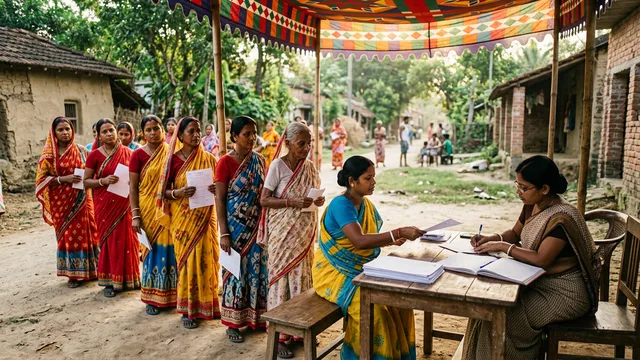
Forms are free in English, Bengali and Hindi. Primary centres are block development offices in rural areas, municipality offices in towns, and gram panchayat offices in villages. Applicants may also print a PDF from the official portal, but offline submission must still happen at a designated government counter. A home printout left with a private cyber cafe is not a valid submission.
Each block and municipality runs dedicated counters during office hours. Weekday visits are safer because staff can check incomplete pages on the spot. Rural women should start at the gram panchayat to avoid long travel to the block headquarters. Confirm the designated centre with the local panchayat or municipality before you go; not every government building issues the form.
The BDO of each block is responsible for stock of forms and for deploying staff at counters. If your form is not yet visible online after offline submission, officials have said large volumes of paper forms are still being digitised. Keep the acknowledgement receipt until the portal shows your reference number. Related step-by-step online help is on the Annapurna Bhandar apply online guide.
Urban applicants in municipal wards should ask for the ward or borough counter name, because some corporations split form collection by ward map. In Kolkata, ward-level teams began door-to-door data work across all 144 wards from 28 May 2026 under borough supervision. Carry extra photocopies; busy counters often refuse to photocopy documents on site.
| Channel | Status in August 2026 | Best for |
|---|---|---|
| Block / Municipality / Panchayat | Open till 25 Aug 2026 | Fresh offline apply and receipts |
| Janakalyan Shibir | Held 15-17 June 2026 (over) | Past camp submissions only |
| Duare Sarkar camps | Ongoing rotating camps | Village-level form help |
| BDO / Anganwadi door-to-door | Active re-verification drive | Rejected or immobile applicants |
| MLA help desks | Constituency camps | Form fill and local escalation |
Janakalyan Shibir: What Happened on 15-17 June 2026
The three-day Janakalyan Shibir (welfare camp) ran statewide from 15 to 17 June 2026 for Annapurna Bhandar form collection. Camps sat at block, panchayat and municipal levels with staff for form fill, document attach and on-the-spot acknowledgement. Special queues were planned for elderly and disabled applicants.
Those camps are now over. Women who could not attend still have until 25 August 2026 to submit through block offices, municipalities, panchayats, Duare Sarkar camps or BDO door-to-door teams. If you already submitted at a Shibir, you do not need to re-apply unless your status is rejected and you must correct data. Re-submitting a second full form without guidance can create duplicate records and slow verification.
District offices used local miking and panchayat boards to publicise camp dates. Status queries for Shibir submissions can still be raised at the same block or BDO office with the acknowledgement slip. For form PDF field-by-field help, use the Annapurna Bhandar form download guide.
Think of Janakalyan Shibir as a completed surge drive, not the only path. The state’s longer offline design always included regular offices and Duare Sarkar. August applicants should not wait for another three-day mega camp announcement before acting.
Duare Sarkar Camps for Ongoing Offline Submission
Duare Sarkar (Government at Doorstep) remains an active offline channel after the special Shibir. Camps rotate at gram panchayat and ward level and accept Annapurna Bhandar forms with self-attested document copies. Staff check completeness and issue acknowledgement receipts on the spot when systems allow.
District camp calendars appear on district websites and panchayat notice boards. Carry all documents in one visit. Camp staff are briefed on the long form and on common rejection causes such as Aadhaar-mobile mismatch. Official Duare Sarkar information is published on the West Bengal Duare Sarkar page.
Because camps move on a roster, missing one date is not fatal if the block office remains open. Still, camp days often have more volunteers for form filling, which helps first-time applicants. Ask whether your camp can also stamp a temporary status note if digitisation queues are long.
MLA Assistance and Local Help Desks
MLAs across West Bengal continue to help women fill the detailed form, especially income, asset and citizenship sections. Many run help desks at local offices and coordinate with BDO and panchayat staff so every village gets support. Constituency camps are useful when block counters are crowded near the deadline.
Elected representatives also escalate stuck applications when counters refuse incomplete forms without guidance. MLA offices often keep logs of forms they assisted, which helps during later verification. Use this channel if you face language barriers or cannot travel repeatedly. Never hand original Aadhaar or bank passbooks to unknown agents who claim MLA authorisation without a written receipt.
Political help does not change eligibility rules. Staff still verify voter status, income tax status and government employment filters. MLA support is best treated as form-filling and escalation help, not a guarantee of approval.
BDO Door-to-Door Teams and Rejected-Status Re-Verification
Block Development Officers deploy gram panchayat staff, gram rojgar sahayaks, nirman sahayaks, BLOs and, in many areas, Anganwadi workers for door-to-door work. Teams help fill forms, collect documents and verify age, residence, income and citizenship. This channel is critical for elderly, disabled and remote households that cannot stand in long queues.
After mass rejections, the same machinery is used for re-verification of Rejected and Under Inquiry cases. The Times of India reported that the administration began door-to-door checks for rejected applicants while preparing an Edit option on the portal so women can fix Aadhaar and mobile errors without a full fresh application. Most of the 27.8 lakh rejections were data mismatches, not automatic ineligibility. Livemint also reported the planned edit path for rejected forms.
Field staff also flag clearly ineligible names and send daily deletion proposals to the BDO. District progress is monitored at senior levels. Teams explain SIR voter-list and CAA-linked cases; applicants with pending tribunal or CAA papers should carry those acknowledgements. Read citizenship rules in the Annapurna Bhandar CAA and SIR rules article.
If a team visits your home, ask them to note the acknowledgement number on any temporary slip and keep a photo of signed papers. If nobody has visited and your status is rejected, go to the BDO office yourself with the receipt before 25 August 2026 rather than waiting indefinitely.
Step-by-Step Offline Application Process
Use this sequence from form collection to first payment. The steps are the same whether you use a block counter, a Duare Sarkar camp or a door-to-door team.
Step 1: Locate a live centre
Choose the nearest open block office, municipality, gram panchayat, Duare Sarkar camp or BDO team visit. Confirm timings with the panchayat the day before travel.
Step 2: Collect the form
Pick the English, Bengali or Hindi form free of cost, or print the official PDF and submit only at a designated counter. Avoid third-party paid form kits.
Step 3: Fill carefully
Enter name, age, address, Aadhaar, voter ID, bank account, family income, assets and ration card details. Ask MLA desk, BDO staff or camp volunteers for help on hard pages. Match spellings with Aadhaar to reduce mismatch rejection.
Step 4: Attach self-attested copies
Carry originals for inspection. Submit only signed photocopies. Unsigned copies are a common reason counters send people home.
Step 5: Submit and take the receipt
Counter staff check completeness, then issue an acknowledgement with a unique reference number. Do not leave without that slip.
Step 6: Track verification
BDO or SDO scrutiny, field checks and District Magistrate sanction follow. Payments move on a rolling basis once approved, not only after day 90.
Step 7: Fix rejection if needed
If status is rejected for Aadhaar or mobile errors, use the announced portal Edit path when live, or request BDO door-to-door re-verification with corrected documents before the enrolment window closes.
Documents Checklist for Offline Counters
Carry self-attested copies. Originals are shown and returned. Prepare a simple folder so counter queues move faster.
Mandatory documents:
- Aadhaar card
- Voter ID card
- Bank passbook or cancelled cheque (Aadhaar-linked DBT account)
- Recent passport-size photograph
- Ration card
- Mobile number linked with Aadhaar
Additional documents when relevant:
- Income certificate if you are not an income taxpayer
- Age proof (birth certificate, school certificate or government ID)
- Residence proof (utility bill or government address proof)
- CAA application acknowledgement if citizenship is pending
- SIR tribunal appeal receipt if challenging voter deletion
- Death certificate of spouse for widow cases
Sign every photocopy so the signature matches the form. The long form also needs Aadhaar and voter details for adult family members. Portal login steps are covered in the Annapurna Bhandar portal login guide.
Before you leave home, confirm that the bank account is seeded for DBT. A correct offline form can still fail payment later if NPCI mapping is wrong. Keep one extra set of photocopies at home in case the counter asks for a second copy after field verification.
Acknowledgement Receipt and Offline Status Tracking
The receipt is your only immediate proof of offline submission. It should show your name, date, centre, unique reference number, document list and official stamp. Door-to-door teams may give a temporary slip later confirmed at the block office.
Store the receipt until final approval. If lost, return to the same centre with ID for a duplicate reference. Use the number at the block or BDO office, and on socialregistry.wb.gov.in or socialsecurity.wb.gov.in once the entry is digitised. Large offline batches can delay portal visibility; local Facebook advisories in July 2026 told applicants not to panic if paper forms took time to appear online, while restating the 25 August last date.
There is still no reliable public way to track status only by phone number on the official portals, according to scheme explainers such as ClearTax. Always quote the reference number. If the portal shows Submitted or Under Process for many weeks, visit the BDO with the receipt rather than filing a second full application blindly.
Verification After Submission: From Counter to DBT
Offline and online applications both face multi-layer checks. Offline forms simply add a digitisation step before the same eligibility engines run.
Stage 1: Counter scrutiny
Staff reject incomplete forms before acceptance and log accepted forms with a reference number.
Stage 2: BDO or SDO check
Officers match age, tax status, government employment, voter list and citizenship databases. Migrated Lakshmir Bhandar names face the new eligibility filters.
Stage 3: Field verification
Teams visit homes to confirm address, family and documents. Rejected and under-inquiry cases get priority in the current drive.
Stage 4: District Magistrate sanction
BDO or SDO recommends names to the DM. In Kolkata, the KMC Commissioner plays this role. Ward teams support urban verification under borough chairpersons.
Stage 5: List publication and payment
Approved lists appear at block, panchayat and booth levels and are updated about every seven days. Community members can object to wrong names. Payments go through PFMS to Aadhaar-linked accounts. The second instalment around 1 July 2026 covered roughly 1.1-1.3 crore women. August credits are expected on a rolling schedule for approved names, with media outlets noting first-week timing for many existing beneficiaries while new offline approvals continue separately.
Authority coverage of the form and offline path includes The Indian Express report on the May 2026 form release, Hindustan Times reporting on mass rejections after SIR checks, and ClearTax’s scheme explainer updated through July 2026. Millennium Post also reported that the Chief Secretary ordered a probe into the large rejected batch, which is one reason edit and re-verification paths matter now.
What to Do If Your Offline Application Is Rejected
Do not ignore a Rejected or Under Inquiry status. Officials say many cases failed only on Aadhaar-mobile linking or wrong numbers. The state is adding an Edit option so you can correct data without rewriting the full form. Until that button is live on your login, visit the BDO office with your receipt, corrected Aadhaar-linked mobile proof and the original documents.
Door-to-door Anganwadi and BDO teams are specifically tasked to reopen genuine rejected cases. If your name was hit by SIR deletion, carry tribunal papers. If you applied under CAA, carry the acknowledgement; benefits can continue until the case is decided, as stated by the CM. Never pay middlemen-forms and resubmission help are free.
Practical checklist for rejected offline applicants:
- Photograph the portal status screen and keep the paper receipt
- Re-link Aadhaar with the active mobile number at an authorised centre if needed
- Match bank account name with Aadhaar spelling
- Ask the BDO whether your case is in the door-to-door re-verification list
- Use Edit on the portal when available instead of creating a duplicate fresh form
If someone demands money to “fast track” approval, report it to the BDO office immediately. The scheme’s offline design is free by policy.
Offline Versus Online: Which Path Should You Choose?
Both paths remain valid through the enrolment window. Choose offline if you need help filling pages, lack stable internet, or already started with a paper form at a camp. Choose online if you can upload clear scans, have Aadhaar-linked mobile OTP access, and can track status yourself on the portal.
Do not run both paths in parallel with different data. Conflicting Aadhaar or bank details across two submissions increase rejection risk. If you submitted offline and later got portal access, use the same identity details and the acknowledgement number when seeking status, rather than inventing a second application.
Women who are comfortable online can still visit a Duare Sarkar camp only for document guidance, then complete submission digitally. Hybrid help is fine; duplicate final submissions are not.
Conclusion
Annapurna Bhandar offline apply is still open, but the calendar is tight. Janakalyan Shibir is finished; block offices, Duare Sarkar camps, MLA desks and BDO door-to-door teams are the live channels until 25 August 2026. With 1.6 crore applications already in the system and nearly 27.8 lakh rejections under review, correct documents and a safe acknowledgement receipt matter more than ever.
Act now if you have not applied, and use Edit or field re-verification if you were rejected for fixable data errors. Online apply remains available for digitally ready users, but offline channels stay the backbone for rural Bengal. Cross-check camp timings only with your local BDO or panchayat before you travel, and ignore anyone who asks for a fee to submit a free government form.
Frequently Asked Questions (FAQ)

SK Jabedul Haque
Building India's most trusted finance education platform — simplifying news, schemes and market trends so anyone can understand and invest confidently.
Read full bio

Never miss an update
Get our clearest explainers on schemes, markets and money — read what matters, without the noise.
Explore more articles