
- How the Annapurna Bhandar scheme provides Rs 3,000 per month to eligible women and who qualifies
- Which buses are covered under the free travel scheme and what documents you need to carry
- What changes when Ayushman Bharat replaces Swasthya Sathi and how it affects your existing health card
- How to apply for all three schemes and the eligibility overlap between them
June 1, 2026: West Bengal's Welfare Revolution Begins
The newly elected BJP government under Chief Minister Suvendu Adhikari has launched the most comprehensive welfare overhaul in West Bengal's recent history. On May 18, 2026, the state cabinet approved a series of transformative decisions effective from June 1, 2026 that touch the lives of millions of Bengali citizens — particularly women, the elderly, and families reliant on public healthcare.
Women and Child Development Minister Agnimitra Paul announced the three flagship schemes after the cabinet meeting. The West Bengal welfare package June 2026 includes the Annapurna Bhandar scheme (Rs 3,000 monthly direct benefit transfer to women), free bus travel for women across all state-run buses, and the long-awaited implementation of Ayushman Bharat Pradhan Mantri Jan Arogya Yojana. The government has spent Rs 48,972 crore so far on women's empowerment benefits under predecessor schemes and is now substantially scaling up both the quantum and reach of welfare delivery.
These changes mark a clear departure from the previous Trinamool Congress government's welfare architecture. The Lakshmir Bhandar scheme (which paid Rs 1,000-1,700 per month depending on category) has been replaced by the more generous Annapurna Bhandar. The state-funded Swasthya Sathi health insurance is transitioning to the centrally sponsored Ayushman Bharat. And for the first time, women across Bengal can travel free on government buses without needing a pre-issued smart card.
Annapurna Bhandar: Rs 3,000 Monthly for Women
The Annapurna Bhandar scheme — the BJP's flagship poll promise from the 2026 Bengal assembly election campaign — formally launched on June 3, 2026 with the first tranche of Rs 3,000 credited directly to over 28 lakh women beneficiaries' bank accounts. Chief Minister Suvendu Adhikari personally oversaw the disbursal, which reached 28.25 lakh women across the state on the very first day of rollout.
The scheme replaces the Lakshmir Bhandar (also known as Lakshmi Bhandar) programme that the TMC government had operated since 2021. Under the old scheme, general category women received Rs 1,000 per month while SC/ST women received Rs 1,500. The Annapurna Bhandar unifies all categories at a flat Rs 3,000 per month — effectively doubling or tripling the earlier benefit depending on the beneficiary category.
Eligibility criteria for the Annapurna Bhandar scheme require applicants to be women aged 25 to 60 years and residents of West Bengal. The government estimates that nearly 1.9 crore women across the state are potentially eligible. However, the verification process under the Suvendu Adhikari government has been significantly tightened. Nearly 30 lakh beneficiaries who were on the old Lakshmir Bhandar list may lose eligibility under the new scheme due to stricter verification protocols, including exclusion of deceased persons, illegal infiltrators, and those flagged in the SIR (Socio-economic Index Register) database.
Transparency has been a key emphasis — the government has asserted that no deceased person or non-Indian citizen would receive benefits. The money is transferred through direct benefit transfer (DBT) using the NPCI BASE system, which links Aadhaar numbers with bank accounts to ensure leak-proof delivery.
Free Bus Travel for Women: Routes, Rules & Documents
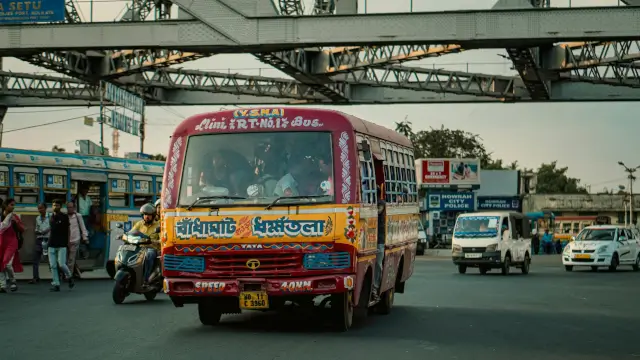
From June 1, 2026, women in West Bengal can travel free of cost on all government-run buses across the state. The free bus travel for women West Bengal scheme covers buses operated by three transport corporations: the West Bengal Transport Corporation (WBTC), the South Bengal State Transport Corporation (SBSTC), and the North Bengal State Transport Corporation (NBSTC). These services span both short-route (intra-city) and long-route (intercity) government buses, making it one of the most extensive free transport initiatives in the country.
The Transport Department issued a formal notification on May 22, 2026 detailing the operational framework. Since the proposed smart card with QR code, photograph, and beneficiary details is not yet ready, the government has implemented an alternative documentation system for the interim period. Women can avail the free travel facility by producing any valid photo identity document at the time of boarding. Read our detailed guide on Annapurna Bhandar district-wise beneficiary lists to check your area coverage.
The list of accepted documents includes: Aadhaar card, Voter ID card (EPIC), driving licence, passport, MGNREGA job card, or any government-issued photo ID. In the first week of launch, the government offered a seven-day grace period during which women could travel without any documentation — a pragmatic step that allowed lakhs of women to immediately start benefiting from the scheme while the paperwork formalities were being completed.
No immediate fleet expansion has been planned alongside the scheme, though women's groups and commuter associations have requested increased bus frequency to manage the anticipated rise in ridership. The scheme is expected to benefit lakhs of women commuters, including students, daily wage workers, and working professionals who rely on public transport for their daily commute.
Ayushman Bharat Replaces Swasthya Sathi: What Changes?
Perhaps the most significant healthcare transition in West Bengal's history, the Ayushman Bharat West Bengal launch marks the state's formal entry into the Centre's flagship health insurance programme after years of political resistance under the previous government. Ayushman Bharat Pradhan Mantri Jan Arogya Yojana (PM-JAY) provides health cover of up to Rs 5 lakh per family per year for secondary and tertiary care hospitalisation. Learn about Ayushman Bharat PM-JAY on Wikipedia for the national programme background.
The state has received a sanction of Rs 976 crore from the Centre for the initial rollout. During the transition period, the existing Swasthya Sathi scheme will continue to operate until beneficiaries are fully converted to Ayushman Bharat. The Union Health Ministry and West Bengal government are scheduled to sign a Memorandum of Understanding on June 8, 2026 to formalise the implementation framework.
A key concern that has emerged during the transition is coverage disparity. The Swasthya Sathi scheme under the previous TMC government covered approximately 24.2 million families — virtually every family in the state. Ayushman Bharat, being a centrally defined entitlement programme, covers families identified through the Socio-Economic and Caste Census (SECC) 2011 database. Initial estimates suggest Ayushman Bharat will cover approximately 12.4 million families (1.36 crore families) in West Bengal — roughly half the coverage of Swasthya Sathi.
Chief Minister Suvendu Adhikari has clarified that those who wish to avail of Ayushman Bharat and those who were not previously associated with Swasthya Sathi will also be covered under the new framework. The government has also announced a Rs 3,000 crore healthcare overhaul package alongside the Ayushman rollout to upgrade hospital infrastructure across the state.
| Feature | Swasthya Sathi | Ayushman Bharat (PM-JAY) |
|---|---|---|
| Coverage per family | Rs 5 lakh (state enhanced) | Rs 5 lakh per year |
| Families covered in WB | ~24.2 million | ~12.4 million (1.36 crore) |
| Funding model | State-funded | Centre-State shared (60:40) |
| Beneficiary identification | Universal (all residents) | SECC 2011 database based |
| Hospital network | State-empanelled | National empanelled network |
| Portability | State only | Portable across India |
| Status from June 1 | Continues during transition | Rolling out from July |
How These Three Schemes Work Together
The West Bengal welfare package June 2026 is designed as a coordinated social safety net. A woman who qualifies for Annapurna Bhandar automatically becomes eligible for free bus travel and can also apply for Ayushman Bharat coverage if her family falls within the SECC-defined beneficiary list. There is no exclusivity between the schemes — they complement rather than replace each other.
The Rs 3,000 monthly cash transfer from Annapurna Bhandar can be used for daily household expenses, nutrition, and health needs. The free bus travel eliminates a significant transportation cost for women, particularly for those who travel long distances for work, education, or healthcare. The Ayushman Bharat card provides a financial safety net against catastrophic health expenditure, covering hospitalisation costs up to Rs 5 lakh per family per year.
Together, these three schemes address three fundamental dimensions of household welfare: cash income, transportation access, and healthcare security. This integrated approach is unique among Indian states and positions West Bengal's welfare architecture as a model for multi-dimensional social protection.
Additionally, the central government schemes like PM-JAY, PM Fasal Bima Yojana, PM SHRI Schools, and PM Vishwakarma are also being implemented in West Bengal alongside these state schemes, creating what Prime Minister Narendra Modi described as a "double-engine government" driving welfare delivery.
Eligibility Overlap: Can You Benefit From All Three?
While the three schemes target overlapping demographics, each has distinct eligibility criteria that beneficiaries must satisfy independently.
For Annapurna Bhandar, the primary condition is being a woman aged 25 to 60 years who is a resident of West Bengal. The previous Lakshmir Bhandar beneficiaries found ineligible under the new verification process (approximately 30 lakh people) will be excluded due to reasons including being deceased, non-resident, or flagged in the SIR exclusion list.
For free bus travel, the requirement is simpler: the passenger must be a woman resident of West Bengal. No income criteria or age limits apply — both young college students and elderly women can travel free. The only requirement is proof of identity, which can be established through any of the 11 accepted documents.
Ayushman Bharat eligibility is based on the SECC 2011 deprivation criteria, covering families classified as deprived in terms of housing, land ownership, and livelihood. For urban areas, the scheme covers 11 defined occupational categories including rag pickers, domestic workers, and sanitation workers. The state government is working to expand the coverage to include as many Swasthya Sathi beneficiaries as possible during the transition.
A typical beneficiary — a woman aged 35 from a low-income family in rural West Bengal — would likely qualify for all three schemes simultaneously, receiving Rs 3,000 per month, free bus travel, and Rs 5 lakh health cover for her family.
Application Process for Each Scheme
Annapurna Bhandar: Women can apply online through the official portal at wb.gov.in or through their nearest block development office. Existing Lakshmir Bhandar beneficiaries were auto-migrated, but new applicants need to fill the application form — initially reported as an 11-page form, this was later clarified as a standard application with necessary declarations and KYC documents. The government has deployed camps at the gram panchayat level to assist with applications. Aadhaar-bank account linkage is mandatory for receiving DBT payments.
Free Bus Travel: No formal application is needed. Women simply board any government bus across WBTC, SBSTC, or NBSTC services and show a valid photo ID. The smart card system will be rolled out later as an additional convenience, not a prerequisite. For the first week, even documentation was waived as a grace period.
Ayushman Bharat: The formal rollout for Ayushman Bharat cards in West Bengal is expected from July 2026. Beneficiaries identified through the SECC database will receive their PM-JAY e-cards automatically. Those not already in the database can apply through common service centres (CSCs) or the nearest Ayushman Mitra kiosk at empanelled hospitals. The MoU signing on June 8 will clarify the exact timeline and application process.
Documents Required: One-Time Preparation for Multiple Benefits
To benefit from all three schemes, women need to prepare a standard set of documents that serve across all programmes:
- Aadhaar card (mandatory for Annapurna Bhandar DBT, accepted for bus travel)
- Voter ID / EPIC card (accepted for bus travel and identity verification)
- Bank account passbook or cancelled cheque (required for Annapurna Bhandar DBT)
- Residence certificate or any proof of West Bengal residency
- Passport-size photographs
- Mobile number linked to Aadhaar
Since the Aadhaar card and bank account linkage are already mandatory for most government schemes, preparing these documents once enables women to access all three schemes without repeated paperwork. The state government has encouraged women to get their Aadhaar-bank linkage verified through the NPCI BASE portal before applying, as B06 and OD flag errors are common reasons for DBT failure.
Timeline: From Cabinet Approval to Ground Implementation
May 11, 2026: Suvendu Adhikari chairs first cabinet meeting, approves in-principle decision to implement central schemes including Ayushman Bharat
May 18, 2026: Cabinet formally approves Annapurna Bhandar (Rs 3,000), free bus for women, 7th Pay Commission; scraps religion-based aid and state OBC list
May 22, 2026: Transport Department notifies free bus travel scheme; smart card planned but alternative documents accepted
May 23, 2026: CM announces Rs 3,000 crore healthcare revamp and Ayushman Bharat rollout from July
June 1, 2026: Free bus travel for women begins; 7-day document grace period starts; cabinet expansion with 35 ministers sworn in
June 3, 2026: Annapurna Bhandar first disbursal — Rs 3,000 credited to 28.25 lakh women across the state
June 8, 2026: MoU signing between Union Health Ministry and West Bengal for Ayushman Bharat implementation
July 2026: Ayushman Bharat card rollout begins across West Bengal
Religion-Based Aid Scrapped: Policy Shift Explained
In a major policy departure from the previous administration, the West Bengal cabinet decided to discontinue all government assistance based on religious categorisation from June 2026. This decision directly affects schemes under the Minority Affairs and Madrasa Education Department as well as the Department of Information and Cultural Affairs.
Under the previous TMC government, imams of registered mosques were receiving Rs 3,000 per month, while muezzins and Hindu purohits (priests) received Rs 2,000 per month. These payments were made through various religious affairs departments and were considered part of the state's minority welfare programme. Additionally, several madrasa-related schemes and minority scholarships were funded directly by the state government.
The new government has clarified that existing scholarship schemes for students — including those for minority communities — will not be discontinued. Only the direct monetary assistance categorised on religious lines has been stopped. The decision aligns with the BJP's stated position of not providing state benefits on the basis of religion and has drawn both support and criticism from different quarters.
The state OBC list has also been scrapped following a Calcutta High Court judgment. An inquiry panel has been constituted to determine fresh quota eligibility based on empirical data rather than political considerations. The OBC reservation has been reduced from 17% to 7%, removing Muslim groups that were added to the OBC list after 2010 and restoring the pre-2010 list of 66 communities.
7th Pay Commission & Other Cabinet Decisions
The West Bengal cabinet has given in-principle approval for the formation of the 7th State Pay Commission for state government employees, staff of allied bodies, and pensioners. This decision, announced on May 18, 2026, signals a future review of salaries, pensions, and allowances for hundreds of thousands of state government employees across departments, schools, colleges, and local bodies.
The 7th Pay Commission is expected to revise the pay matrix, fitment factor, and grade pay structure for West Bengal government employees. While the previous TMC government had implemented the 6th Pay Commission (ROPA 2019) after significant delays, the new government has indicated a faster implementation timeline. The exact financial impact and implementation date will be determined once the commission submits its report.
Other significant cabinet decisions include the establishment of two commissions headed by retired Calcutta High Court judges. Justice Biswajit Basu will head a commission to investigate corruption during the previous TMC government's tenure, while Justice Samapti Chatterjee will head a commission to examine crimes against women during the same period. The cabinet also approved the implementation of PM-JAY, PM Fasal Bima Yojana, PM SHRI Schools, and PM Vishwakarma schemes across West Bengal, marking a significant shift towards adoption of centrally sponsored flagship programmes.
Conclusion
The West Bengal welfare package June 2026 represents the most ambitious social welfare overhaul in the state's recent history. With a combined focus on direct cash transfers through Annapurna Bhandar, mobility empowerment through free bus travel, and healthcare security through Ayushman Bharat, the package addresses the three most pressing needs of Bengali women and families: income support, transportation access, and health coverage.
The early rollout data is encouraging — over 28 lakh women received their first Annapurna Bhandar payment within days of launch, and buses across the state are already seeing increased female ridership as women take advantage of free travel. The Ayushman Bharat transition, while raising valid concerns about coverage reduction from Swasthya Sathi's universal model, brings the benefit of national portability and access to a much larger hospital network.
For beneficiaries, the key takeaway is that these schemes are designed to work together. The same set of basic documents — an Aadhaar card, voter ID, and bank account — can unlock access to all three benefits. As the government continues to roll out the smart card system for buses and the Ayushman Bharat cards from July, the welfare infrastructure will only become more streamlined and accessible.