
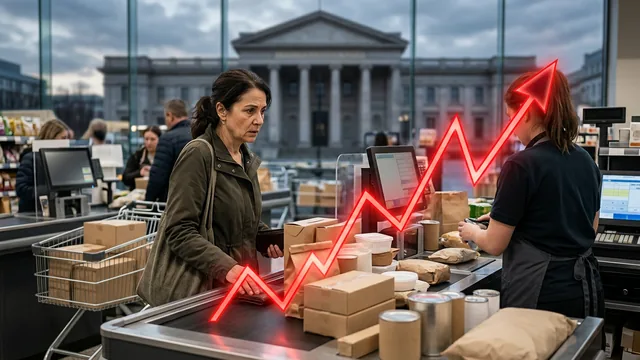
U.S. consumer inflation accelerated to 4.2% in May 2026, marking the highest annual rate since April 2023, according to Bureau of Labor Statistics data released Wednesday. The surge, up from 3.8% in April, was driven primarily by rising energy costs tied to the ongoing Iran conflict, the Wall Street Journal reported. This comes amid broader market uncertainty as outlined in our stock market week ahead analysis.
What Happened
The consumer price index rose 0.5% on a monthly basis, putting the year-over-year rate at 4.2% — the steepest increase in over three years. Energy prices were the primary catalyst, with the Iran war pushing up gasoline and electricity costs across the economy. The Washington Post noted this was the first time inflation crossed above 4% since 2023.
Financial markets reacted sharply on June 10. The Dow Jones Industrial Average sank 953 points, while the Nasdaq Composite fell 2%, according to MarketWatch live coverage. The S&P 500 also declined as investors reassessed the Federal Reserve's rate path.
Core inflation, which strips out volatile food and energy prices, offered a mixed signal. It eased to 0.2% month-over-month and 2.9% year-over-year, suggesting underlying price pressures remain contained for now, CNBC reported.
Why It Matters
The inflation spike arrives days before the Federal Open Market Committee meeting scheduled for June 16-17. Futures markets assign a 98-99% probability that the Fed will hold the federal funds rate at 3.50%-3.75%, according to ABF Journal analysis. The 10-year Treasury yield climbed near 4.53%, close to a one-year high.
A Reuters poll of economists found a strong majority expect the Fed to hold rates for the rest of 2026, with rate hike calls gaining traction. Interest rate futures have gone further, pricing in at least one rate hike by year-end as war-driven inflation proves more persistent than expected.
Globally, central banks are also tightening. The European Central Bank raised rates by 25 basis points to 2.40% in early June, with another hike possible this year. Japan is pricing in a 25-basis-point increase to 1%, KITCO reported. This global tightening cycle adds pressure on emerging markets, as seen in our analysis of Iran war impact on India economy.
The Federal Reserve interest rate forecast for 2026 suggests a prolonged pause, but persistent headline inflation could force a policy shift. For context on how energy prices drive broader inflation, see our coverage of Trump tariffs impact on US economy.
What's Next
All eyes turn to the FOMC decision on June 17. While a rate hold is the consensus, the persistent 4.2% headline inflation — double the Fed's 2% target — keeps the door open for future tightening. Peter Earle of the American Institute for Economic Research noted that energy-driven inflation could keep rates higher for longer, CNBC's expert panel discussed.
The next CPI report in July will be critical. If energy prices stabilize, core inflation's moderation to 2.9% could give the Fed room to maintain its pause. However, any escalation in the Iran conflict could push headline inflation further above 4%, forcing the Fed's hand. For investors watching market valuation metrics, our analysis of Shiller P/E ratio nearing dot-com bubble peak provides relevant context.