Iran War Impact on India Economy 2026: Oil, LPG, Inflation, Jobs Analysis
The Iran war has triggered a severe energy crisis in India, with oil prices crossing $115 and LPG imports collapsing by 45% in 2026. Moody's has slashed India's GDP forecast to 6.0% as the record-low rupee (₹95.22/$) and fertilizer shortages threaten industrial production and agricultural stability across the country.
What You Will Learn
- The primary impact of oil price surges on India's fiscal stability.
- Why the LPG import collapse is a direct threat to 329 million households.
- The "silent" agricultural crisis triggered by fertilizer shortages.
- Macroeconomic data: GDP cuts, rupee lows, and sector-wise job risks.
When US and Israeli forces launched strikes on Iran on February 28, 2026, killing Supreme Leader Khamenei, few anticipated how swiftly the shockwaves would reach every Indian kitchen, farm, and factory floor. Six weeks later, the answer is clear: India's "Goldilocks era" of high growth and low inflation is over - at least for now.
From LPG cylinders running dry in Mumbai restaurants to urea plants operating at 70% capacity in Gujarat, the Iran war has exposed the structural vulnerabilities of Asia's third-largest economy. This is a comprehensive, fact-checked analysis of every major impact channel.
Why India Is So Exposed: The Energy Dependency Problem
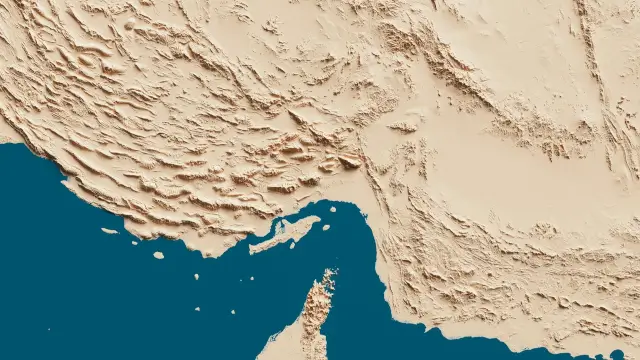
India imports approximately 88-90% of its crude oil needs - making it one of the world's most import-dependent major economies. About 55-60% of all petroleum imports come from the Gulf region, and roughly 50% of crude passes through the Strait of Hormuz - the narrow waterway Iran has now effectively shut down.
The LPG situation is even more acute. A staggering 91% of India's LPG imports originate from the Gulf, with 90% transiting the Strait. With 329 million Indian households dependent on LPG for cooking - including 103 million of the poorest families enrolled under the Ujjwala scheme - this is not an abstract economic metric. It is a daily survival issue.
Making matters worse, India's strategic petroleum reserves stand at just ~100 million barrels, equivalent to a mere 40-45 days of cover, according to the Asian Development Bank. That thin buffer has turned the Strait blockade from a geopolitical event into a domestic emergency.
Oil Prices: The Primary Shock
Brent crude, which traded below $70/barrel before the war, briefly hit $119-120/barrel - a 65% surge. By March 30, 2026, it had settled around $112-115/barrel, still far above any level India's fiscal arithmetic was designed to handle. Stay updated with the latest crude oil price update to track the market volatility.
March 2026 recorded the largest monthly oil price gain on record - approximately 50% in a single month. War risk insurance for tankers exploded from 0.25% to 3% of vessel value (a 12x increase), while ships rerouting around Africa add 15-18 days to every voyage, compounding costs at every link in the supply chain. You can check the crude oil price today for real-time updates.
| Indicator | Pre-War | Current (Apr 2026) |
|---|---|---|
| Brent Crude | ~$70/barrel | $112-115/barrel |
| LPG Imports (monthly) | 2.04 million tonnes | 1.12 MT (↓45%) |
| Indian Rupee | ~₹85/$ | ₹95.22 (record low) |
| Sensex (since war) | Baseline | −9 to −10% |
| India FY27 GDP Forecast | 6.8% (Moody's) | 6.0% (Moody's) |
| War Risk Insurance | 0.25% of vessel value | 3.0% (12x surge) |
The LPG Crisis: India's Most Acute Pain Point
Iran's blockade of Hormuz has produced India's worst cooking gas crisis in decades. LPG imports collapsed 45% month-on-month in March 2026 - from 2.04 million tonnes in February to just 1.12 million tonnes. The consequences have been immediate and visceral.
✅ Restaurants and commercial eateries across India shut down due to cooking gas shortages
✅ Engineering, medical and management colleges shifted to online classes as campus kitchens ran dry
✅ Working-class households reverted to firewood, coal and cow dung for cooking
✅ Domestic LPG cylinder price hiked by ₹60; commercial cylinders by ₹115
The government's response has been swift but stretched. Refineries have been ordered to stop producing petrochemicals and divert all propane and butane towards LPG production. Domestic output has risen by 20-25%, with refineries running at over 100% capacity. The government has also secured 800,000 tonnes of emergency LPG from the US, Russia, and Australia. And in a historic reversal, India resumed Iranian oil imports - the first since 2019 - with a tanker heading to Vadinar, Gujarat.
Fertilizers: The Silent Agricultural Time Bomb
Less visible than the LPG crisis but potentially more damaging for long-term food security is the fertilizer shock. India sources over 40% of its urea and phosphate from the Gulf region. With Qatar's LNG output cut by 17% after Iran struck the Ras Laffan complex on March 18 - damage requiring an estimated 3-5 years to fully repair - the knock-on effects are severe.
India needs approximately 17 million tonnes of urea through August 2026. Current stocks stand at 6.2 MT, with expected domestic production of roughly 10 MT, leaving a shortfall of nearly 2 million tonnes. Three urea plants have already reduced production. Gas allocation to fertilizer facilities has been capped at approximately 70% of normal consumption. Some Indian chemical manufacturers have suspended production entirely due to ammonia shortages. Sulfuric acid - critical for fertilizer production - is now 30% more expensive than before the war.
With the Kharif planting season approaching, this fertilizer crunch threatens crop yields, farm incomes, and India's position as the world's leading rice exporter (25% of global supply in 2024).
Sectors Under Stress: Who Is Hurting Most?
✈️ Aviation
Aviation turbine fuel (ATF) accounts for 30-40% of airline operating costs. Both IndiGo and Air India have announced airfare hikes. Airspace closures over key Asia-Europe-Africa corridors have added delays and rerouting costs across the industry.
🏭 Ceramics and Manufacturing
Gujarat's tile and ceramic industry - one of the world's largest - suspended production for three weeks due to gas supply disruptions. Paints, chemicals, and synthetic rubber manufacturers face surging crude-derived raw material costs.
⛽ Oil Marketing Companies
BPCL, HPCL, and IOC face mounting marketing losses as the government holds retail fuel prices frozen to protect consumers. The excise duty cut on petrol and diesel - while helping consumers - directly hits tax revenues, as Petroleum Minister Hardeep Singh Puri acknowledged publicly.
🧱 Construction and Cement
Indian cement companies import nearly half their petcoke from Saudi Arabia and the UAE. With Gulf supply choked, input costs are rising sharply across the construction sector.
🛒 FMCG, Logistics, Bottled Water
Higher diesel costs are flowing directly into freight and packaging expenses. The Maharashtra Bottled Water Manufacturers Association flagged price hikes tied to surging crude costs for plastic bottles. The ripple effects are reaching every consumer product on Indian shelves.
Jobs: The Human Cost
The Iran war threatens Indian employment through multiple channels, with the most vulnerable workers hit hardest.
✅ Gulf remittances at risk: The Gulf region accounts for approximately 40% of India's $125 billion annual remittances. With regional economic activity disrupted, millions of Indian migrant workers face contract non-renewals.
✅ Diamond and jewelry exports: Surat's polishing units, dependent on Gulf trade routes and Middle Eastern buyers, are reporting significant delays.
✅ Agriculture employment: A fertilizer-driven crop shortfall would ripple through farm employment and rural incomes at planting season.
✅ Informal sector devastation: Restaurant closures have devastated food service workers. Street vendors and small eateries dependent on LPG face an existential crisis.
✅ Manufacturing slowdown: Suspended production in ceramics, chemicals, and fertilizer plants translates directly into lost daily wages.
If the war drags on, economists warn that returning Gulf workers could flood India's domestic job market - compressing wages and straining urban employment absorption capacity precisely when the domestic economy is slowing.
Macroeconomic Scorecard: The Damage in Numbers
The cumulative macroeconomic damage is already significant. Moody's cut India's FY27 GDP growth forecast from 6.8% to 6.0% in its March 31 credit opinion - the most pessimistic of major forecasters. OECD projects 6.1%; domestic agency ICRA estimates 6.5%; EY warns of a full 1 percentage point erosion alongside a 1.5 percentage point inflation spike if the conflict persists.
FY27 inflation is now projected to average 4.8% - double the 2.4% recorded in FY26. India's goods trade deficit widened to $27.1 billion in February 2026, nearly double the $14.4 billion of February 2025. The current account deficit for Q3 FY26 stood at 1.3% of GDP.
The rupee hit a historic low of ₹95.22 per US dollar on March 30 - its steepest fiscal year decline since 2011-12. The Sensex has shed 9-10% since the war began. Foreign Portfolio Investors pulled out ₹1.18 lakh crore ($12.3 billion) in March alone - the largest monthly outflow in years. India's 10-year bond yield crossed 7% for the first time in 21 months.
Government and RBI: Firefighting at Full Stretch
New Delhi and the Reserve Bank of India have deployed a rapid response toolkit. The government invoked the Essential Commodities Act on March 9 via a Natural Gas Control Order to prioritize domestic PNG and CNG supplies over industrial use. Customs duties on critical petrochemical products were waived until June 30, 2026.
The RBI capped banks' net open forex positions at $100 million to curb rupee speculation, and is estimated to have sold $15-20 billion in reserves during March alone. Finance Minister Sitharaman announced the excise duty cut on petrol and diesel, acknowledging the fiscal cost openly. Chief Economic Adviser V. Anantha Nageswaran said plainly on March 29 that India's trade deficit "will rise significantly" with "considerable downside risk" to growth.
What Comes Next: Three Scenarios
Scenario 1 - Conflict ends within weeks: Oil settles at $80-90/barrel. Temporary inflation spike; mild GDP slowdown. India recovers to 6.5%+ growth in H2 FY27.
Scenario 2 - Conflict drags 3-6 months: Persistent $100+ oil; fertilizer shortfall materializes at planting; rupee tests ₹100. FY27 growth likely falls below 6%; rural distress worsens.
Scenario 3 - Prolonged conflict beyond 6 months: $130+ oil; strategic reserves exhausted; global recession risk. India's growth could fall to 5-5.5% - a level not seen since COVID. It is critical to learn how to budget during inflation to protect your savings.
Last Updated: May 08, 2026 | Source: Moody's Ratings & ADB (Official Website)
Frequently Asked Questions

SK Jabedul Haque
Building India's most trusted finance education platform — simplifying news, schemes and market trends so anyone can understand and invest confidently.
Read full bio

Never miss an update
Get our clearest explainers on schemes, markets and money — read what matters, without the noise.
Explore more articles