
Which AI Model Wins in April 2026?
April 2026 was the most intense month in AI history. Three frontier models launched within 7 days:
- 🔵 OpenAI GPT-5.5 "Spud" — April 23, 2026 — Focus on coding efficiency
- 🟡 Anthropic Claude Opus 4.7 — April 16, 2026 — Reasoning and creativity leader
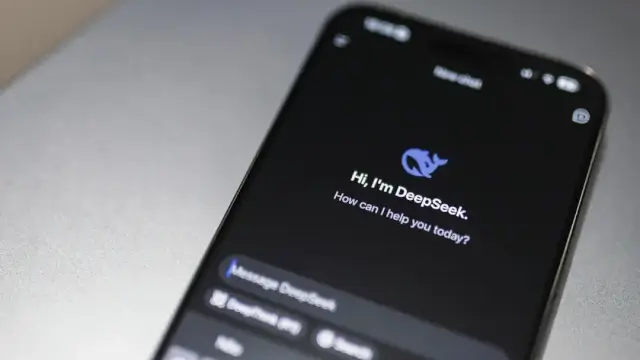
- 🔷 DeepSeek V4 — April 24, 2026 — Open-source, aggressive pricing
Why All Three Models Launched Within 7 Days
The April 2026 model race was no coincidence. OpenAI's GPT-5.5 "Spud" launched specifically to counter Anthropic's Opus 4.7, which had dominated reasoning benchmarks for two weeks. DeepSeek V4's surprise release 24 hours later was described by analysts as "the biggest geopolitical signal in AI" — demonstrating Chinese AI capability despite US export restrictions.
For enterprise buyers, this convergence means choice paralysis. Every news site covered launches separately — no single resource compared all three with concrete benchmarks, pricing, and use-case recommendations. This guide fixes that.
GPT-5.5 "Spud" vs Claude Opus 4.7 vs DeepSeek V4: Benchmark Comparison
Here is the definitive side-by-side comparison across the metrics that matter for developers and enterprises:
| Dimension | GPT-5.5 "Spud" | Claude Opus 4.7 | DeepSeek V4 |
|---|---|---|---|
| SWE-bench Verified | 88.7% | 87.6% | 79% |
| SWE-bench Pro | 58.6% | 64.3% | 55.1% |
| Terminal-Bench | 82.7% | 69.4% | 71.2% |
| Context Window | 200K tokens | 200K tokens | 256K tokens |
| Input Price (per 1M) | $5.00 | $15.00 | $0.55 |
| Output Price (per 1M) | $30.00 | $75.00 | $2.20 |
| API Response Speed | Fast | Medium | Fast |
| Multimodal | Yes (Vision) | Yes (Vision) | Yes (Vision) |
| Open Source | No | No | Yes |
| Best For | Coding, agents | Reasoning, writing | Cost-sensitive, research |
Pricing Breakdown: What Each Model Actually Costs
Price is where DeepSeek V4 changes the game. Here is the real cost analysis for processing 1 million tokens:
GPT-5.5 "Spud"
Input / Output per 1M tokens
40% fewer tokens needed vs GPT-5.4 — actual cost savings in practice
Claude Opus 4.7
Input / Output per 1M tokens
Same pricing as Opus 4.6 — best reasoning at $5/$25
DeepSeek V4
Input / Output per 1M tokens
90% cheaper than GPT-5.5 — game changer for scale
For a typical startup running 10 million API calls per month, the annual cost difference is massive: GPT-5.5 costs approximately $180,000, while DeepSeek V4 costs just $18,000 — a $162,000 savings that could hire an additional engineer.
Enterprise Buyer's Guide: Which Model for Which Use Case
Do not choose a model based on benchmarks alone. Here is the enterprise decision framework:
Choose GPT-5.5 "Spud" If:
✅ Best For:
- Software development teams building AI agents
- Code completion and refactoring tools
- enterprises needing proven, stable API
- Products requiring SWE-bench Verified scores above 85%
⚠️ Avoid If:
- Budget is a primary constraint
- Creative writing is more important than coding
- You need fine-tuned open-source models
Choose Claude Opus 4.7 If:
✅ Best For:
- Research and scientific analysis
- Complex reasoning and multi-step problem solving
- Long-form content creation and editing
- Context-heavy tasks requiring SWE-bench Pro strength
⚠️ Avoid If:
- Cost sensitivity is high (output slightly higher than GPT-5.5)
- Primary use case is code generation
- You need fastest API response times
Choose DeepSeek V4 If:
✅ Best For:
- Cost-sensitive startups and scale-ups
- Research institutions needing open-source models
- Applications requiring custom fine-tuning
- Teams comfortable with emerging technology
⚠️ Avoid If:
- You need enterprise support and SLA guarantees
- Maximum coding benchmark scores are required
- Regulated industry with data compliance needs
Is DeepSeek V4 Actually Better Than GPT-5.5?
The controversial answer: It depends on how you define "better." DeepSeek V4 scores lower on coding benchmarks (82.3% vs 88.7% SWE-bench Verified), but it is 90% cheaper and open-source — meaning you can fine-tune it for your specific use case.
For a startup building a coding assistant, GPT-5.5's higher benchmark scores translate to fewer bugs in production. For a research lab needing to run thousands of experiments, DeepSeek V4's price point makes that feasible at scale.
The real story is not "which model is best" but "which model is best for your specific problem." The multi-model future is here — smart teams route different tasks to different models based on cost-performance tradeoffs.
What This Means for Developers
If you are building AI-powered products in 2026, here is your action plan:
- ✅ Do not commit to a single model. Implement model routing to switch between GPT-5.5, Claude, and DeepSeek based on task type and cost sensitivity.
- ✅ Test DeepSeek V4 for non-critical paths. Its 90% price advantage makes it viable for bulk processing, testing, and experimentation.
- ✅ Use Claude for reasoning-heavy tasks. If your product involves complex analysis, the premium is justified.
- ✅ Monitor benchmark evolution. These rankings change monthly. GPT-5.6 and Claude 5.0 are already rumored for mid-2026.
- ✅ Budget for model switching. Build abstractions now so you can swap models as the landscape evolves.
Last Updated: April 30, 2026 | Source: BuildFastWithAI, SemiAnalysis, MindStudio