From Pokémon to Protein Folding
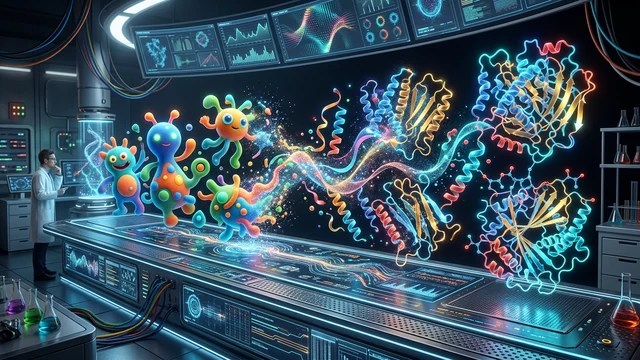
What You'll Learn
- What Anthropic officially says about Claude Fable 5's vision, research, and safety capabilities.
- What the Pokémon FireRed timelapse shows and what it does not prove about general vision.
- Why the inherited 3.9 million and 1.5 million view figures are not treated as verified facts.
- How enterprises can test multimodal models without confusing a demonstration with a production guarantee.
What the Official Fable 5 Announcement Says
Anthropic's Claude Fable 5 and Claude Mythos 5 announcement is dated June 9, 2026. Anthropic describes Fable 5 as a Mythos-class model made safe for general use. The announcement discusses software engineering, knowledge work, vision, scientific research, and extended autonomous work.
Those statements are useful primary evidence, but they are vendor descriptions. They show what Anthropic is claiming about the model and the areas it is designed to address. They do not prove that every user will see the same result on every screenshot, game, chart, or scientific task.
The page also records product-status changes. It includes a June 12 update saying access was suspended while Anthropic worked to restore service and a July 1 update saying Fable 5 and Mythos 5 were redeployed. A current reader should therefore verify access and product terms before relying on a launch article.
| Official item | What Anthropic says | Safe reading |
|---|---|---|
| Launch date | June 9, 2026 announcement | Use the date for the public announcement |
| Model scope | Vision, software, knowledge work, and research are discussed | These are vendor-described capability areas |
| Access history | June suspension update and July redeployment update | Availability should be checked again |
| Safety behavior | Some topics may route to Claude Opus 4.8 | Product safeguards can affect observed output |
The Pokémon FireRed Timelapse
TinyFish search found a YouTube timelapse titled Claude Fable 5 beats Pokémon FireRed only using vision. The search snippet describes a playthrough using raw game screenshots without maps, navigation aids, or extra game-state information.
That is a compelling demonstration of visual interaction and sequential decision-making. A game screen contains text, menus, sprites, positions, and changing state. A system that receives screenshots and chooses actions must connect what it sees with a plan and the next input.
The timelapse does not by itself establish that the model has no hidden assistance, that every frame was handled identically, or that the same result would transfer to a different game, interface, or task. A demo can be genuine and still depend on a harness, retries, timing choices, model settings, or human preparation that a short description does not show.
Our AI agent architecture guide covers the broader difference between a model and the system around it. That distinction is important here because vision performance includes the image pipeline, action interface, memory, retry policy, and evaluation design.
Why the 3.9 Million View Count Is Not Verified
The inherited subtitle says the vision model went viral with 3.9 million views. The official Anthropic announcement and the source evidence captured for this repair do not independently verify that exact count. The article preserves the subtitle because title and slug preservation is required, but it does not repeat 3.9 million as a confirmed audience metric.
View counts also change over time and can differ between a primary upload, a repost, a short clip, and a social embed. A number needs a URL, platform, capture date, and definition of whether related uploads are combined. Without those details, a precise count can create a false sense of measurement.
The same rule applies to the original claim that three demos collectively crossed 7 million views. That aggregate is removed. The body reports the existence of the located timelapse and separates that observation from an unverified headline metric.
| Claim in the inherited post | Repair treatment | Reason |
|---|---|---|
| 3.9 million Pokémon views | Retained only in the subtitle and identified as unverified in the body | Exact count was not independently confirmed |
| 1.5 million eclipse views | Removed from the factual analysis | No official source captured for the count |
| 7 million combined views | Removed | Uploads and counting method were not established |
| Model proved first-principles physics | Reframed as an unverified interpretation | Demo evidence does not establish hidden knowledge or theory |
What a Vision-Only Setup Can Show
A vision-only setup can test whether a model can read pixels, identify visual features, infer a likely state, and choose an action from an image stream. It can reveal useful behavior in screen understanding, visual memory, planning, and interaction. It cannot prove that the model has human-like perception or that it has learned the underlying game engine.
Even when structured game state is withheld, the system may still receive a carefully designed image, a fixed action space, timing support, or a wrapper that filters the environment. Those supports do not invalidate the demo. They define what was actually tested.
A reproducible report should state the image resolution, frame rate, action set, model version, prompt, retry behavior, context policy, stopping rule, and human interventions. It should also report failures and the number of attempts. Without those details, the strongest safe conclusion is that the demo shows a reported visual interaction capability.
The Solar Eclipse Claim Needs a Source Boundary
The original article says Fable 5 watched visual planetary data, inferred Kepler's laws, and predicted solar eclipses from first principles without pretrained astronomical knowledge. The official Anthropic page fetched for this repair discusses scientific research and vision at a high level. It does not independently verify that specific eclipse demonstration or the claim that the model had no relevant prior knowledge.
There is a major difference between fitting a visual pattern, applying a known tool, estimating a physical relationship, and deriving a scientific law from raw observations. A convincing result can involve more than one of these steps. A public article should not collapse them into the strongest possible interpretation without a reproducible method and source.
The safer wording is that multimodal models may assist with visual scientific data and can be tested on astronomy or physics tasks. The quality of that assistance depends on the data, prompt, tools, numerical methods, and verification process. A generated prediction should be checked against an authoritative calculation before anyone relies on it.
Screenshot-to-Code Is a Reconstruction Task
The original article also describes a complete web application rebuilt from one screenshot. Screenshot-to-code systems can infer layout, colors, typography, spacing, and likely components. They can produce a useful first draft. A screenshot does not reveal the original source, accessibility tree, responsive behavior, database, authentication, security controls, or licensing status.
A successful reconstruction therefore demonstrates visual imitation and code generation under a particular setup. It does not prove that the output is production-ready. A serious evaluation should test mobile breakpoints, keyboard access, semantic markup, error states, performance, dependency safety, and maintainability.
Our AI model pricing comparison is useful context for teams comparing model cost, but price alone does not measure whether a screenshot-to-code result is safe to ship.
Vision Capability Versus Scientific Understanding
Visual recognition, visual question answering, chart extraction, physical reasoning, and scientific discovery are related but different tasks. A model can read a chart accurately without deriving the theory behind it. It can describe an orbit without calculating a reliable trajectory. It can identify a Pokémon menu without knowing how the game engine stores its state.
Anthropic's announcement presents Fable 5 as capable across vision and scientific research. That supports testing it in these areas. The original article's stronger statement that the demos prove underlying physics understanding is not retained because the captured sources do not establish that conclusion.
For research use, require units, assumptions, calculations, citations, uncertainty, and a second verification path. For visual extraction, compare the model's result against ground-truth labels and measure errors on small text, occlusion, unusual colors, and low-resolution images.
| Task | What it tests | What it does not prove |
|---|---|---|
| Screenshot reading | Pixel, text, and layout extraction | Understanding of the original software |
| Game interaction | Visual state tracking and action choice | General competence in every game |
| Chart analysis | Data extraction and explanation | Correctness of a hidden scientific theory |
| Physics prediction | Modeling, calculation, and verification | Proof of first-principles discovery |
Autonomy, Memory, and the Harness
The announcement says Fable 5 can work autonomously for longer than previous Claude models. A long task still depends on the harness. The harness may store state, choose when to send images, retry failed actions, restrict the action space, or request summaries. Those system choices can make an agent more reliable or more fragile.
When reporting a multimodal result, identify what the model did and what the surrounding software did. The distinction is similar to evaluating a driver inside a vehicle. The driver matters, but sensors, controls, route planning, and safety systems also affect the outcome.
Teams should test memory drift, repeated visual states, contradictory instructions, slow pages, missing images, invalid actions, and recovery after a tool failure. A single successful run is a demonstration. A production capability needs repeated trials and defined failure handling.
For a related long-horizon discussion, see our agentic AI and long-horizon memory article. It is context, not independent proof of the claims in this post.
Enterprise Uses Worth Testing
Multimodal models may help with visual quality inspection, document intake, interface testing, chart review, accessibility checks, customer support screenshots, and scientific figure extraction. Each use case needs a narrow acceptance test and a clear human escalation path.
For example, a support team can measure whether the model identifies the correct error message and requests the right missing detail. A finance team can test whether chart values and units are copied correctly. A software team can compare screenshot-to-code drafts against a design system and accessibility checklist.
Do not place confidential images into a workflow until the provider's current data controls, retention terms, regional handling, and account settings are reviewed. Safety routing can also change outputs. Anthropic says some topics may route to Claude Opus 4.8 under Fable 5 safeguards, so a team should test the actual account and product route it intends to use.
How to Evaluate a Viral Demo
Start with the original URL and capture date. Confirm whether the video is a primary upload, a repost, or a commentary clip. Record what is visible, what is stated by the uploader, and what is inferred by viewers. Separate views from likes, reposts, and combined coverage.
Next, identify the model version and harness. Ask whether images were preprocessed, whether tools were available, whether a human intervened, and whether unsuccessful attempts were omitted. Then run a small replication set with the same task, several seeds or sessions, and an explicit failure log.
| Audit step | Evidence to capture | Common error |
|---|---|---|
| Source identity | Primary URL, uploader, date, and model name | Treating a repost as the original |
| Audience metric | Platform, timestamp, and counting rule | Repeating a changing view count without a snapshot |
| System setup | Prompt, image stream, tools, action space, and retries | Attributing harness behavior only to the model |
| Outcome quality | Success criteria, failures, and repeat runs | Using one successful demo as a general guarantee |
Price, Access, and Safety Conditions
Anthropic's June 9 announcement states $10 per million input tokens and $50 per million output tokens for Fable 5 and Mythos 5. It also records the June access suspension and July redeployment updates. These are dated facts from the announcement, not a guarantee that an account will have the same access in the future. For a separate example of dated technology claims, compare our Amazon Stock 2026 analysis.
Anthropic says Fable 5 safeguards may route some topics to Claude Opus 4.8 and that safeguards trigger on average in less than 5% of sessions. This can affect a production test, especially when the team's workflow includes sensitive subjects, cyber tasks, or content requiring a particular model's exact behavior.
Our AI engineer and H-1B guide is unrelated to model pricing, but it demonstrates the same rule used here: official process facts should be separated from assumptions and personal outcomes.
Conclusion: A Demo Is Evidence, Not a Guarantee
The located Pokémon timelapse is evidence of a reported vision-driven game interaction demonstration. Anthropic's official announcement supports describing Fable 5 as a model with published vision and research capability claims, plus specific access, pricing, and safety caveats. The captured official sources do not independently verify the inherited 3.9 million view count, 1.5 million eclipse count, 7 million aggregate, or the strongest first-principles conclusions.
For enterprise use, replicate the task with a documented harness, ground truth, repeat runs, cost measurement, privacy review, and human approval. The useful question is not whether a viral clip proves a model understands everything. It is whether the model reliably meets a defined requirement under the conditions your team can control.
This article is for information only and is not a product, procurement, scientific, legal, medical, financial, privacy, or security recommendation.
Frequently Asked Questions

SK Jabedul Haque
Building India's most trusted finance education platform — simplifying news, schemes and market trends so anyone can understand and invest confidently.
Read full bio


Never miss an update
Get our clearest explainers on schemes, markets and money — read what matters, without the noise.
Explore more articles