ChatGPT's Secret Age Prediction: Behavior Tracking to Guess If You're Under 18
What You'll Learn
- What OpenAI publicly says about its age-prediction model and signals
- How the ChatGPT for Teens experience differs from ordinary age verification
- What OpenAI says about safeguards, Persona verification, and privacy
- Which claims remain unverified because the model’s design and thresholds are not public
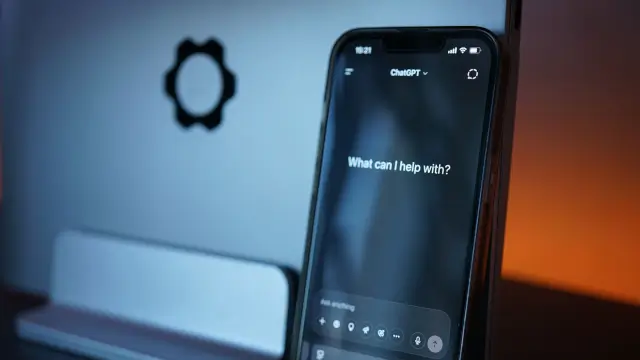
ChatGPT age prediction is no longer accurately described as a hidden trick that silently guesses a user’s age from every message. OpenAI has published a public explanation of the system and a Help Center guide for people who encounter it. The company says ChatGPT can estimate whether an account likely belongs to someone under 18, then make that account eligible for a teen-focused experience with additional protections.
The important word is estimate. Age prediction is not the same as an identity document, a confirmed birth date, or a government database match. OpenAI says it uses a combination of behavioral and account-level signals. It has named broad categories such as account age, typical times of day when someone is active, usage patterns over time, and a user’s stated age. It has not published a complete feature list, model design, confidence threshold, or formula.
That makes this a privacy and product-policy story, not a detective story. The public evidence supports a narrower conclusion than the original article claimed. OpenAI is using age estimation as one input for access to ChatGPT for Teens. When an adult is incorrectly placed in that experience, OpenAI says the person can verify age through Persona. The user-facing result is documented. The hidden implementation details are not.
This distinction matters for readers who want to know what is collected, what is inferred, and what they can do after a mistake. Those are separate questions. A platform may infer a likely age from account and usage signals without knowing a verified identity. It may also ask an adult to complete a separate verification process. Treating those processes as one system creates confusion.
What OpenAI Actually Disclosed
OpenAI’s official explanation says ChatGPT uses an age prediction model to help estimate whether an account likely belongs to someone under 18. The company says the system is being rolled out on consumer plans to support teen safety. It describes the result as an account-level estimate, not a public label attached to a person’s identity.
OpenAI also says the model can use several categories of information. These include how long an account has existed, typical times of day when the user is active, usage patterns over time, and the user’s stated age. The wording is deliberately broad. It tells readers what kinds of signals may matter without disclosing the model’s internal weights or decision boundary.
The OpenAI Help Center adds an operational explanation. It says age prediction can identify an account as eligible for ChatGPT for Teens even when the user already supplied a date of birth during account creation. OpenAI may use account-associated age, verified age, or age prediction when determining eligibility.
The public disclosure therefore supports three statements. OpenAI uses age prediction as an extra safety check. The check can contribute to eligibility for ChatGPT for Teens. A person who is 18 or older can start age verification if the account was placed in the teen experience by mistake. It does not support claims about a secret transcript-scanning formula or a published probability score.
| Publicly stated point | What it means | What it does not establish |
|---|---|---|
| Age prediction is an extra safety check | It adds an estimate to existing age information | It is not proof of identity |
| Behavioral and account-level signals may be used | The model looks beyond a single declared date | The exact feature weights are not public |
| Eligible accounts can enter ChatGPT for Teens | Teen protections can be applied automatically | Every account sees the same rollout at once |
| Adults can verify age | A mistaken placement can be challenged | Every country uses the same verification step |
For context on another ChatGPT product change, read our ChatGPT Workspace Agents guide. Product features change over time, so current official help pages should take priority over old launch summaries.
How ChatGPT Age Prediction Works
OpenAI describes age prediction as a model that estimates whether an account likely belongs to a person under 18. The company has not published a step-by-step algorithm. So the safest explanation begins with what is known: the model combines account information, activity patterns, usage history, and stated age rather than relying only on a birth date typed into a form.
Think of the process as a risk signal inside an account system. An account may have a declared age, a verified age, and an age prediction. OpenAI says those forms of information can contribute to eligibility for ChatGPT for Teens. The system then changes the user experience when the account is eligible.
That does not mean ChatGPT reads every sentence and identifies a child with certainty. OpenAI’s published wording does not say that it uses a particular school reference, a particular slang dictionary, or a fixed list of conversation topics. The legacy article’s detailed examples about grades, parents, school hours, and late-night habits go beyond the official disclosure.
Nor does the public source say that account age alone decides the outcome. Account age is one named signal category. Typical active times are another. Usage patterns over time and stated age are also named. The model may combine these inputs, but readers should not infer how much weight any one signal receives.
OpenAI says it uses learnings from deployment to refine the model over time. That sentence creates another boundary. A model that is refined over time may change behavior as OpenAI learns which signals improve accuracy. It does not give readers a fixed formula that can be independently reproduced from the public announcement.
Which Signals OpenAI Names
The official list is shorter than many online summaries suggest. OpenAI names the age associated with an account, the length of time an account has existed, typical times of day when someone is active, usage patterns over time, and a user’s stated age. It describes these as behavioral and account-level signals that can help estimate eligibility.
These categories are broad by design. “Usage patterns” could describe many kinds of activity, but OpenAI does not publish a complete breakdown on the announcement page. “Stated age” could include an account setting or information supplied during use, but the public source does not say that every mention of a school, parent, grade, or hobby becomes a direct age label.
This is where precision protects privacy reporting. It is reasonable to say that OpenAI uses age-related account information and activity patterns. It is not reasonable to invent a hidden list of prompts, a minimum account age, a school-hour rule, or a threshold at which the model switches experience.
The same caution applies to accuracy. OpenAI says it is learning which signals improve accuracy and refining the model. The announcement does not publish an accuracy percentage, a false-positive rate, or a false-negative rate. Any article that supplies those numbers without a named source is adding information that the public record does not support.
What Happens When an Account Enters the Teen Experience
If OpenAI’s age information or prediction indicates that an account may belong to someone under 18, the account may be eligible for ChatGPT for Teens. OpenAI’s Help Center says ChatGPT automatically enables the teen experience for eligible accounts. The account stays active. The user does not need to turn on a separate switch.
ChatGPT for Teens is described as the same capable ChatGPT with age-appropriate protections, learning-focused tools, reminders that support balanced use, and optional parental controls. That description is different from a total account lock. It also means the teen experience is not just a content filter. OpenAI presents it as a combination of safeguards, settings, and product features.
Availability is not identical for every user. OpenAI’s Help Center says the teen experience is rolling out to eligible teen accounts on Free and paid personal plans beginning August 18. It says full availability in Australia is expected September 8 and warns that feature availability may vary by region. Those rollout details should be read as current Help Center information, not as a permanent global guarantee.
The practical result is a change in the account experience. A user may see teen-specific onboarding, learning tools, reminders, or extra protections. A parent or guardian may optionally link an account to manage selected settings. But OpenAI says parental controls do not allow a parent or guardian to read or monitor the teen’s conversations.
Which Protections OpenAI Lists
OpenAI’s age-prediction announcement names five categories of additional protection for accounts estimated to belong to someone under 18. They are graphic violence or gory content, viral challenges that could encourage risky or harmful behavior in minors, sexual, romantic, or violent role play, depictions of self-harm, and content that promotes extreme beauty standards, unhealthy dieting, or body shaming.
The wording is important because it describes protection goals rather than a complete technical rulebook. The public page does not publish every classifier, refusal pattern, or boundary condition. It also does not say that the five categories are the only product differences in every region or account type.
The Help Center describes further teen-experience features. These include study-focused flows, homework reminders, learning tools such as quizzes when available, Study hours, reminders that may encourage breaks, and prompts that remind users to check for sensitive information before sharing images. OpenAI says feature availability may vary by region.
Readers should avoid translating these descriptions into a promise that every risky output will be blocked. Safety systems reduce exposure. They do not make a platform infallible. The most defensible claim is that OpenAI says it applies additional protections designed to reduce exposure to named sensitive categories.
| Protection area | OpenAI’s stated goal | Reporting boundary |
|---|---|---|
| Graphic violence | Reduce exposure to graphic or gory content | Do not invent a complete blocklist |
| Risky viral challenges | Reduce content that may encourage harmful behavior | Do not claim every challenge is detected |
| Sexual or violent role play | Apply age-appropriate limits | Do not turn the policy summary into a test result |
| Self-harm and body-image risks | Reduce exposure to harmful or unhealthy content | Do not claim the safeguards replace human support |
Our MCP security checklist covers a different product surface, but its central lesson applies here: a safety feature should be described from its documented controls, not from assumptions about hidden implementation.
How Age Verification Works for Adults
Age prediction and age verification solve different problems. Prediction estimates whether an account may belong to someone under 18. Verification asks an adult to provide evidence for an age claim. OpenAI says a person who is 18 or older can start verification from ChatGPT on the web by opening Settings, going to Account, selecting Verify age, and following the Persona steps.
Depending on the country, Persona may ask for a live selfie or a government-issued ID. OpenAI describes Persona as a trusted third-party company that helps verify age. If Persona confirms that the user is 18 or older, OpenAI says ChatGPT removes teen protections. If the result indicates that the account should remain in the teen experience, those protections may be kept or restored.
This process is a correction path for adults who were placed in the wrong experience. It is not evidence that OpenAI has published the internal model decision. A user can challenge the result without learning the model’s threshold or the exact signals that contributed to the estimate.
The Help Center also has a country-specific note for Italy. It says that if ChatGPT asks a user there to verify age, the user must complete the process within 60 days or certain features may be disabled. That deadline should not be presented as a universal rule for every country.
| Account situation | Documented route | Important limit |
|---|---|---|
| Adult placed in teen experience | Open Settings, Account, and Verify age | Verification outcome controls the next step |
| Country requiring a live selfie | Follow the Persona flow shown by ChatGPT | The method can vary by country |
| Country requesting government ID | Submit the requested material through the official flow | Do not use an unofficial link |
| Italy-specific verification request | Complete the process within 60 days | This timing is not stated as universal |
What Persona Sees and Deletes
OpenAI’s Help Center says OpenAI does not see what a user shares with Persona. It says OpenAI learns whether the user verified that they are 18 or older and the date of birth. Persona handles the verification process and deletes an uploaded ID or selfie within 7 days after verification.
Those statements answer part of the privacy question. They describe what OpenAI says it receives from the verification outcome and what it says Persona does with uploaded material. They do not answer every possible question about account logs, regional retention rules, security controls, or third-party processing. A careful article should not expand the statement beyond its wording.
Users should also distinguish a live selfie from a stored identity document. OpenAI says the method can vary by country. A person may be asked for a selfie, an ID, or another step presented by Persona. The exact flow can change with location and service requirements.
There is a practical tradeoff. An adult who wants teen protections removed may prefer a verification path to continued restrictions. Another person may decide not to submit a selfie or ID and keep the existing account experience. The public Help Center explains the available correction route. It does not make that choice for the user.
Age Prediction Versus Parental Controls
These features should not be collapsed into one surveillance system. Age prediction is an OpenAI eligibility signal for the teen experience. Age verification is a correction or confirmation process for an adult. Parental controls are optional settings that a parent or guardian can use after linking accounts.
OpenAI says parental controls can manage selected settings. The Help Center names Study hours, which can influence when eligible new chats start in Study mode, and Quiet hours, which can limit access during scheduled times. It also says parental controls do not let a parent or guardian read or monitor a teen’s conversations.
That privacy statement is narrower than a promise of total secrecy. OpenAI says that in limited safety-notification situations it shares only the information needed to help support a teen’s safety. The article should preserve that qualifier instead of claiming that no account information can ever be shared.
Parental controls also do not create the age prediction itself. They are a separate product feature. A teen account may have age-based protections without a linked parent. An adult may verify age without enabling parental controls. Each step has a different purpose.
For another view of how fast ChatGPT product features change, see our AI tools comparison guide. You can also compare the Claude agent guide when thinking about how different AI products expose controls. Current Help Center wording should take priority over an older third-party summary when settings or availability change.
What the System Does Not Reveal
OpenAI has not published the age-prediction model’s architecture, training data, feature weights, confidence score, or threshold for entering the teen experience on the pages reviewed for this article. It has also not provided a public accuracy table showing false positives and false negatives by country, age group, language, or account type.
That absence is not proof that the system uses a particular hidden signal. It is simply an information boundary. A responsible explanation can say that OpenAI names broad signal categories while leaving the technical implementation undisclosed. It cannot turn that gap into a list of invented behaviors.
The same rule applies to the phrase “silent tracking.” OpenAI’s pages say the model can use account and usage signals. They do not establish that the company secretly reads every conversation to guess age. The system may use product telemetry or other data, but the reviewed public sources do not specify every input or retention rule.
Readers should be skeptical of exact percentages or confident claims about accuracy unless a source provides them. OpenAI’s announcement says it is refining the model based on learnings from deployment. It does not provide a public benchmark that would justify a precise success rate.
How to Read the Privacy Tradeoff
The age-prediction system creates a familiar platform tradeoff. OpenAI wants to reduce the chance that younger users encounter sensitive material. To do that, it says it uses more than a declared age. More signals can improve an estimate, but they also create questions about inference, explainability, retention, and mistaken placement.
For users, the key question is not only whether the model is right. It is what happens when the model is uncertain or wrong. OpenAI says eligible accounts can be placed into ChatGPT for Teens automatically, and adults can start verification if that placement is incorrect. That correction path is a meaningful product control.
The public record still leaves room for scrutiny. OpenAI does not publish the threshold, a full list of inputs, or an independent error report on the announcement page. Without those details, outsiders cannot reproduce the decision or calculate how often different groups are misclassified.
That does not make every age-prediction decision unreasonable. It means the claims should stay proportional to the evidence. The documented system is an age estimate used for safety routing. The undocumented part is the internal mechanics. Both facts belong in the same article.
Practical Steps for Adults and Families
Adults who see the teen experience and believe it is incorrect can use the official verification path. Sign in to ChatGPT on the web, open Settings, choose Account, select Verify age, and follow the instructions shown by Persona. The verification entry point is also available at ChatGPT’s official age-verification page. OpenAI says the process may use a live selfie or government-issued ID depending on the country.
Families should understand what parental controls do before linking accounts. OpenAI says a linked parent or guardian can manage selected settings, including Study hours and Quiet hours. It also says parental controls do not allow conversation monitoring. The settings available to an account can vary by region and rollout status.
Users who do not want to complete verification can review the choices shown in their account and the relevant OpenAI Help Center guidance. Our AI agent case-study analysis also shows why a system’s documented controls should be kept separate from claims about hidden behavior. The company’s public documentation explains the correction route, but it does not require every adult to use it. A person can weigh the benefit of removing teen protections against the information requested by the verification provider.
Do not upload an ID or selfie through an unofficial link. Start from ChatGPT’s own Settings flow or the official OpenAI verification page. Product screens can change, and phishing pages can copy familiar branding. A link in an old article is not a substitute for checking the current account interface.
| Question to check | Where to look | Why it matters |
|---|---|---|
| Is the teen experience enabled? | ChatGPT Settings and account notices | Eligibility can be automatic |
| Is age verification available? | Settings, Account, Verify age | The correction route is account based |
| Are parental controls linked? | Parental controls settings | They are optional and separate from prediction |
| Does a feature appear in your region? | Current OpenAI Help Center guidance | Rollout and features may vary |
What This Means for ChatGPT Users
OpenAI’s age-prediction rollout changes how users should think about age settings in ChatGPT. A declared date of birth is not necessarily the only input the platform can use. OpenAI says account information, activity patterns, usage over time, and stated age can contribute to an estimate. That estimate can affect eligibility for ChatGPT for Teens.
The safeguards are also more specific than a general “minor mode” label. OpenAI names limits aimed at graphic violence, risky viral challenges, sexual or violent role play, self-harm depictions, and harmful body-image content. Its Help Center adds learning tools, balanced-use reminders, and optional parental controls, with availability varying by region.
The privacy story has two sides. OpenAI says it does not see what users share with Persona and that Persona deletes uploaded ID or selfie material within 7 days after verification. At the same time, the public pages do not reveal the age model’s architecture, thresholds, or full feature list. Users can therefore understand the stated outcome without being able to audit the inference itself.
The original “secret age prediction” framing is too strong. The system is publicly described, while parts of its implementation remain undisclosed. That is the accurate middle ground. ChatGPT users should rely on OpenAI’s current settings and Help Center instructions, treat exact undocumented claims with caution, and remember that age estimation, age verification, teen safeguards, and parental controls are related but separate features.
Frequently Asked Questions

SK Jabedul Haque
Building India's most trusted finance education platform — simplifying news, schemes and market trends so anyone can understand and invest confidently.
Read full bio


Never miss an update
Get our clearest explainers on schemes, markets and money — read what matters, without the noise.
Explore more articles