Anthropic Fable 5 vs Mythos 5: Why Both Models Were Banned by the US Government
What You'll Learn
- The exact differences between Fable 5 and Mythos 5
- Why they are the same model but behave differently
- Why the US government banned both - not just Mythos 5
- Which model is more affected by the ban
- What each model's future looks like
When Anthropic launched Claude Fable 5 on June 9, 2026, the company simultaneously introduced Claude Mythos 5 - a name that confused many users. Are they competing models? Is Mythos 5 better? Why was Mythos 5 banned alongside Fable 5? This article answers every question about the Fable 5 vs Mythos 5 distinction and explains how the US government's export control directive affected both.
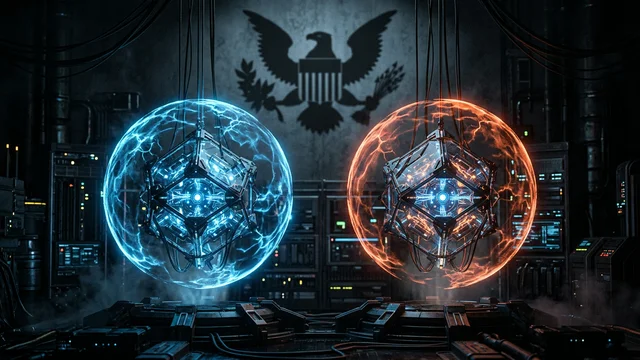
Fable 5 vs Mythos 5: They Are the Same Model
The most important thing to understand about the difference between Fable 5 and Mythos 5 is that they share the exact same underlying architecture, weights, and capabilities. Anthropic did not train two separate models - it trained one Claude 5 base model and deployed it in two configurations.
Anthropic's official launch post states this clearly: Fable 5 is "a Mythos-class model that we've made safe for general use." Both model variants share the same core intelligence, reasoning power, context window, and benchmark performance. A task that doesn't trigger Fable 5's restrictions will produce essentially the same output from either version.
The difference is entirely in how each version handles sensitive queries. Fable 5 applies additional safety classifiers that detect certain high-risk requests and route them to Claude Opus 4.8. Mythos 5 lifts those classifiers for vetted users working in approved domains.
| Feature | Fable 5 | Mythos 5 |
|---|---|---|
| Base Architecture | Claude 5 | Claude 5 (identical) |
| Intelligence/Reasoning | Identical | Identical |
| Context Window | Same | Same |
| Pricing | $10/$50 per M tokens | $10/$50 per M tokens |
| Cybersecurity Guardrails | ✅ Active - routes to Opus 4.8 | ❌ Lifted |
| Biology/Chemistry Guardrails | ✅ Active - routes to Opus 4.8 | ❌ Lifted |
| Distillation Guardrails | ✅ Active - routes to Opus 4.8 | ❌ Lifted |
| Public Access | ✅ Yes | ❌ Vetted partners only |
| Status (after June 12) | ❌ Suspended | ❌ Suspended |
The Safety Guardrail Difference Explained
The difference between Fable 5 and Mythos 5 comes down to three categories of safety classifiers that Fable 5 applies but Mythos 5 does not:
1. Cybersecurity Classifiers. Fable 5's classifiers monitor for requests related to exploit development, offensive cyber operations, agentic hacking, and vulnerability discovery. When detected, the request is automatically handled by Claude Opus 4.8 instead. This is because Mythos-class models have demonstrated exceptional cybersecurity capabilities - scoring 78% on Anthropic's cybersecurity evaluations compared to Opus 4.8's 40% - making them powerful tools for both defense and attack. Fable 5's cybersecurity classifiers were the most robust of any model tested, including Opus 4.8, with zero compliance to harmful single-turn requests even when subjected to 30 different public jailbreak techniques.
2. Biology and Chemistry Classifiers. Fable 5 routes biology and chemistry-related queries to Opus 4.8. This was a decision driven by the model's dual-use capabilities - Mythos 5 demonstrated the ability to design adeno-associated viruses (AAVs) for gene therapy delivery, a promising medical capability that could also be misused. In blinded tests, scientists preferred Mythos 5's molecular biology hypotheses 80% of the time over Opus-class models. Anthropic plans to open a trusted access program for biology researchers to use Fable 5 with biology safeguards removed while keeping cyber safeguards in place.
3. Distillation Classifiers. Fable 5 detects and blocks attempts to extract the model's capabilities to train competing models. This prevents what Anthropic calls "large-scale attempts to distill Claude's capabilities" - especially by entities in authoritarian countries. This classifier serves dual purposes: safety control (preventing proliferation of unaligned frontier AI) and competitive protection (preventing rivals from copying Anthropic's hard work).
In practice, Fable 5's safety guardrails trigger in less than 5% of sessions. For the remaining 95%+ of usage, Fable 5's performance is effectively identical to Mythos 5.
Who Gets Mythos 5 Access?
Mythos 5 is not available through any standard API tier or subscription plan. Access is granted through a rigorous vetting process that evaluates the user's use case, deployment safeguards, and compliance frameworks. Currently, Mythos 5 is only available through Project Glasswing - Anthropic's collaboration with the US government to provide AI-powered cybersecurity tools to critical infrastructure providers and cyber defenders.
Mythos 5 replaces the earlier Claude Mythos Preview as an upgrade for existing Project Glasswing partners. Verta, the product company managing Glasswing, handles the deployment and vetting process. Anthropic has stated it plans to expand Mythos 5 access through a broader trusted access program, but no timeline has been announced.
Beyond cybersecurity, Anthropic also plans a separate biology track that would give select researchers access to Fable 5 with biology and chemistry safeguards removed, while keeping the cybersecurity classifiers active. This program has not yet launched.
Why Both Models Were Banned - Including Fable 5
If Mythos 5 is the version with fewer safeguards, why did the US government's export control directive ban both Fable 5 and Mythos 5? This is one of the most confusing aspects of the situation.
On June 12, 2026, at 5:21 PM ET, the US Commerce Department issued an export control directive requiring Anthropic to suspend access to both models for "any foreign national, whether inside or outside the United States, including foreign national Anthropic employees." The directive was issued under the Export Control Reform Act and IEEPA, citing national security concerns related to a demonstrated jailbreak.
Anthropic responded by disabling both models globally - not just for foreign nationals, but for all users - because the company cannot verify the nationality of every API caller. This blanket approach meant that both Fable 5 and Mythos 5 were taken down simultaneously.
The government's concern was that the models' capabilities - specifically their ability to read and analyze codebases for vulnerabilities - could be exploited by foreign adversaries. While Fable 5 has safeguards against cybersecurity misuse, the government determined that these safeguards might not be sufficient, or that the underlying capability itself (even if routed to Opus 4.8 in some cases) still posed a national security risk.
The Irony: Which Model Was More Vulnerable to the Jailbreak?
There is a significant irony in the government's approach. The jailbreak technique that triggered the export control directive involved asking the model to read a specific codebase and fix any software flaws - a form of autonomous vulnerability analysis. This is precisely the kind of capability that Fable 5's cybersecurity classifiers are designed to detect and route to Opus 4.8.
In other words, if a user attempted this jailbreak on Fable 5, the model's safeguards would likely have triggered, and the request would have been handled by the less capable Opus 4.8 instead. However, on Mythos 5 - which has no cybersecurity safeguards - the same request would have been processed directly by the full Mythos-class model, potentially producing the vulnerability analysis that the government feared.
This means Mythos 5 was arguably more vulnerable to the specific jailbreak technique that triggered the entire ban. Yet the government banned both models indiscriminately, including the version with active safeguards specifically designed to prevent the very type of misuse they were concerned about.
Anthropic has argued this point explicitly, calling the directive a "misunderstanding" and noting that the "previously known, minor" vulnerability is replicable by other widely available models - including GPT-5.5, which remains fully accessible to foreign nationals.
Benchmark Comparison: Fable 5 vs Mythos 5 Performance
Since Fable 5 and Mythos 5 share the same underlying architecture, their benchmark scores are identical on evaluations that don't trigger safety classifiers:
| Benchmark | Fable 5 / Mythos 5 | Opus 4.8 | GPT-5.5 |
|---|---|---|---|
| SWE-Bench Pro (Coding) | 80.3% | 69.2% | - |
| FrontierCode (Hard) | 29.3% | 13.4% | 5.7% |
| Cybersecurity Eval | 78.0%* | 40.0% | - |
| GDP.pdf (Vision) | 29.8% | - | 24.9% |
| BioMysteryBench | 46.1%* | 40.0% | - |
* Mythos 5 scores - Fable 5 routes these queries to Opus 4.8
On cybersecurity and biology benchmarks, the difference between Fable 5 (routes to Opus) and Mythos 5 (full capability) is stark. Mythos 5 scores 78% on cybersecurity evaluations - nearly double Opus 4.8's 40% - because the model's full capability is expressed. Fable 5, by design, cannot achieve those scores since it delegates such queries to the weaker model.
On general benchmarks like SWE-Bench Pro, FrontierCode, and vision evaluations, both models achieve identical results since no safety classifiers are triggered.
Pricing and Availability Comparison
Both models share the same pricing: $10 per million input tokens and $50 per million output tokens. This is less than half the cost of Claude Mythos Preview and roughly double the cost of Opus 4.8 ($5/$25).
Before the ban, availability differed significantly:
- Fable 5: Available to all users via the Claude API as
claude-fable-5. Included free on Pro ($20/month), Max ($100/month), Team, and Enterprise subscription plans through June 22, after which it was to require usage credits. - Mythos 5: Restricted to Project Glasswing partners only. Not available through any API tier or subscription plan. Access requires vetting and government collaboration approval.
Both models are now suspended globally due to the export control directive, pending resolution with the US government.
What the Ban Means for Each Model's Future
The ban affects Fable 5 and Mythos 5 differently, and their restoration paths may diverge.
Fable 5's Restoration Path. As the public-facing model with active safety guardrails, Fable 5 has a stronger case for restoration. Anthropic can argue that the model's classifiers already mitigate the jailbreak concern - the specific vulnerability the government cited. If the diplomatic path succeeds, Fable 5 could return relatively quickly, potentially within days or weeks. The model's broad user base and commercial importance make it Anthropic's top priority for restoration.
Mythos 5's Restoration Path. Mythos 5 faces more significant obstacles. Since it has no cybersecurity safeguards, the government's concerns about its capabilities are more directly applicable. Even if the general ban is lifted, Mythos 5 may face additional scrutiny or require enhanced access controls before it can be re-enabled. Its restricted user base (Project Glasswing partners) means Anthropic may be able to restore it faster through direct government coordination, but the scope of access may remain limited.
Anthropic is pursuing both diplomatic resolution (convincing the Commerce Department the jailbreak concern is unwarranted) and technical compliance (building nationality verification infrastructure) simultaneously. Both models will likely return together if the diplomatic path succeeds. If technical compliance is required, Fable 5 may return first since its broader user base justifies the engineering investment.
Conclusion
The Fable 5 vs Mythos 5 distinction is simple: same brain, different guardrails. Fable 5 is the public version with safety training wheels; Mythos 5 is the unrestricted version for trusted partners. The US government's decision to ban both models together was a blanket response to a demonstrated jailbreak - one that Mythos 5 was arguably more vulnerable to than Fable 5.
For users wondering about the difference between Fable 5 and Mythos 5, the answer is entirely about access control, not capability. Both models represent Anthropic's most advanced AI, and both are currently unavailable. Their restoration depends on the same factors: resolution with the US government and implementation of any required compliance measures.
Frequently Asked Questions

SK Jabedul Haque
Building India's most trusted finance education platform — simplifying news, schemes and market trends so anyone can understand and invest confidently.
Read full bio


Never miss an update
Get our clearest explainers on schemes, markets and money — read what matters, without the noise.
Explore more articles