Anthropic "Dreaming" Self-Improving AI Agents: The Complete 2026 Guide
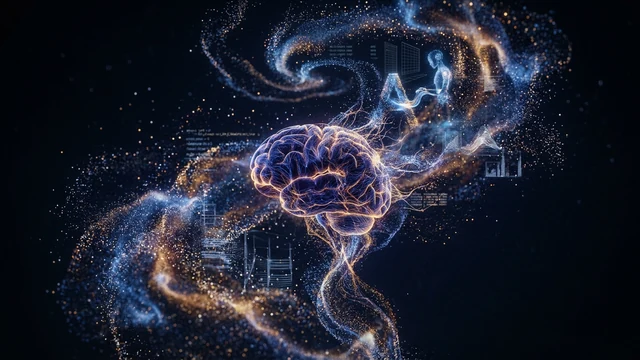
The word “dreaming” is excellent product language. It is also exactly the kind of label that can make a fairly specific memory-maintenance pipeline sound like a machine developing its own successor overnight. Anthropic’s documentation is more restrained. Dreams are a gated research-preview capability for Claude Managed Agents. They curate memory. They do not prove that an agent has changed its model weights, learned an independent objective, or become generally autonomous.
That distinction matters for engineering teams. A durable memory can make a long-running agent more useful, but it can also preserve a bad assumption, duplicate a wrong answer, or turn a one-off instruction into a recurring habit. The feature’s safety model therefore depends on separate output stores, review, access controls, and a clear owner for deciding what memory becomes active.
What You'll Learn
- What Anthropic’s Dreams feature actually does to a managed agent’s memory.
- Why memory curation is different from model training or recursive self-improvement.
- How Managed Agents separates sessions, harnesses, sandboxes, tools, and credentials.
- Which review, rollback, and security controls belong in a production deployment.
What Claude Dreaming agents actually are
Anthropic’s Claude Platform documentation calls the capability Dreams and labels Dreaming a research preview. A dream reads an existing memory store alongside past session transcripts and produces a new memory store. The input is not modified. That one design choice is more important than the name because it creates a reviewable boundary between what the agent already remembers and what the pipeline proposes next.
Agents can write to memory stores during their work. Those writes are local and incremental. Over many sessions, the store can collect duplicates, contradictions, and stale entries. A dream is a synthesis pass intended to clean up that accumulation and make the resulting store more useful for later sessions.
The documented feature is therefore closer to asynchronous memory curation than to a model training loop. The system does not claim that Claude has edited its neural weights. It does not claim that the agent has discovered a new objective. It does not guarantee that every surfaced insight is correct. It creates another artefact that an operator can inspect, attach, archive, or discard.
Read the official Dreams documentation and compare the mechanism with our coverage of OpenAI’s agent reorganisation. Both stories concern long-running agents, but product architecture is not evidence of general self-improvement.
What Anthropic’s documentation calls a dream
A dream takes two main inputs. It needs a pre-existing memory store and between one and 100 past sessions. The session transcripts provide the history that the pipeline can mine. The memory store provides the current accumulated record that needs checking. Optional instructions can guide what the pipeline should focus on, such as coding preferences or recurring research patterns.
The output is a new memory store rather than an in-place edit. Anthropic’s docs describe three useful transformations: duplicate entries can be merged, stale or contradicted entries can be replaced with the latest value, and new insights can be surfaced. That sounds simple until the memory contains conflicting instructions, sensitive material, or a confident error repeated across many sessions.
| Input or output | Role in a dream | Operational question |
|---|---|---|
| Existing memory store | The accumulated memory that Claude will review | Who owns it and what data is allowed inside? |
| Past sessions | Transcripts that provide evidence and recurring patterns | Are the sessions relevant, complete, and safe to mine? |
| Instructions | High-level guidance for what the synthesis should focus on | Are instructions broad enough to avoid brittle edits? |
| Output memory store | A separate reorganised result for review | What gates decide whether it can be attached? |
There is no reason to treat a new output store as automatically superior. A store can be cleaner and still be wrong. Memory compression is a judgement operation. It may remove context that later proves important, preserve a recurring mistake because the mistake appears often, or create an insight that sounds plausible but lacks source support.
How the memory-store workflow operates
Dreaming runs as an asynchronous job. The documented lifecycle includes pending, running, completed, failed, and canceled states. When it completes, the output store becomes an ordinary memory store that can be reviewed through the memory API or console. An operator can attach it to future sessions alongside or instead of the input store, or delete and archive it.
| Status | Meaning | Operator action |
|---|---|---|
| Pending | The dream has been created and queued | Wait for the pipeline to start or cancel it if appropriate |
| Running | The pipeline is processing its memory and session inputs | Monitor progress and protect input stores from deletion |
| Completed | The output memory store is ready | Review it before attaching or discard it |
| Failed | The run ended with an error | Inspect partial output and clean it up if unnecessary |
| Canceled | The run was stopped before completion | Keep or remove any partial output according to policy |
This is a better failure model than silently overwriting the active memory. If the output is poor, the input remains available. If the job fails, the documentation says the output can contain partial contents that can be inspected and cleaned up. That does not remove the need for governance, but it makes rollback possible.
The feature is also gated by beta headers, including `dreaming-2026-04-21`. In plain language, access is controlled and the API contract can change. Teams building around it should expect version changes, limited availability, and the possibility that an experimental endpoint will not behave like a permanent product surface.
Why this is not weight-level self-improvement
Model training changes parameters. Memory curation changes the information available to a later session. Those mechanisms can interact, but they are not the same thing. A Dream output may help an agent repeat a useful preference or avoid a documented error. It does not by itself retrain Claude, improve the base model for every customer, or give the agent a new capability that was absent from the model.
This sounds like pedantry until the system reaches a sensitive workflow. If an agent stores an incorrect legal interpretation, the next session may reproduce it more confidently. If it stores a prompt-injection instruction from an untrusted document, later sessions may treat that text as a standing preference. If it stores a secret, a later tool call may expose the secret to a different task. Memory is state, and state needs access control.
The correct engineering claim is conditional: a reviewed and well-scoped output memory may improve continuity across sessions. It may reduce repeated work. It may help a managed agent preserve project context. The claim is not that the agent has become self-improving in the strong sense used in discussions of recursive AI development.
Managed Agents separates the brain, hands, and session
Anthropic’s Managed Agents engineering article describes a hosted service for long-horizon agent work. Its design separates three components: the brain and harness that call Claude, the hands that provide sandboxes and tools, and the session that stores the event history. This is a systems architecture decision, not a mystical account of agent consciousness.
The separation solves ordinary infrastructure problems. A sandbox can fail without destroying the session log. A harness can be restarted and resume from durable events. Tools can sit in different environments. The system can provision a sandbox only when needed instead of forcing every session to boot the same container.
| Component | Documented responsibility | Why the boundary matters |
|---|---|---|
| Brain and harness | Runs Claude and routes tool calls | Can be replaced or restarted without losing the session record |
| Hands | Sandboxes, code execution, and external tools | Can fail independently and should not receive unnecessary credentials |
| Session | Durable event log outside the context window | Supports recovery and selective context retrieval |
| Memory store | Curated information attached to future sessions | Needs review because it can preserve errors and stale instructions |
The Managed Agents engineering article says the session can act as a durable context object. The harness can retrieve event slices rather than forcing every old message back into the context window. That is useful engineering. It is not the same as the model remembering everything or understanding the entire history.
Why security boundaries matter more than the dream metaphor
The strongest part of Anthropic’s Managed Agents article is the security discussion. In a coupled design, generated code may run in the same container as credentials. A prompt injection that convinces Claude to read its environment can then become a credential incident. The structural response is to keep tokens out of the sandbox where untrusted code executes.
Anthropic describes credentials held in a vault outside the sandbox, with custom tools accessed through a proxy. Git credentials can be wired into a remote during sandbox initialisation, and MCP or OAuth tokens can remain in a secure vault while the agent calls a dedicated proxy. The exact implementation belongs to the platform, but the principle is portable: memory, tools, and credentials should not share an unrestricted boundary.
Dreaming increases the importance of that separation because it mines old sessions. A contaminated session can become a contaminated memory output. A memory output can then influence future tool calls. The review process should therefore inspect not only the text of a memory, but also its provenance, sensitivity, confidence, and intended scope.
Our related analysis of BaFin AI Act implementation covers the same general lesson from a regulated-technology angle: a system’s operator remains responsible for how automation is used.
What research-preview status means for deployment
Dreaming is not documented as a finished, broadly available consumer feature. The docs label it a research preview and require a separate beta header. A preview may have incomplete monitoring, changing limits, evolving model support, and a contract that is not safe to treat as a permanent foundation for a critical process.
A careful team can still test it. The test should start with a small set of low-risk sessions and an empty or disposable memory store. The output should be reviewed by someone who understands the domain. The team should record which sessions were included, what instructions were supplied, which memories were accepted, and what was discarded.
Do not begin with legal advice, production credentials, health records, or an unrestricted engineering environment. That is not because the feature is necessarily unsafe. It is because preview status and memory synthesis create an evidence problem, and evidence problems are cheaper to fix before sensitive data enters the loop.
The Managed Agents overview should be read with the Dreams documentation. The overview explains the platform context, while the Dreams page explains the narrower preview workflow.
What Anthropic’s broader self-improvement research does and does not say
Anthropic’s Institute has separately published “When AI builds itself,” a discussion of recursive self-improvement and AI-assisted development. That article says Anthropic is delegating more AI-development work to AI systems. It also says the company is not yet at full recursive self-improvement and that such an outcome is not inevitable.
The distinction is important. A future system capable of designing and developing its own successor is a much stronger concept than a managed agent that reorganises a memory store between sessions. The Institute article discusses coding agents, research experiments, internal productivity observations, and possible futures. It does not turn the Dreams API into a self-training model.
The same article says human direction-setting, research taste, and judgement remain important. That is consistent with a practical deployment model in which Dream outputs are reviewed and selectively attached. Anthropic’s broader research may be relevant context, but it should not be used as a product-performance guarantee.
See the Anthropic Institute discussion and our analysis of CUSP benchmark AI. The first is a company research perspective on AI-assisted development. The second shows why plausible reasoning should not be mistaken for reliable foresight.
Why the old 6x, 80x, and billion-dollar claims are not enough
The original article used a 6x Harvey task-completion claim, an 80x Anthropic API-growth claim, and a prediction about a billion-dollar company run by one person. The problem is not that large numbers are impossible. The problem is that the article did not anchor them to a direct primary source, a defined measurement, or the Dreaming feature’s documented behaviour.
A task-completion improvement could depend on the task mix, baseline, time period, human review, and whether the measurement was a controlled study or a customer quote. API growth could reflect pricing, customers, product launches, or usage patterns unrelated to Dreams. A company-size prediction is a forecast, not evidence that a memory-curation endpoint has produced that outcome.
The rewrite removes those claims rather than laundering them into softer promotional language. If a statistic matters, the source should explain what was measured and under what conditions. If it is a prediction, label it as a prediction. If it is a product mechanism, link the documentation that describes the mechanism.
| Old claim type | Why it is weak as written | Better evidence standard |
|---|---|---|
| 6x task improvement | No direct primary study or defined baseline in the article | Controlled task set, sample, baseline, and evaluation method |
| 80x API growth | Company-wide usage is not proof of Dreaming performance | Official metric definition, period, denominator, and attribution |
| Billion-dollar single-person company | Forward-looking prediction presented as product consequence | Attribute it as a forecast and separate it from current capability |
| Self-improving agent | Blurs memory curation with model training | State exactly whether weights, prompts, memory, or tools changed |
Where reviewed memory can help enterprise agents
Memory curation has practical uses that do not require science-fiction claims. A coding agent may preserve repository conventions, accepted test commands, or a project’s approved architecture decisions. A support agent may consolidate recurring customer preferences. A research agent may maintain a reviewed glossary, source map, or list of unresolved questions.
Each use case needs a bounded memory schema. The team should know which facts are durable, which are temporary, which require an expiry date, and which require a human sign-off. “Remember everything” is not a design. It is a future debugging session with a larger blast radius.
Use the output store as a candidate state. Attach only the entries that pass review. Keep the original store for comparison. If a later answer is wrong, the team should be able to identify which memory influenced it and remove that memory without destroying unrelated project history.
Our coverage of agentic banking and AI compliance tools shows why durable state requires ownership, auditability, and rollback in high-consequence workflows.
Operational controls before putting Dreams into production
Before a team attaches a Dream output to live sessions, it should establish a review gate. The gate should check whether each memory has a source, whether the source is trustworthy, whether the memory contains personal or secret data, whether the entry has an expiry date, and whether the entry is allowed to influence tools or external actions.
Testing should include contradiction cases and prompt-injection cases. Feed the pipeline a stale instruction and a later correction. Include an untrusted document that tries to write itself into memory. Check whether a sensitive value survives synthesis. Then verify that rejecting the output leaves the input store unchanged and that a later session cannot access a discarded store.
Monitoring should record dream IDs, input store IDs, session IDs, model identifiers, instructions, output store IDs, reviewer decisions, and attachment events. That creates an audit trail. It also makes it possible to answer the most important incident question: which memory caused the agent to take this action?
The AI tools analysis for German Hidden Champions is a useful companion for thinking about adoption constraints. The hard part of enterprise AI is rarely the demo. It is proving what happened after the demo became a system.
Conclusion: memory curation is not autonomy
Anthropic’s Dreaming feature is technically interesting because it gives Managed Agents a structured way to review past sessions and produce a cleaner memory store. The separate output, asynchronous lifecycle, research-preview gate, and review or discard path are sensible design choices.
The accurate headline is narrower than the original one. Claude Dreaming agents can curate memory between sessions. They may become more consistent when a reviewed output store is attached to later work. That is not the same as retraining the model, changing its weights, inventing its own objective, or designing a successor.
For engineers, the practical lesson is straightforward. Treat memory as state. Treat a Dream output as a proposed state transition. Inspect provenance, isolate credentials, test contamination, preserve rollback, and keep a human accountable for activation. The metaphor can stay. The architecture and evidence need to remain precise.
Frequently Asked Questions

SK Jabedul Haque
Building India's most trusted finance education platform — simplifying news, schemes and market trends so anyone can understand and invest confidently.
Read full bio


Never miss an update
Get our clearest explainers on schemes, markets and money — read what matters, without the noise.
Explore more articles