AI Browsers Are Replacing Traditional Browsers: Inside the Rise of Agentic Browsing
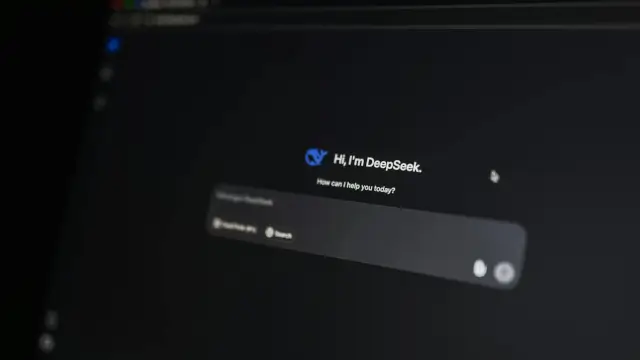
AI Browsers are autonomous software agents that navigate the web, fill forms, and execute complex multi-step tasks without manual human clicks. Unlike traditional browsers like Chrome or Safari that act as passive windows to the internet, agentic browsers utilize multimodal reasoning and computer-use capabilities to turn the web into an actionable workspace, effectively replacing "searching" with "executing."
What You Will Learn
- ✓ The shift from Passive Browsing to Agentic Execution.
- ✓ Key players: OpenAI Operator, Perplexity Comet, and Google Mariner.
- ✓ Technical architecture: How "Computer Use" models see and click.
- ✓ Security & Privacy: The risks of giving AI full control of your session.
Related: Explore - What is MCP?, Inside the AI Brain, or AI vs Generative AI.
For over three decades, the web browser was a tool for humans to *look* at things. We opened tabs, scrolled through lists, and manually clicked buttons to buy products or book flights. In 2026, that fundamental behavior is being disrupted. We are moving from the era of the **Web Viewer** to the era of the **Web Operator**.
The rise of "Agentic Browsing" means you no longer visit a travel site to book a vacation. Instead, you tell your AI browser: "Find a flight to Tokyo under $800 for next Tuesday, book it using my saved card, and add it to my calendar." The browser then navigates the site, handles the complex UI logic, and confirms the transaction-all without you ever seeing the travel website's homepage.
The Death of the Passive Tab: Traditional vs. Agentic Browsing
The difference between a traditional browser (Chrome, Safari, Edge) and an agentic browser (Operator, Comet, Arc Max) is the difference between a map and a chauffeur. One shows you where to go; the other takes you there.
Meet the Operators: Key Players in 2026
Several technology giants and well-funded startups have launched "Web Operators" that are already siphoning traffic away from traditional search engines.
OpenAI Operator
Originally a standalone experiment, Operator is now integrated into ChatGPT Enterprise. It specializes in consumer tasks like booking, shopping, and data entry across complex web forms.
Perplexity Comet
Comet isn't just a search engine; it's a browsing agent that can visit 20+ tabs simultaneously to synthesize a deep technical report or compare real-time product prices.
While these tools are powerful, Anthropic's Computer Use capability remains the underlying infrastructure for many "headless" agents. Claude can now see a live stream of a web browser, identify the DOM elements (buttons, inputs), and issue precise keyboard and mouse commands just like a human would.
How Agentic Browsers Actually "See" the Web
The technical shift driving this revolution is the move from **VNC-based streaming** to **native browser automation**. In 2024, agents were slow because they had to wait for screenshots to be processed. In 2026, agents like *Browser Use* and *Skyvern* interact directly with the browser's rendering engine.
When using AI browsers, always enable "Human-in-the-loop" mode for financial transactions. While these agents are 95%+ accurate, a single UI misinterpretation can lead to an incorrect purchase. 2026's best browsers now require biometric confirmation before any 'Buy' button is clicked.
Adoption and Impact: The Numbers
The transition is happening faster than predicted. As Brave and Perplexity report massive jumps in user sessions, the traditional "gateway" role of Google Search is being bypassed by direct action agents.
Key Takeaways
- AI Browsers move beyond viewing to autonomous task execution.
- OpenAI Operator and Perplexity Comet lead the consumer agent market.
- Multimodal models enable AI to "see" and "click" like a human user.
- Security remains a critical barrier, requiring biometric and human-in-the-loop gates.
Last Updated: May 06, 2026 | Source: OpenAI / Similarweb (Official Reports)
Frequently Asked Questions

SK Jabedul Haque
Building India's most trusted finance education platform — simplifying news, schemes and market trends so anyone can understand and invest confidently.
Read full bio


Never miss an update
Get our clearest explainers on schemes, markets and money — read what matters, without the noise.
Explore more articles