Stock Market Crash 2026: Should You Buy, Hold or Sell?
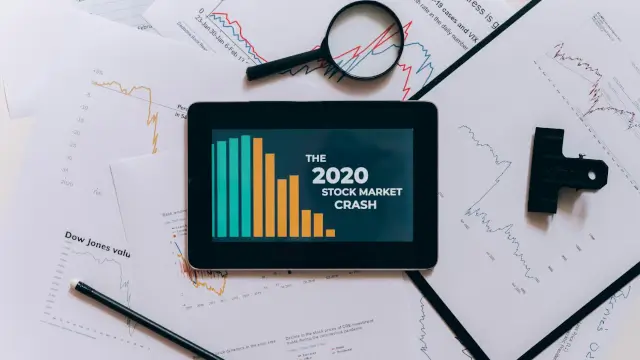
Stock Market Crash 2026 headlines can create pressure to act before the facts are clear. A sharp index move may reflect several risks at once, but the right response depends on the security, the investor's time horizon, liquidity needs, and risk capacity. No article can determine a personal buy, hold, or sell decision without those details.
SEBI identifies market, inflation, liquidity, business, volatility, and currency risks in securities investing. It also says investors should understand their goals, objectives, and risk appetite. NSE investor education warns against unsolicited stock tips, fake trading schemes, and misleading influencers. The practical lesson is to use a documented process instead of reacting to a headline.
For the live market snapshot, consult the NSE Investor's Home page. For risk definitions, read SEBI's securities market risk guide. The original source should be checked again when market conditions change.
What You'll Learn
- How to distinguish a market headline from a verified market fact.
- How to review buy, hold, or sell questions by time horizon and cash need.
- How to separate an individual company problem from a broad market move.
- How to avoid tips, panic trades, and unsupported recovery forecasts.
What Does a Stock Market Crash Mean?
There is no single universal threshold that turns every decline into a crash. Market participants may use the word for a rapid and broad fall, while another observer may describe the same period as a correction or a volatile session. The label alone does not explain the cause, duration, or effect on a particular portfolio.
First identify what moved. An index, sector, stock, mutual fund, exchange traded fund, bond, and derivative can respond differently to the same event. Then identify the reference period, the source of the price, and whether the figure is a live quote, an official close, or a later revision.
A headline can be useful for discovery, but it is not a portfolio diagnosis. A decision record should state the instrument, purchase purpose, time horizon, cash requirement, risk capacity, and evidence considered.
What Do SEBI, NSE, and NISM Explain?
SEBI's investor page lists market or systematic risk as the chance of losses from factors affecting financial markets and the wider economy. It separately describes inflation risk, liquidity risk, business risk, volatility risk, and currency risk. It points to asset allocation and diversification across companies and asset classes as ways investors may try to reduce risk.
NSE's investor section provides material on investor rights and obligations, opening a trading account, investor awareness, unsolicited stock tips, and fake trading scams. NISM's securities-market tutorial explains that risk is the possibility that expected returns may not materialise and distinguishes the primary market from the secondary market.
- SEBI identifies market, inflation, liquidity, business, volatility, and currency risks.
- SEBI says investors should understand their goals, objectives, and risk appetite.
- SEBI identifies asset allocation and diversification across companies and asset classes as ways investors may try to mitigate risk.
- NSE provides investor education and warnings on unsolicited tips, fake trading schemes, and misleading influencers.
- NISM explains that risk is the possibility that expected returns may not materialise.
These sources explain risk and investor protection. They do not predict the next index move or prescribe a personal trade.
Why Can Prices Fall Together?
A broad decline can reflect changes in economic expectations, interest rates, currency conditions, commodity prices, earnings outlook, foreign flows, or investor risk appetite. Several factors can interact, and a headline may identify a possible cause without proving its size or duration.
Check the source and date for each explanation. A company can fall with the market even when its own results are unchanged. A sector can fall for an industry reason while the wider index is stable. A stock can also move because of a company announcement, valuation change, liquidity condition, or technical order flow.
Do not copy a causal explanation from a social post into a decision note. Record the claim, open the original release or filing, and mark it as confirmed, disputed, or unverified. Our dated RBI policy explainer shows why the meeting date and policy source must stay visible when discussing a market event.
How Should You Read a Sudden Market Decline?
Begin with a calm fact sheet. Note the instrument, exchange, time stamp, reference period, price basis, and source. Then ask whether the move is broad or concentrated. A single red day does not establish a lasting trend, and a green day does not remove the risks described by SEBI.
| Question | Evidence to collect | Why it matters |
|---|---|---|
| What moved? | Index, sector, stock, fund, bond, or derivative | Different instruments carry different risks |
| When did it move? | Trading session and reference date | Prevents mixing live and historical information |
| Why is it said to have moved? | Exchange filing, regulator page, company release, or credible report | Separates evidence from commentary |
| Who needs cash? | Known expenses, debt payments, and emergency reserve | Liquidity can matter more than a market view |
| What changed in the thesis? | Business results, valuation, governance, or only market sentiment | Supports a review of the original purpose |
Use your own records for purchase price, allocation, and cash needs. Public articles cannot see those details and therefore cannot decide what action is suitable for you.
How to Review a Buy, Hold, or Sell Question?
A buy decision requires a reason for owning the security, a valuation basis, a risk limit, and money that is not needed for a near-term obligation. A hold decision requires checking whether the original thesis still stands and whether the position remains suitable within the overall allocation. A sell decision may relate to changed facts, a cash need, a risk limit, or a better documented use of funds.
These are decision categories, not instructions. The same market move may be tolerable for one long-term investor and unsuitable for another person who needs cash soon. Avoid converting a general market observation into a personal recommendation.
| Decision question | What to review | Evidence that helps |
|---|---|---|
| Could I buy? | Purpose, valuation, downside, and position size | Company filings, fund documents, and current risk disclosure |
| Could I hold? | Original thesis, new facts, and concentration | Results, filings, and the portfolio record |
| Could I sell? | Changed thesis, cash need, risk limit, and costs | Updated facts rather than a social-media tip |
| Could I wait? | Whether the decision is urgent or driven by fear | A written cooling-off period and a source list |
Before any action, consider regulated professional advice where the decision is material to your finances. Do not use a market article as a substitute for your own suitability assessment.
What If You Invest Through a SIP?
A systematic investment plan is a method of investing a chosen amount at regular intervals. It is not a guarantee against loss and it does not remove market risk. A falling market can change the value of existing units, while new instalments may buy at different prices. The suitability of continuing, changing, or stopping depends on the product, goal, cash flow, and risk capacity.
Review the fund's current documents, objective, portfolio, costs, risk disclosure, and your reason for choosing it. Do not increase an instalment simply because a headline says that prices are cheap. Do not stop an investment solely because a single session was negative.
Our PPF, SIP, and FD comparison explains why a SIP is an investment method while PPF and FD have different structures and risks.
What If You Hold Individual Stocks?
For an individual company, review the business rather than only the chart. Check the latest financial statements, exchange filings, debt, cash flow, segment conditions, governance disclosures, and the reason the stock was purchased. A broad market fall may not change the company, while a company disclosure may change the investment case even if the index is stable.
| Area | Review question | Source to check |
|---|---|---|
| Business | Has demand, competition, or execution changed? | Company filing, results release, or investor presentation |
| Financial position | Have debt, cash flow, or margins changed? | Audited or reported financial statements |
| Governance | Is there a new disclosure or related-party concern? | Exchange filing and company disclosure |
| Valuation | Does the price still match the documented thesis? | Comparable basis with dated inputs |
| Portfolio role | Is the position too concentrated for the investor? | Personal allocation record and risk capacity |
Do not rely on an influencer's target price, a forwarded message, or a promise of quick returns. NSE's investor education material specifically warns about unsolicited tips and fake trading scams.
What Should Investors With Near-Term Cash Needs Do?
Money needed for an upcoming expense has a different role from money allocated to a long-term goal. A market decline can expose a mismatch between the investment horizon and the cash requirement. Review the timing and amount of the obligation, available emergency reserves, debt commitments, and the liquidity of each holding.
Liquidity risk matters because an investment may not be bought or sold promptly at the expected price. Selling in a falling market can also create a loss, tax consequence, or transaction cost. The right question is not whether the market will recover on a preferred schedule. It is whether the plan can meet the known cash need without relying on an uncertain price.
Keep this review separate from a forecast. No source reviewed for this article establishes when a future decline will end or when a particular investment will recover.
What Should Traders Check Before Acting?
Trading decisions carry different risks from long-term investing because timing, transaction costs, liquidity, margin, and order execution matter. A market headline is not a trading signal. Before placing an order, check the instrument, order type, available funds, risk limit, exit rule, and the possibility of rapid price movement.
Do not increase position size to recover a previous loss. Do not treat borrowed exposure as a shortcut to a certain result. Verify broker and exchange information through official channels, and protect account credentials. NSE investor education includes material on trading-account safety and warnings about fake trading schemes.
Our dated energy-market explainer illustrates why event-driven market commentary should retain its source date and avoid presenting an uncertain outcome as a forecast. You can also browse the Current Affair Markets section for other dated market explainers.
Which Crash-Market Mistakes Should Be Avoided?
The first mistake is treating a headline as a complete diagnosis. The second is using past recovery stories as a promise about the future. The third is confusing a diversified fund with a risk-free product. The fourth is following an unregistered tip, a fake testimonial, or a message that pressures immediate payment.
Another mistake is checking only the price and ignoring the original purpose of the investment. Write down the facts that would change your view before the market is moving quickly. If you cannot explain the security, its risks, and the reason it fits your goal, pause and seek appropriate information.
| Mistake | Why it is risky | Better practice |
|---|---|---|
| Panic selling | It may turn a temporary price move into a realised loss | Review cash needs, thesis, and risk limit separately |
| Blind buying the dip | A lower price does not prove value or suitability | Check the business, valuation, and allocation |
| Trusting tips | The source may be unverified or fraudulent | Use exchange, regulator, and company sources |
| Using old data | Past facts may not describe current conditions | Record the reference date and refresh the source |
| Ignoring liquidity | Cash may not be available when required | Match the instrument with the time horizon |
How Should You Record the Review?
Keep a short record of the date, security, source documents, original purpose, time horizon, cash need, position size, changed facts, and unanswered questions. Write the possible actions without turning them into an instruction. Set a date to review the evidence again, especially when the decision depends on a filing, policy announcement, or other changing fact.
For a wider view of household financial products, our PM Jan Dhan Yojana explainer covers a different product category and should not be treated as an equity-market recommendation.
Conclusion: Use a Process Instead of a Market Prediction
The question of whether to buy, hold, or sell during Stock Market Crash 2026 cannot be answered for every investor in one sentence. Start with verified facts from SEBI, NSE, exchange filings, company disclosures, and dated fund documents. Then review the investment purpose, time horizon, liquidity need, risk capacity, position size, and what has changed in the original thesis.
A disciplined process does not promise that the next market move can be predicted. It helps reduce avoidable errors, makes uncertainty visible, and keeps a market headline from becoming an automatic trade instruction. This article provides general education only and is not personalized financial advice.
Frequently Asked Questions

SK Jabedul Haque
Building India's most trusted finance education platform — simplifying news, schemes and market trends so anyone can understand and invest confidently.
Read full bio


Never miss an update
Get our clearest explainers on schemes, markets and money — read what matters, without the noise.
Explore more articles