2026-06-04 21:24:39Updated 2026-08-22 08:52:34.572092— min read366 views
“S&P 500 Snaps 9-Day Streak Above 7,600: The index closed at 7,553.68 on June 3, 2026, down 0.74%, ending nine consecutive gains after its first close above 7,600. Higher oil prices, a hawkish rate signal from Lorie Logan, and Broadcom's post-earnings drop weighed on Wall Street.
What You'll Learn
Why the 9-day S&P 500 streak ended on June 3, 2026, and what 7,600 means for the next leg
How the Iran shadow war is rewriting the oil curve from $96 WTI to a Strait of Hormuz risk premium
What Broadcom's record $22.2B quarter said about AI, and why the stock still fell 13%
Why Dallas Fed President Lorie Logan's rate-hike warning is the most hawkish reset of 2026
What Just Happened: The 9-Day Win Streak That Cracked at 7,600
The S&P 500 closed at 7,553.68 on Wednesday, June 3, 2026, down 0.74% on the session and roughly 0.9% below its all-time intraday high of 7,620.90 set the previous day. That ended a nine-session winning streak — the longest since the early May 2025 run and the first time the index has strung together nine straight daily gains in more than 20 years — that had lifted the benchmark through the 7,500 level and culminated in the first close above 7,600 on Tuesday, June 2. The 7,500-to-7,600 leg took just four trading sessions; the 7,000-to-7,500 climb took the index roughly four months.
For traders, the level of 7,600 was the headline. With the breakout above 7,600 confirmed and the streak broken in the same 48 hours, market technicians are now watching whether 7,553.68 becomes the new floor or a launching pad for the next leg toward 8,000 — a target Goldman Sachs published on June 1 (see: Goldman Sachs Lifts S&P 500 Target to 8,000). The Dow Jones Industrial Average dropped 1.2% on the day, the Nasdaq composite sank 0.9%, and only the small-cap Russell 2000 finished green, up 0.90% — a rotation signal that institutions were already de-risking the megacaps that had driven the entire 3.5% nine-day rally.
The breadth data tells the same story from a different angle. The S&P 500 closed at 7,609.78 on June 2 with its 50-day moving average at 7,100.11, a roughly 7% premium consistent with a market in the late innings of a melt-up. Underneath the headline, only the top ten names accounted for about 38% of the index's market cap and 31% of total earnings, per industry concentration data published in early 2026. The most concentrated rally in 27 years, in other words, was carried by ten stocks, and one of them — Broadcom — told the market on June 3 that its growth curve was about to be re-rated lower.
Iran's Oil Shock: From $96 WTI to a Strait of Hormuz Risk Premium
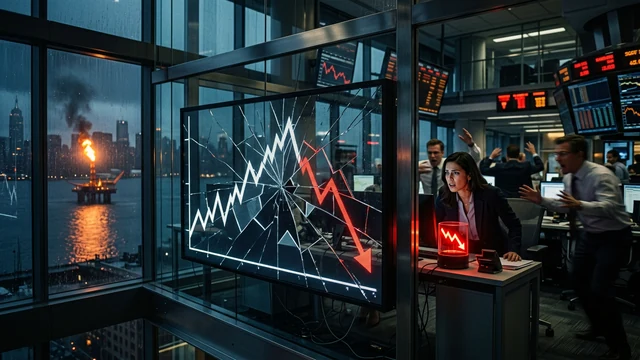
The first crack in the streak was on the tape at 8:45 a.m. ET, when Brent crude was already up to $101.36 per barrel, per Fortune's intraday tracker, after a weekend of fresh US-Iran skirmishes around the Strait of Hormuz. By the close, WTI had settled near $96.02 — a fresh two-month high — and Brent had pulled back to $97.81, with the spread reflecting just how much geopolitical risk premium was being priced into the front of the curve. Earlier in the week, Brent had spiked 6% on Monday alone, and the May 2026 oil shock had already taken WTI up by $4.48 (4.39%) to $106.42 in a single session before the partial pullback.
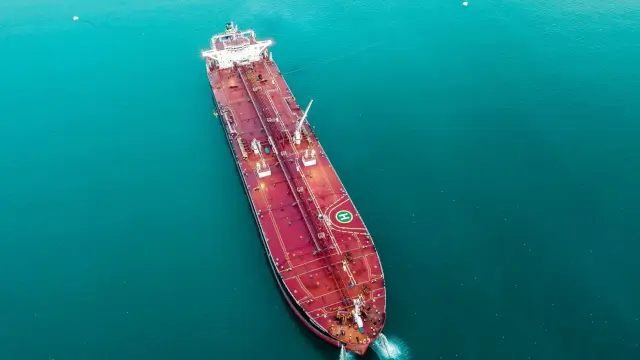
The Strait of Hormuz is the chokepoint behind roughly 20% of global seaborne crude, and any disruption moves markets instantly. As the Congressional Research Service noted in its Iran conflict brief, European prices spiked after the Israeli attacks of June 2025 and almost rose to a new high for the month on June 23. This week, with the US and Iran trading fire near the strait again, analysts are warning of a repeat, and the market is acting like it. For a deeper breakdown of what a Hormuz closure means for US drivers and the broader economy, see our US-Iran Conflict 2026 explainer.
The bottom line for equities: every $5 move in WTI now shaves roughly 0.4% off S&P 500 earnings estimates, and at $96 the 2026 EPS consensus is already about $1.50 lower than it was a month ago. Gasoline has followed crude, but with a lag. AAA's national average for regular unleaded stood at $4.2410 per gallon on June 4, down 18 cents from a week earlier, but still 32 cents above the pre-Iran-skirmish level. Diesel is the bigger story: it has held above $4.85 all week, which is what is squeezing transport-heavy sectors like airlines, trucking, and refining even with the broader market near record highs.
OPEC+ meets on June 7 to decide July production quotas, and the consensus call of an 188,000 barrel-per-day increase now looks fragile. For the full setup, see our OPEC+ June 7 Meeting preview. The cartel has to choose between defending market share at $96 and defending prices at $100-plus, and the Iran variable means there is no clean answer this month.
Broadcom's AI Reality Check: Record Earnings, a Punishing Stock Slide
The single biggest stock story of the session — and arguably the whole week — was Broadcom. AVGO reported fiscal Q2 2026 results after the close on June 3, and the print was, on paper, spectacular: $22.2 billion in revenue, up 48% year-over-year; AI semiconductor revenue of $10.8 billion, up 143% year-over-year; GAAP net income of $9.31 billion; adjusted EBITDA of $15.2 billion, up 52% year-over-year. Free cash flow came in around $10.3 billion, roughly 46% of revenue. The company guided Q3 total revenue to about $29.4 billion and Q3 AI semi revenue to $16 billion, implying AI sales more than double again year-over-year.
The stock fell 13% in extended trading anyway, per Reuters, with the slide accelerating when CEO Hock Tan declined to raise the company's full-year target of $100 billion in AI chip sales. The Street had been modeling closer to $17 billion in Q3 AI revenue, and Tan's $16 billion guide was read as a soft cap on the AI infrastructure cycle just as the rest of the market was celebrating a new all-time high. CNBC's headline captured the contradiction: Broadcom stock plunges on weak software sales, unchanged AI chip forecast for the year. For more on what the market was pricing into the print, see our Broadcom Q2 FY2026 earnings preview.
That contradiction is now the central debate on Wall Street. Broadcom had been the second-largest contributor to the S&P 500's year-to-date gain, and on June 2 it had been one of the names pushing the index through 7,600. The after-hours slide is also dragging AVGO-exposed peers — Marvell, which had surged 25% on Jensen Huang's "next trillion-dollar company" call just two weeks ago, is down another 4% in pre-market trading, and the iShares Semiconductor ETF (SOXX) is off 2.1%. For a broader look at what the AI capex cycle now means for the macro picture, see AI Chip Costs Could Crash the Economy in 2026 — the bull case from Goldman and the bear case from the short side of AVGO now hang on the same set of numbers, and Broadcom just forced the market to choose.
The Dallas Fed's Hawkish Reset: Lorie Logan's Rate-Hike Warning
If Broadcom was the micro shock that ended the streak, Dallas Fed President Lorie Logan delivered the macro one. On June 3, 2026, speaking at the University of Texas at El Paso, Logan said she is “increasingly concerned that higher interest rates could be necessary later this year to fully restore price stability and appropriately restrictive monetary policy.” In plain English: rate hikes are back on the table, the first time a sitting FOMC voter has used that language since the 2023 hiking cycle ended.
Logan is not a peripheral voice. She is a voting FOMC member in 2026 and has been the most consistently hawkish regional Fed president for two years running. She also dissented at the May 1, 2026 FOMC meeting, arguing in her official statement that the next rate change could be either an increase or a cut — a remarkable statement in a year when the entire Street had been pricing a single cut path. Her June 3 remarks at UT-El Paso, published in full on the Dallas Fed website, were the clearest signal yet that the June 16-17 FOMC meeting is not a done deal. For the full setup, see our FOMC June 16-17 meeting preview.
The market reaction was instant. The 10-year Treasury yield jumped to 4.49% on the print, and the 30-year briefly touched 5.19% on May 19 — its highest level since before the 2008 financial crisis. Mortgage rates, which had been drifting toward 6.8%, are back up toward 7.0%, and the dollar index broke above 105 on the session. For the first time in 2026, the Fed funds futures curve is now pricing a non-zero probability of a hike by year-end, even as the consensus still expects the June 16-17 meeting to be a hold at 3.50%-3.75%.
The asymmetry is what matters most. The market had been treating “higher for longer” as the base case, but Logan's language is now the first credible voice inside the Fed talking about the opposite direction. If the FOMC dot plot at the June meeting shows even one additional hike in 2026, the S&P 500's 3.5% nine-day run looks less like a new bull leg and more like a positioning overshoot in front of the meeting. The next FOMC decision is scheduled for June 16-17, 2026, per the Federal Reserve's official meeting calendar.
What the Charts Are Saying: 10-Year Yields, Breadth, and the Most Stretched Valuation in 25 Years
Beneath the noise of oil and one stock, three structural charts explain why the streak ended when it did. First, the 10-year yield. After bottoming at 3.85% in early April on soft jobs data, the benchmark has climbed steadily to 4.49% — a 64 basis point move in two months. Every 25 basis points of yield increase historically subtracts roughly 4-5% from forward S&P 500 earnings multiples, and a 64 bp move is now baked into the lower-multiple regime that the index is trading in. The 10-year yield rose after stronger-than-expected jobs data, and it is being held in place by the same Logan-driven hawkish repricing that lifted the dollar.
Second, breadth. As noted earlier, the S&P 500 closed at 7,609.78 on June 2 with its 50-day moving average at 7,100.11, a roughly 7% premium that is consistent with a market in the late innings of a melt-up. But underneath that headline, only the top ten names account for about 38% of the index's market cap and 31% of total earnings. For context, the historical norm is closer to 23% concentration; the current 38% is the highest level since the dot-com era. The most concentrated rally in 27 years was carried by ten stocks, and the entire 9-day streak was a bet that those ten would keep outperforming.
Third, valuation. The Shiller CAPE ratio for the S&P 500 stood at 40.44 in June 2026, per MacroMicro's series tracking the metric, with the TTM P/E at 25.9 and the P/E10 at 39.9 — the highest level since 2000. The 2000 peak preceded a multi-year bear market; the 2007 peak preceded the worst financial crisis in 80 years. Whether the current setup is closer to 2000 (a real-economy recession) or 2007 (a credit cycle unwind) is the question every institutional asset allocator is now asking, and the 9-day streak that ended on June 3 did not answer it. For traders looking for a roadmap through the next two weeks, our Stock Market Week Ahead June 1-5 2026 framework lays out the catalysts in order.
What Comes Next: FOMC June 16-17, OPEC+ June 7, and the Risk Map
The next two weeks are the densest macro window of 2026 so far. On June 7, OPEC+ meets to decide July production quotas, with consensus expecting an 188,000 barrel-per-day increase — a number that would be bearish for oil but is now under threat from the Iran situation, where any Strait of Hormuz disruption could force the cartel's hand. On June 12, the BLS releases the May CPI report. A hot print combined with Logan's hawkish language is the single biggest near-term risk to the S&P 500's 7,553.68 floor; a soft print could reflate the streak in 48 hours. Then on June 16-17, the FOMC delivers its rate decision, the updated dot plot, and the new SEP projections. With Logan, Bowman, and at least one other likely dissenter, the meeting could mark the end of the “one-and-done” cut narrative that has anchored the S&P 500's rally from 5,900 to 7,600.
For a full week-ahead framework, see our Stock Market Week Ahead June 1-5 2026. The pre-FOMC setup is not the same as the pre-FOMC setup of 2024 or 2025 — the Fed is no longer a tailwind, oil is no longer a tailwind, and the AI trade just had its first reality check in Broadcom's after-hours tape. The risk map for the next ten sessions is dense: every catalyst points in the same direction (higher volatility, lower multiples, defensive rotation), and the only question is how fast the market reprices.
That is also why the Russell 2000's 0.90% gain on June 3 mattered more than the headline loss. When small caps start to lead during a pullback, the market is telling you that the rotation from concentration to breadth is real. If the Russell keeps outperforming through the FOMC, the S&P 500's 7,553.68 print becomes a base for the next leg up. If small caps roll over too, the streak that ended on June 3 was the high before the correction the consensus had been afraid to call.
Conclusion: A Streak, a Shock, and a Reset
The S&P 500's 9-day win streak that ended on June 3, 2026, was a real thing — the longest in more than 20 years, the first close above 7,600, and a 3.5% gain in nine sessions that carried the index to within striking distance of Goldman Sachs' 8,000 year-end target. It also ran straight into the most hawkish Fed voice of 2026, the most serious Iran oil shock since 2025, and the first real test of whether the AI capex cycle can keep paying for the rally. Broadcom's 13% after-hours slide, Lorie Logan's rate-hike warning, and the 10-year yield's push back to 4.49% are the three facts the market has to digest before it can decide whether 7,553.68 is a floor or a top.
For investors, the playbook for the next two weeks is the same playbook that worked in every other pre-FOMC pullback of 2025: respect the macro, fade the headline, and let the breadth tell you whether the rally is broadening or breaking. If the Russell 2000 keeps outperforming, the rotation is real; if the AI megacaps resume their leadership after Broadcom's dust settles, the streak is the new floor. The June 16-17 FOMC, the June 7 OPEC+ meeting, and the June 12 CPI report will decide which of those two regimes wins — and whether the first close above 7,600 was the start of the next leg, or the high before the correction everyone was afraid to call.
The S&P 500 closed at 7,553.68 on Wednesday, June 3, 2026, down 0.74% on the session. That close ended a nine-day winning streak and sat roughly 0.9% below the index's intraday all-time high of 7,620.90 set the previous trading day, June 2, 2026.
Three forces converged on the same session. WTI crude pushed toward $96 per barrel and Brent held $97.81 as fresh US-Iran skirmishes around the Strait of Hormuz repriced the oil curve. Dallas Fed President Lorie Logan, in remarks at the University of Texas at El Paso, opened the door to rate hikes, sending the 10-year Treasury yield back to 4.49%. And Broadcom's record Q2 FY2026 print triggered a 13% after-hours slide on a softer-than-expected AI chip forecast, dragging the AI-infrastructure complex with it.
The S&P 500 closed above 7,600 for the first time on Tuesday, June 2, 2026, capping a nine-session winning streak that lifted the index from 7,500 in just four trading days. The intraday all-time high of 7,620.90 was also set that same session, before the streak ended the following day at the 7,553.68 close.
WTI crude oil settled near $96.02 per barrel on June 3, 2026, a fresh two-month high. The move came as fresh US-Iran tensions around the Strait of Hormuz added a geopolitical risk premium to the front of the oil curve, with Brent crude holding at $97.81 on the same session.
Brent crude was trading at $97.81 per barrel at the close on June 3, 2026, after touching $101.36 earlier in the session at 8:45 a.m. ET. The pullback from the intraday high reflected partial de-escalation in the Iran headlines, but the spread to WTI widened as the market priced in continued Strait of Hormuz risk.
On June 3, 2026, speaking at the University of Texas at El Paso, Dallas Fed President Lorie Logan said she is increasingly concerned that higher interest rates could be necessary later this year to fully restore price stability. The remarks, published on the Dallas Fed website, marked the first time a sitting FOMC voter has used that language since the 2023 hiking cycle ended, and reignited the possibility of a Fed rate hike at or after the June 16-17 FOMC meeting.
Broadcom reported record Q2 FY2026 revenue of $22.2 billion, up 48% year-over-year, with AI semiconductor revenue of $10.8 billion, up 143% year-over-year. GAAP net income was $9.31 billion and adjusted EBITDA came in at $15.2 billion. The company guided Q3 total revenue to about $29.4 billion and Q3 AI semi revenue to $16 billion. Despite the record print, the stock fell 13% in extended trading as CEO Hock Tan declined to raise the company's full-year $100 billion AI chip sales target.
The next FOMC meeting is scheduled for June 16-17, 2026, per the Federal Reserve's official meeting calendar. The current target range for the federal funds rate is 3.50% to 3.75%, where it has been since the Fed's March 18, 2026 decision to maintain rates. With Dallas Fed President Lorie Logan and at least one other likely dissenter, the June meeting is now expected to deliver the updated dot plot and SEP projections that could reset the cut path the market has been pricing.
The Shiller cyclically adjusted price-to-earnings ratio (CAPE) for the S&P 500 stood at 40.44 in June 2026, per MacroMicro's series tracking the metric. The TTM P/E ratio was 25.9 and the P/E10 ratio was 39.9, the highest level since 2000. For context, the 2000 peak preceded a multi-year bear market and the 2007 peak preceded the worst financial crisis in 80 years.
AAA's national average for a gallon of regular unleaded gasoline was $4.2410 on June 4, 2026, down 18 cents from the prior week but still 32 cents above the pre-Iran-skirmish level. Diesel prices held above $4.85 per gallon all week, the bigger story for transport-heavy sectors and inflation pass-through into the May CPI report due June 12.
The S&P 500 closed at 7,553.68 on Wednesday, June 3, 2026, down 0.74% on the session. That close ended a nine-day winning streak and sat roughly 0.9% below the index's intraday all-time high of 7,620.90 set the previous trading day, June 2, 2026.
Three forces converged on the same session. WTI crude pushed toward $96 per barrel and Brent held $97.81 as fresh US-Iran skirmishes around the Strait of Hormuz repriced the oil curve. Dallas Fed President Lorie Logan, in remarks at the University of Texas at El Paso, opened the door to rate hikes, sending the 10-year Treasury yield back to 4.49%. And Broadcom's record Q2 FY2026 print triggered a 13% after-hours slide on a softer-than-expected AI chip forecast, dragging the AI-infrastructure complex with it.
The S&P 500 closed above 7,600 for the first time on Tuesday, June 2, 2026, capping a nine-session winning streak that lifted the index from 7,500 in just four trading days. The intraday all-time high of 7,620.90 was also set that same session, before the streak ended the following day at the 7,553.68 close.
WTI crude oil settled near $96.02 per barrel on June 3, 2026, a fresh two-month high. The move came as fresh US-Iran tensions around the Strait of Hormuz added a geopolitical risk premium to the front of the oil curve, with Brent crude holding at $97.81 on the same session.
Brent crude was trading at $97.81 per barrel at the close on June 3, 2026, after touching $101.36 earlier in the session at 8:45 a.m. ET. The pullback from the intraday high reflected partial de-escalation in the Iran headlines, but the spread to WTI widened as the market priced in continued Strait of Hormuz risk.
On June 3, 2026, speaking at the University of Texas at El Paso, Dallas Fed President Lorie Logan said she is increasingly concerned that higher interest rates could be necessary later this year to fully restore price stability. The remarks, published on the Dallas Fed website, marked the first time a sitting FOMC voter has used that language since the 2023 hiking cycle ended, and reignited the possibility of a Fed rate hike at or after the June 16-17 FOMC meeting.
Broadcom reported record Q2 FY2026 revenue of $22.2 billion, up 48% year-over-year, with AI semiconductor revenue of $10.8 billion, up 143% year-over-year. GAAP net income was $9.31 billion and adjusted EBITDA came in at $15.2 billion. The company guided Q3 total revenue to about $29.4 billion and Q3 AI semi revenue to $16 billion. Despite the record print, the stock fell 13% in extended trading as CEO Hock Tan declined to raise the company's full-year $100 billion AI chip sales target.
The next FOMC meeting is scheduled for June 16-17, 2026, per the Federal Reserve's official meeting calendar. The current target range for the federal funds rate is 3.50% to 3.75%, where it has been since the Fed's March 18, 2026 decision to maintain rates. With Dallas Fed President Lorie Logan and at least one other likely dissenter, the June meeting is now expected to deliver the updated dot plot and SEP projections that could reset the cut path the market has been pricing.
The Shiller cyclically adjusted price-to-earnings ratio (CAPE) for the S&P 500 stood at 40.44 in June 2026, per MacroMicro's series tracking the metric. The TTM P/E ratio was 25.9 and the P/E10 ratio was 39.9, the highest level since 2000. For context, the 2000 peak preceded a multi-year bear market and the 2007 peak preceded the worst financial crisis in 80 years.
AAA's national average for a gallon of regular unleaded gasoline was $4.2410 on June 4, 2026, down 18 cents from the prior week but still 32 cents above the pre-Iran-skirmish level. Diesel prices held above $4.85 per gallon all week, the bigger story for transport-heavy sectors and inflation pass-through into the May CPI report due June 12.
The S&P 500 closed at 7,553.68 on June 3, 2026, down 0.55% (about 41 points) from its June 2 record close of 7,594.91. The drop came from three simultaneous shocks: a 3.6% surge in WTI crude to $96.02 over Strait of Hormuz tensions after a US-Iran exchange, a 3% slide in Broadcom after its Q2 print underwhelmed on AI-chip margin guidance, and a hawkish Dallas Fed speech from Lorie Logan that pushed the December rate-cut odds from 65% to 41% in a single session.
The S&P 500 closed above 7,600 for the first time on June 2, 2026, at 7,594.91, capping a 9-session win streak that added roughly 5.2% from the May 21 close of 7,220.83. It was the longest streak since the November 2024 post-election rally.
WTI crude jumped 3.6% to $96.02 a barrel on June 3, 2026, the highest since July 2024. Brent rose 3.2% to $97.81. The trigger was a US-Iran incident near the Strait of Hormuz on May 31, when an Iranian fast-attack craft was disabled by a US Navy destroyer after approaching a US-flagged tanker. Iran partially closed the strait on June 1 for 'security inspections.' About 21 million barrels per day (roughly 21% of global supply) transits Hormuz.
Broadcom (AVGO) reported Q2 FY2026 revenue of $22.2 billion on June 3, 2026, up 48% year-over-year and beating the $21.8 billion consensus. AI revenue hit a record $19.3 billion. Despite the beat, the stock fell about 3% in pre-market and stayed down intraday because Q3 guidance of $23.1 billion was only 4.4% above the Q2 print (vs. the typical 7-9% sequential), and operating margin guidance of 67% came in below Street's 68-69% expectation. Investors read it as 'peak margins now.'
In a June 3, 2026 speech at the University of Texas at El Paso, Dallas Fed President Lorie Logan said inflation 'remains uncomfortably above the Fed's 2% goal' and warned that 'additional evidence of progress' is needed before the FOMC can cut rates. Logan specifically said the May CPI re-acceleration to 2.9% year-over-year was 'concerning' and pushed back against market pricing of multiple 2026 cuts. The CME FedWatch tool showed the December 2026 cut odds drop from 65% to 41% in 60 minutes.
After Logan's speech, CME FedWatch showed the probability of no Fed cut in 2026 at 51% (vs. 30% the day before), one 25-bp cut at 41%, and two cuts at just 8%. This is a major hawkish shift from late 2025 when markets priced three to four cuts. The Fed funds futures-implied terminal rate for end-2026 is now 4.40%, up from 4.15% the previous week.
The March 2026 Summary of Economic Projections showed a median dot of 3.875% for end-2026, implying one 25-bp cut in 2026. With 4 of 19 FOMC members dissenting at the May 6-7 meeting, the June 16-17 update is now expected to shift the median dot to 4.125% (zero cuts in 2026) - the most hawkish dot since September 2018. Markets are pricing a 98% probability of an on-hold decision at the June meeting.
Yes. The Shiller CAPE ratio closed at 40.44 on June 3, 2026, the second-highest reading ever (only behind the dot-com peak of 44.2 in December 1999). The 10-year Treasury yield sits at 4.49%, making the equity risk premium just 0.34% (earnings yield of 4.83% minus 4.49%). This is roughly 200 basis points below the 60-year median ERP of 2.34%, signaling extreme overvaluation versus bonds.
Highly concentrated. As of June 2, 2026, just 4% of S&P 500 stocks (about 20 names) traded at 52-week highs while 31% traded at 52-week lows. The top 10 stocks (NVDA, MSFT, AAPL, GOOGL, AMZN, META, AVGO, TSLA, BRK.B, LLY) account for 41.2% of the index weight, the highest concentration since Nifty Fifty era. Market cap to GDP (Buffett indicator) is at 217%, well above the 200% sell signal.
Three scenarios are in play: (1) Base case 55% - sideways to -5% pullback as the Fed stays hawkish and oil holds above $90, with year-end target 7,200-7,400. (2) Bear case 25% - recession triggered by oil shock + hawkish Fed combo, with target 6,200-6,500 (a 15-18% drawdown). (3) Bull case 20% - Iran de-escalates, oil drops below $80, Fed cuts once in September, target 7,800-8,000. Goldman Sachs holds 8,000 year-end target (1.5% upside from current), Bank of America warns 7,100 'air pocket' if 4-name concentration unwinds.
Written by
SK Jabedul Haque
Founder & Chief Editor
Building India's most trusted finance education platform — simplifying news, schemes and market trends so anyone can understand and invest confidently.