
The June 5 Bloodbath: By the Numbers
June 5, 2026 will go down as one of the most violent single-session rotations in recent market history. The Nasdaq Composite collapsed 4.18% to close at 25,709.43 — its worst day since April 2025. The S&P 500 slumped 2.6%, snapping a nine-week winning streak and posting its first losing week in ten. The Dow Jones Industrial Average fell 695 points (1.4%) to finish at 41,585.59, just one session after hitting an all-time intraday high of 51,561.93.
The catalyst was a one-two punch: Broadcom's disappointing AI revenue outlook after the close on June 4, followed by a blockbuster May jobs report at 8:30 a.m. ET on June 5 that obliterated remaining Fed rate-cut expectations. The 10-year Treasury yield surged to 4.55%, its highest level since early 2025, while the 2-year yield climbed to 4.17% — the highest since February 2025.
- Why the Nasdaq crashed 4.18% on June 5 and the two catalysts behind the selloff
- How Broadcom's AI revenue guidance miss triggered a $1T semiconductor wipeout
- Why the May jobs report crushed Fed rate-cut hopes and drove yields to 4.55%
- How to reposition your portfolio for the Great Rotation into value and defensive sectors
Semiconductor Wipeout: $1 Trillion Erased in a Single Session
The semiconductor sector suffered its worst single-day loss in over six years, with combined market capitalization evaporating by more than $1 trillion. Crypto markets mirrored the risk-off tone, with Bitcoin ETFs seeing record 13-day outflows of $4.3B. The VanEck Semiconductor ETF (SMH), which had surged 18.2% in May 2026 for its best month on record, saw its holdings devastated.
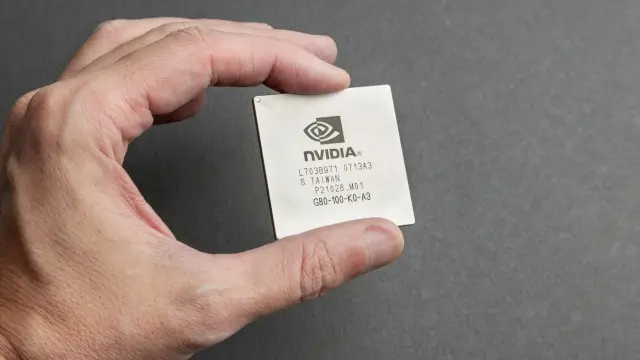
NVIDIA (NVDA) led the carnage, on track to wipe out approximately $300 billion in market value in a single session — a record single-day market cap loss for any U.S. company. The stock fell roughly 6%, threatening to push NVIDIA's market cap below the $5 trillion threshold. CEO Jensen Huang's net worth dropped by an estimated $18 billion in one day. Even crypto ETFs are feeling the pressure, with Grayscale's new Hyperliquid ETF launching at a 0.29% fee to undercut competitors.
Micron Technology (MU) plunged 13.25%, Advanced Micro Devices (AMD) fell 10.9%, and Intel (INTC) dropped approximately 6-7%. The breadth was brutal: every major semiconductor name finished deep in the red. OpenAI's memory system upgrades contrast with the hardware sector's pain.
Broadcom's Guidance Miss: The Spark That Lit the Powder Keg
Broadcom (AVGO) shares crashed 15.3% — their biggest single-day decline since January 2025 — erasing roughly $300 billion in market capitalization. The catalyst was fiscal Q2 earnings that missed on the AI narrative despite beating headline numbers. AI infrastructure spending remains a key theme, with Anthropic revealing recursive self-improvement capabilities.
Broadcom reported Q2 FY2026 revenue of $22.19 billion (versus $22.13 billion consensus) and guided Q3 revenue to approximately $29.4 billion at the midpoint (versus $28.53 billion consensus). On the surface, a beat-and-raise. But the market focused on CEO Hock Tan's commentary: AI revenue growth would "moderate" in the second half, and the company's custom AI accelerator (XPU) ramp was slower than the Street had modeled.
The miss wasn't in the numbers — it was in the narrative. Investors had priced Broadcom as the primary beneficiary of hyperscaler custom silicon spend. When Tan signaled the ramp would be more gradual, the premium evaporated instantly.
The Jobs Report That Changed Everything: 172K vs 80K Forecast
At 8:30 a.m. ET, the Bureau of Labor Statistics (BLS) reported May nonfarm payrolls of 172,000 — more than double the consensus forecast of 80,000-85,000. The unemployment rate held at 4.3%. March and April payrolls were revised up by a combined 41,000.
The report was a body blow to the "Fed put" narrative. With core CPI running at 2.8% year-over-year (the highest since September 2025) and the labor market showing zero signs of cracking, the Federal Reserve (Fed) has no cover to cut rates. Fed funds futures immediately repriced: the first rate cut was pushed from July to September at the earliest, with some desks pricing no cuts in 2026.
The 10-year Treasury yield finished at 4.55%. The 2-year yield hit 4.17%. Real yields rose across the curve — toxic for growth/tech valuations.
Great Rotation Accelerates: Healthcare & Financials Catch the Falling Knife
While the Nasdaq bled, the Dow's record high just one session earlier told the real story: capital wasn't leaving the market — it was rotating. The "Great Rotation" out of mega-cap tech and into healthcare, financials, and industrials accelerated violently on June 5. Our earlier coverage detailed how the Dow hit 51,562 as healthcare surged and AI stocks crashed.
Healthcare Select Sector SPDR (XLV) and Financial Select Sector SPDR (XLF) both finished green on the day. Banks benefit from higher long-term yields (wider net interest margins). Healthcare offers defensive earnings visibility in a slowing economy. The Dow's 30 components — weighted toward financials, industrials, and healthcare — outperformed the tech-heavy Nasdaq 100 by over 550 basis points.
This rotation has legs: with the Fed on hold and yields rising, the valuation gap between growth and value has room to narrow further. Commodity markets are also signaling a shift, with crude oil forecasts diverging sharply.
What This Means for Your Portfolio: Action Plan
1. Don't chase the semiconductor bounce. The SMH ETF's 18.2% May surge was the last leg of a momentum trade. With AI capex expectations being recalibrated and yields rising, the risk/reward for chasing NVDA/AVGO/MU down here is poor. Wait for earnings clarity in August.
2. Overweight financials (XLF) and healthcare (XLV). Banks gain from higher-for-longer yields. Healthcare offers earnings resilience. Both sectors are under-owned relative to tech.
3. Rebalance, don't panic-sell. If your portfolio is Nasdaq-heavy, use this washout to trim concentration risk. The S&P 500 equal-weight index (RSP) outperformed the cap-weighted index by ~200 bps on June 5 — a signal that breadth is improving beneath the surface.
4. Watch the 10-year yield at 4.55%. A sustained break above 4.60% would signal more pain for growth stocks. A fall back toward 4.30% would suggest the rate scare is overdone.
5. Palantir (PLTR) remains the AI earnings standout. Q1 FY2026 (reported May 5) showed 85% revenue growth to $1.633 billion, U.S. commercial revenue up 133% to $595 million, government revenue up 84% to $687 million, GAAP net income of $871 million (53% margin), and a Rule of 40 score of 145%. Full-year guidance was raised to $7.65 billion. Not all AI names are created equal. C3.ai's Q4 earnings showed a contrasting picture with revenue beating but shares plunging 53%.
This is not investment advice. Consult a SEBI-registered advisor.