
⚡ AI Overview — Quick Answer
Nine India-flagged LPG tankers have safely crossed the Strait of Hormuz despite the ongoing US-Israel-Iran war — the latest being Green Asha on April 5, 2026. Iran considers India a "cherished partner," allowing Indian ships to transit. However, with 16 ships still stranded, India's energy security and GDP growth remain under pressure.
India's LPG Tankers Navigate Strait of Hormuz Amid US-Iran War — What It Means for You
The West Asia conflict — driven by the US-Israel military campaign against Iran — has placed one of the world's most critical shipping lanes under direct threat. For India, which depends on the Strait of Hormuz for the bulk of its energy imports, this is a crisis that hits close to home — quite literally, in the form of cooking gas (LPG) prices and economic growth.
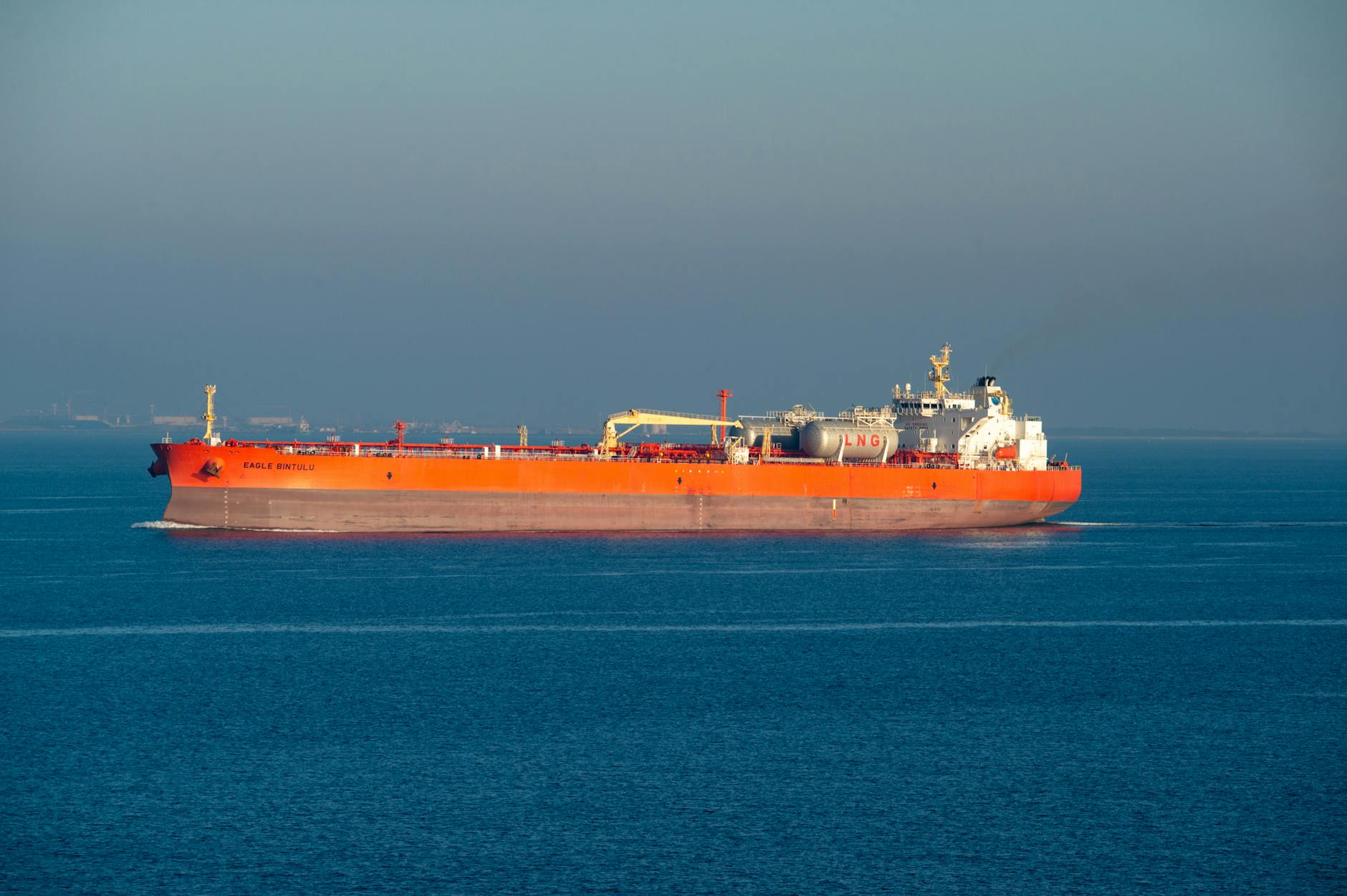
On April 5, 2026, the India-flagged LPG tanker Green Asha safely crossed the Strait of Hormuz, becoming the 9th Indian vessel to transit the waterway since the conflict escalated. But the journey was anything but routine — and for millions of Indian families depending on affordable LPG, the stakes could not be higher.
The Strait of Hormuz — Why It Matters So Much for India
The Strait of Hormuz is a narrow waterway — barely 33 km at its narrowest point — separating Iran from Oman. Despite its small size, it is the single most important oil chokepoint in the world. Every day, approximately 20 million barrels of oil (roughly 20% of global supply) and large quantities of LPG, LNG, and other energy cargo flow through it.
📊 India's Gulf Energy Dependency — Key Numbers
- 🛢️ India imports ~85% of its crude oil from the Gulf and West Asia
- 🔥 A large share of India's LPG (cooking gas) supply comes via Gulf tankers
- 🚢 Dozens of Indian-flagged tankers operate in the Persian Gulf at any given time
- 💰 Every $10 rise in crude oil prices adds ~₹1 lakh crore to India's import bill
The Crisis: How It Unfolded
When the US and Israel launched strikes on Iran, Tehran responded by tightening control over the Strait of Hormuz — selectively allowing passage only to ships from "friendly nations." Dozens of international tankers were stranded in the Persian Gulf, unable to exit safely.
For India, this created an immediate energy security crisis. Indian LPG tankers — loaded with cargo meant for Indian ports — were caught in the middle of a geopolitical firestorm. The Indian government moved swiftly, engaging diplomatically with Tehran to secure safe passage for Indian ships.
India-Iran Diplomacy: "Cherished Partner" Status
India's diplomatic engagement paid off. Iran has explicitly listed India as a "friendly nation", allowing Indian-flagged vessels to use the Strait of Hormuz even as it blocks many Western-aligned ships. Iran even called India a "cherished partner", a rare public endorsement in the midst of a conflict.
This reflects India's careful foreign policy balance — not formally siding with either the US-Israel camp or Iran, while ensuring its national economic interests are protected. India's strategic autonomy has essentially earned it a special status in a deeply divided conflict.
Timeline of Indian Tanker Crossings (2026)
- 🚢 Shivalik — First Indian LPG tanker to cross Hormuz using an alternate Iranian channel (March 2026)
- 🚢 Nanda Devi — Second tanker to reach India via Hormuz (March 2026)
- 🚢 Green Sanvi — Crossed Hormuz safely, two more in queue (April 4, 2026)
- 🚢 Green Asha — 9th Indian tanker to safely cross Hormuz (April 5, 2026)
- ⏳ ~16 ships still in Persian Gulf as of April 6, 2026
Additionally, India made a significant energy move — it purchased its first LPG cargo directly from Iran in years, as disruptions in global supply chains made Iranian LPG an attractive option for India's state-run oil companies.
Economic Impact: GDP, LPG Prices, and Inflation
The West Asia conflict is already leaving a measurable mark on India's economy. Rating agency Moody's has slashed India's FY27 GDP growth forecast from 6.8% to 6%, directly citing the West Asia conflict as the primary reason. Other agencies — including Goldman Sachs and EY — have also cut their India growth forecasts.
For ordinary Indians, the most tangible impact is through:
- 🔴 Higher LPG prices: Supply disruptions and rising freight costs push up cooking gas prices
- 🔴 Rising petrol/diesel prices: Crude oil prices spike when Gulf supply is threatened
- 🔴 Inflation: Higher energy costs feed into food prices, transport, and manufacturing costs
- 🔴 Rupee pressure: India's trade deficit widens as import bills increase, weakening the rupee
India's Energy Security Strategy
This crisis has once again underscored India's vulnerability to Gulf energy disruptions, and has accelerated discussions about diversifying India's energy sources:
- 🌞 Renewable energy push: India targets 500 GW of renewables by 2030 to reduce oil/gas dependence
- 🇷🇺 Russian oil imports: India has sharply increased oil imports from Russia as a diversification strategy
- 🌍 Alternative routes: India is exploring supply from US, Africa, and Central Asia
- 🔋 Strategic petroleum reserves: India maintains reserves to buffer short-term disruptions
🗣️ Hinglish Mein Samjhein
Strait of Hormuz crisis kya hai? Yaar, seedha baat karte hain — India apna 85% oil aur bahut saara LPG Gulf se mangwata hai. Woh sab ships Strait of Hormuz se guzarti hain. US aur Iran mein war chal rahi hai, to Iran ne strait band kar di almost. India ki tanker ships wahan phans gayi thi. Lekin India ne seedha Iran se baat ki, aur Iran ne kaha — "haan bhai, India hamare dost hain, unki ships jaane do." Ab tak 9 Indian ships safely nikal chuki hain. Aur agar yeh crisis lamba khicha, to aapke ghar ka LPG cylinder mahenga ho sakta hai — yahi seedha impact hai aap par!
❓ Frequently Asked Questions
The Strait of Hormuz is a critical shipping lane between Iran and Oman through which 20% of global oil supply flows. India imports ~85% of its crude oil from the Gulf, making this strait essential for India's energy security.
As of April 5, 2026, at least 9 India-flagged tankers have safely crossed the Strait of Hormuz. The latest was LPG tanker Green Asha on April 5, 2026. Around 16 ships are still in the Persian Gulf.
There is a significant risk of LPG price increases if the crisis continues. Supply disruptions, higher shipping costs, and rising crude oil prices all put upward pressure on domestic LPG prices in India.
Iran has treated India favourably, calling it a "cherished partner" and allowing Indian-flagged vessels to use the Strait of Hormuz even while restricting Western-allied ships. India's non-aligned diplomatic stance has proven beneficial here.
Yes. Moody's cut India's FY27 GDP growth forecast from 6.8% to 6% due to the West Asia conflict. Goldman Sachs and EY also revised India's growth forecasts downward, citing oil price risks and energy supply disruptions.
Agar Strait of Hormuz band ho jaye to India ka LPG, crude oil supply ruk jaega. Isse petrol, diesel aur LPG ke daam badh jaenge, inflation badhega, rupya kamzor hoga, aur economy ki growth slow ho jaegi. GDP growth 6% se bhi neeche aa sakti hai.