Annapurna Bhandar Application Form
What You'll Learn
- Why the official 2026 form is called the Annapurna Yojana Family Level Data Collection Form.
- Where the official form downloads and applicant-status link appear.
- Which family, bank, ration-card, income and supporting details the form asks for.
- How to avoid confusing the new family-level survey with old ration-card pages or unverified application claims.
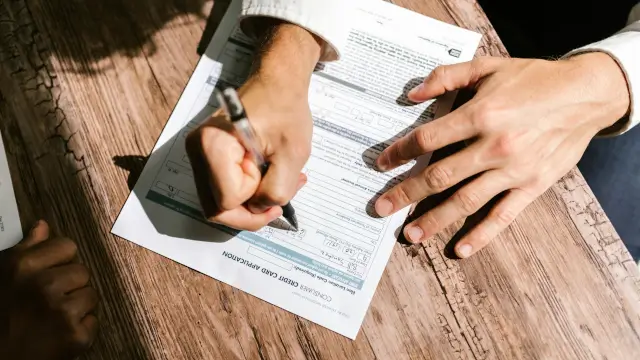
Annapurna Bhandar Application Form 2026 is the phrase many readers use when searching for West Bengal’s new Annapurna-related family survey. The official portal page reviewed for this article labels the document the Annapurna Yojana Family Level Data Collection Form and provides English, Bengali and Hindi downloads. It also shows a Track Applicant Status option.
That is materially different from the old article’s promise of a quick online application through wbfood.in. The official form is designed to collect household-level information for verification and social-protection decisions. It asks about family identity, bank accounts, ration-card status, assets, income, education, social status and existing government benefits.
This guide therefore explains what the official form contains and what could not be verified. It does not invent an open deadline, a fixed approval time or a guaranteed payment amount. Readers should use the official portal and the issuing department’s current notice before submitting sensitive information.
What is the official Annapurna Yojana form?
The official English document is titled Family Level Data Collection Form for Annapurna Yojana. The linked filename identifies it as a final form dated June 10, 2026. The document runs to 11 pages and says that each section has fields, checkbox options and instructions, with all fields marked as mandatory.
This matters because the search phrase “Annapurna Bhandar form” can point readers toward different schemes. The Food & Supplies Department has older material about Annapurna Ration Cards and monthly food-grain distribution under the Public Distribution System. That is not the same document as the 2026 family-level data-collection form on the Annapurna Yojana Portal.
| Document or page | What it is | How to read it |
|---|---|---|
| Annapurna Yojana Family Level Data Collection Form | Current official family-level form linked from the social-security portal | Use it for the fields and declarations it actually contains |
| Annapurna Yojana Portal | Government page showing Track Applicant Status and form downloads | Use it as the primary navigation point |
| Food & Supplies Annapurna Ration Card material | Legacy or separate PDS documentation | Do not treat it as proof of the 2026 family-survey workflow |
| Third-party application guides | Secondary explanations with varying dates and claims | Cross-check every deadline and payment statement with government sources |
The official Annapurna Yojana Portal page is the source used for the form link and status label. The site says office login is for office users, so readers should not assume that every visible control is a public citizen login.
Where can the form be downloaded?
The official portal page provides downloads for English, Bengali and Hindi versions of the Annapurna Yojana Family Level Data Collection Form. The English form is an 11-page PDF. It contains instructions and an official-use enquiry section, so applicants should read the document rather than rely on a short social-media checklist.
The verified English download is Annapurna Yojana Family Level Data Collection Form PDF. The filename includes spaces and the June 10, 2026 date. If the PDF does not open, return to the official portal page and use its English download link instead of choosing a copied file from an unknown domain.
For wider context, our Annapurna Bhandar ration-card linking guide covers a related but separate topic. It should not be used to replace the current official family-level form.
What information does the family form ask for?
The first part records the family identity. It asks for the head of family’s name, date of birth, gender, Aadhaar, household ID if available, number of family members, address and contact number. It also provides fields for the name, date of birth, gender, relationship and Aadhaar details of family members.
The form includes a checkbox for whether each listed family member is applying for Annapurna Yojana. It notes that children below five years may be marked as not applicable where Aadhaar is not available. This is a form instruction, not a general statement that every family member automatically qualifies.
| Section | Examples of fields | Why accuracy matters |
|---|---|---|
| Family identity | Head of family, members, address, Aadhaar and contact | These details establish the household record |
| Bank details | Bank name, account number and IFSC for members | The form labels accounts for Aadhaar-linked DBT credit |
| Ration-card status | Digital ration card and card category | It distinguishes food-subsidy status from other household facts |
| Social and economic details | Assets, income, profession, education and existing benefits | Verification can depend on the full family profile |
Do not copy a single applicant’s name into every family-member field. The form is designed to collect information across the household. Use the official instructions and local verification channel if a field does not apply or the family record is complex.
What bank and identity details are required?
The form contains bank fields for the head of family and adult family members, including bank name, account number and IFSC. It labels these as Aadhaar-linked bank accounts for DBT credit. It also asks for Electoral Photo Identity Card details and the Assembly Constituency and Part Number for adult family members.
Other identity sections include category, religion and disability details. The form asks for applicable certificates and a disability certificate number where relevant. It also includes fields for other identity documents, such as CAA application status and various credit-card or programme identifiers.
These fields do not mean that every applicant must possess every certificate or account type. They show what the official form asks the household to declare or provide where applicable. Never publish or email completed Aadhaar, bank or identity details in a public comment or to an unverified intermediary.
The official Yuva Sathi application-form guide is a different scheme article. It can help readers compare how government forms are structured, but it is not an Annapurna Yojana instruction.
What ration-card and household questions appear?
The form has a Ration Card and Food Subsidy section. It asks whether the family has a Digital Ration Card and, if so, which type applies, including AAY, PHH, SPHH, RKSY1, RKSY2 or non-subsidized. It also asks whether the family is lifting monthly ration from the ration shop.
Its asset section asks about a house with three or more pucca rooms, land ownership and landholding size, motorized non-commercial four-wheelers and health-insurance coverage. The form also asks for Swasthya Sathi URN information where that coverage exists.
This is why the page should not describe the document as a simple ration-card correction form. It is a broad household data-collection instrument. The details can be used for verification or social-protection administration, so accuracy and privacy matter more than speed.
What income, work and social details are included?
The income and profession section asks whether any family member pays income tax or professional tax, whether PAN information is available and what type of work each member performs. The choices include government work, private salaried work, formal or informal self-employment, migrant labour, unemployment and other categories.
The form also records the number of literate and illiterate adult family members and the highest educational qualification. It asks about constitutional or local-body posts, government pension, GST registration and total annual family income.
A household should answer these sections consistently with its supporting records and declarations. The document says information may need supporting documents or self-declaration. Do not assume that selecting “unemployed” for one family member means the whole household is treated as unemployed.
Does the form ask about children and existing schemes?
Yes. The social-status section asks for details of children attending school, including grade, school name and school type. It also asks about children’s vaccination status and related card or date information.
The benefits section asks whether family members receive benefits under government schemes through DBT. It provides space for scheme names and an option related to opting out of a scheme. The declaration at the end says the information should be true and warns that social-protection benefits can be stopped if information is false.
This does not establish that a new payment is automatically approved after the form is filled. The final pages include an official-use enquiry report where a verifying official records whether the information is correct and recommends acceptance or rejection.
Is there an online application deadline or fixed approval time?
The official sources reviewed for this rewrite verify the form download and the portal’s Track Applicant Status label. They do not verify the old article’s claim that applications remain open until August 25, 2026. They also do not verify fixed timelines of 15 to 30 minutes for submission, 7 to 15 working days for verification or 30 to 45 days for card delivery.
Do not treat those numbers as official deadlines or service guarantees. A government notice may change the process, and the office responsible for a household record may provide the current instruction. Check the official Annapurna Yojana Portal and the Department of Women & Child Development and Social Welfare’s administrative notices before acting.
The department’s administrative notice page lists a Notification for Annapurna Yojana dated May 20, 2026. The page confirms that an official notice exists, but readers should open the linked notice itself for any current deadline or instruction.
How is this different from old Annapurna ration-card information?
The Food & Supplies Department page for the Annapurna Scheme describes Annapurna beneficiaries and Annapurna Ration Cards used for specified monthly food-grain distribution under the Public Distribution System. That material belongs to a different administrative context from the family-level form linked by the current Annapurna Yojana Portal.
Mixing the two can produce incorrect advice about application offices, benefits, documents and payment. The existing article also used the name Annapurna Bhandar while describing a generic online and offline application process. The safer approach is to name the exact official document and state what it does not prove.
If you are checking a ration-card or food-subsidy issue, use the West Bengal Food & Supplies portal and its current notices. If you are checking the family-level Annapurna Yojana form or status label, start at the social-security portal page instead.
What should an applicant do before submitting details?
First, open the official Annapurna Yojana Portal page and download the correct language version of the family-level form. Read all sections before filling anything. The form is extensive, so gather household identity, Aadhaar, bank and IFSC, ration-card, electoral-roll, income, employment, education and applicable certificate details in advance. For another government-portal navigation example, see our Yuva Sathi Portal Guide.
Second, keep the information consistent across family members and supporting documents. Do not guess an account number, IFSC, EPIC Part Number, household ID or scheme identifier. If a section does not apply, follow the form’s own instruction or ask the responsible office rather than inventing a value.
Third, protect the completed form. It contains highly sensitive identity, bank, family and income information. Use only an official portal or a government-designated submission channel. Do not upload the document to an unknown form-filling website simply because it promises faster approval.
For broader scheme-navigation context, the site’s government schemes guide is available, but time-sensitive instructions must always be checked against the issuing department.
The practical takeaway
The current official document behind the search phrase Annapurna Bhandar Application Form 2026 is the Annapurna Yojana Family Level Data Collection Form. It is an 11-page household form with identity, bank, ration-card, asset, income, social-status, benefits and consent sections, followed by official verification and acceptance or rejection recommendation.
The official portal page shows Track Applicant Status and English, Bengali and Hindi form downloads. The public page does not justify repeating the old article’s wbfood New Application flow, an August 25 deadline, a ₹3,000 payment cycle, named bank counters or fixed approval times. Those claims remain unverified in the sources checked for this rewrite.
Use the official form, read its instructions, protect the household data and check the latest departmental notice before acting. A form guide is useful only when it identifies the right document and refuses to turn an unverified deadline into a promise.
Frequently Asked Questions

SK Jabedul Haque
Building India's most trusted finance education platform — simplifying news, schemes and market trends so anyone can understand and invest confidently.
Read full bio


Never miss an update
Get our clearest explainers on schemes, markets and money — read what matters, without the noise.
Explore more articles