West Bengal Kanyashree Prakalpa 2026
What You'll Learn
- What Kanyashree K1 and K2 provide according to the official scheme page.
- Who can qualify based on residence, age, education, marital status, and family income.
- Why applications are handled through a school, college, or other eligible institution.
- How to use the current official portal to track an application and verify scheme information.
What is West Bengal Kanyashree Prakalpa 2026?
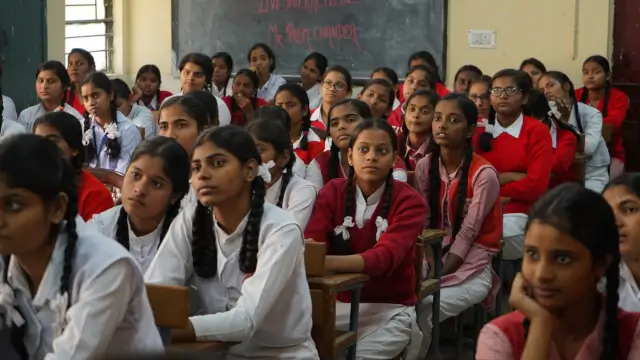
Kanyashree Prakalpa is a Government of West Bengal conditional cash transfer scheme focused on girls’ continued education and delayed marriage. The official portal describes the scheme as a social safety net for girls from socio-economically disadvantaged families. Its design links financial support to conditions such as remaining in education and remaining unmarried.
The current official website is kanyashree.wb.gov.in. It is branded as Kanyashree 9.0 and includes information about the scheme, guidelines, application tracking, district resources, and departmental contacts. Applicants should use this current host when checking instructions rather than relying on copied pages with an older domain name.
The scheme page explains that the word education covers secondary and higher secondary study as well as vocational, technical, and sports courses. This wider definition matters because the scheme is not limited to one type of classroom course. The relevant institution still has to verify the applicant’s status and process the application under the applicable rules.
Kanyashree should not be described as an automatic payment for every girl in West Bengal. The official rules contain conditions, document checks, institutional responsibilities, and portal stages. Applicants should confirm their case with the school, college, or eligible institution that handles the application. For wider context, readers can compare the Annapurna Bhandar Yojana guide without treating a different scheme as a substitute for Kanyashree rules.
Kanyashree’s conditional cash transfer design
The official Kanyashree Conditional Cash Transfer page identifies two cash transfer components. K1 is an annual incentive for girls aged 13 to 18 who are studying in Class VIII equivalent or above, remain in education, and are unmarried. K2 is a one-time grant paid after a girl turns 18 when she is engaged in academic or occupational pursuits and remains unmarried.
The conditions are intended to connect financial support with education and the legal age of marriage. The scheme page says that girls with annual family income of ₹1,20,000 or less are eligible under the income rule. It also identifies exceptions for girls with special needs, orphans, and girls in J. J. Homes.
The official portal’s scheme rationale refers to the Prohibition of Child Marriage Act, 2006. It states that 18 is the legal age of marriage for girls and 21 for boys in India. Kanyashree’s objective is expressed in programme terms. It seeks to help girls remain in education and delay marriage until at least age 18.
| Component | Official benefit description | Core condition |
|---|---|---|
| K1 | ₹1,000 annual incentive | Girl aged 13 to 18, studying in Class VIII equivalent or above, remaining in education, and unmarried |
| K2 | ₹25,000 one-time grant after turning 18 | Girl engaged in academic or occupational pursuits and unmarried |
| Income rule | Family annual income of ₹1,20,000 or less | Income criterion is waived for the official exception groups described below |
K1 annual incentive and K2 one-time grant
K1 is the annual incentive in the official scheme design. The portal states that it is for girls aged 13 to 18 who study in Class VIII equivalent or above and remain in education while unmarried. The page states the amount as ₹1,000 for every year that the conditions are met. The older article version used ₹750, but the current official page reviewed for this update states ₹1,000. The revised figure should be used for 2026 guidance.
K2 is a one-time grant of ₹25,000 after a girl turns 18. The official page says she must be engaged in academic or occupational pursuits and unmarried. Occupational pursuits can include the vocational, technical, or sports courses included in the portal’s definition of education. The grant should not be presented as automatic. Institutional verification and the relevant application process still apply.
The official cash page does not provide a K3 benefit amount or a current K3 application workflow in the material reviewed for this article. Readers should not treat a third-party K3 amount, monthly stream rate, or postgraduate portal instruction as confirmed by the current Kanyashree cash page. If a student is asking about another scholarship, the institution should identify the correct programme and official department portal.
Amounts and conditions can change through an official government update. Before submitting a form, compare the institution’s current instructions with the official portal and the guideline link listed in the portal menu. A copied social-media graphic or a bank blog is not enough to establish a revised benefit amount.
Kanyashree eligibility rules
The official cash page sets out the main eligibility conditions. The applicant must fall within the age and education conditions for the relevant component, remain unmarried, and come from a family that meets the stated income rule unless an exception applies. The programme is intended for girls in West Bengal, and institution-level verification is part of the application path.
For K1, the portal specifies ages 13 to 18 and Class VIII equivalent or above. It also says that girls with special needs who are below Class VIII can apply for the annual scholarship. For K2, the official description focuses on the period after the girl turns 18 and requires academic or occupational engagement along with unmarried status.
Applicants should not infer eligibility from age alone. The institution may need to verify residence, course or class, bank details, identity information, and the declaration relating to unmarried status. The exact document list and form instructions can depend on the component and the institution’s current administrative process.
| Eligibility factor | What the official page says | How to use it |
|---|---|---|
| Residence | The scheme is for girls in West Bengal | Ask the institution which residence proof is accepted under its current process |
| Age and class | K1 covers ages 13 to 18 and Class VIII equivalent or above | Check the applicant’s date of birth and current enrolment record |
| Marriage status | K1 and K2 conditions include remaining unmarried | Complete the declaration required by the institution |
| Education or occupation | Education includes academic, vocational, technical, and sports courses | Confirm that the course or institution falls within the applicable rules |
| Family income | The normal ceiling is ₹1,20,000 per year | Provide the income evidence requested, unless an official exception applies |
How institution-led applications work
The official portal describes Kanyashree as an institution-linked programme. In practical terms, a student normally begins by speaking with the school, college, or other eligible educational institution where her enrolment is recorded. The institution can explain which component applies, issue or receive the relevant form, check the documents, and enter the application into the programme system.
Students should ask the institution for a written or clearly stated checklist before submitting copies. The applicant should check spelling, date of birth, bank details, address, and course information. A mismatch can delay verification even when the student otherwise appears to meet the scheme conditions.
The current portal includes a guideline download route under its Guidelines menu. It also provides links for tracking an application and finding district or nodal information. Those links are more reliable than an unofficial form circulated without a date or departmental source.
After the institution accepts the application, the student should ask how the application identifier will be provided and when status tracking becomes available. Keep a copy of the submitted form and acknowledgement if the institution issues one. Do not share a one-time password, bank PIN, or login password with anyone claiming to speed up a payment. The institution-led model is different from business-credit programmes such as PM Mudra Yojana, so use the correct application route.
Documents and information to prepare
The exact document requirement should be confirmed with the institution because the official portal’s public pages reviewed here describe the scheme and tracking route but do not display one universal applicant checklist in the extracted text. Preparing accurate information is still useful. The institution can tell the applicant which copies, declarations, and originals are required for K1 or K2.
- Proof of date of birth and current age.
- Proof of current enrolment and course or class.
- Residence information requested by the institution.
- Family income evidence where the normal income rule applies.
- Bank account information suitable for the programme’s payment process.
- Unmarried-status declaration or other form requested by the institution.
- Special-needs, orphan, or J. J. Home evidence where an income exception is being claimed.
These are preparation categories, not a promise that every item is required in every case. An applicant should not submit sensitive identity or bank documents to an unofficial website. Use the institution’s office and the official portal’s published route for the next step. Document and online-service questions for other public programmes, such as India’s e-Passport guide, should be checked separately.
How to track a Kanyashree application status
The official portal provides a Track Application route. The correct time to use it is after the institution has processed or uploaded the application and has given the applicant the relevant identifier or instructions. A search may return no record if the institution has not yet entered the application or if the information has been typed incorrectly.
Start from the official Kanyashree 9.0 website and open Track Application rather than using an unverified copy of the status form. Enter the details exactly as the institution provides them. Check the year, component, application identifier, date of birth, and captcha field where the portal requests them.
If the status page does not return a result, first check the identifier and ask the institution whether the application has been uploaded. If the issue remains, use the official portal’s nodal or district information. Do not pay a third party to reveal a status that the official portal is designed to display.
| Status stage | What it may mean | Next safe step |
|---|---|---|
| Not found | The application may not yet be uploaded or the entered details may not match | Check the details and ask the institution to confirm entry |
| Under verification | The institution or programme office is checking the application | Respond to a legitimate document query through the institution |
| Sanctioned | The application has reached a sanction stage in the programme system | Check the official status details and keep the acknowledgement |
| Payment information | The portal may show payment or transfer-related details when available | Check the linked bank information with the institution if a transfer is delayed |
Official Kanyashree portal figures for 2026
The current Kanyashree 9.0 home page displays an official programme snapshot marked “As on 07/06/2026”. The figures are useful as a dated view of the programme, not as a live count for every later day. The page shows 18,520 registered institutions, 36,101,930 enrolled applications, 35,372,833 sanctioned applications, and 9,891,361 unique beneficiaries.
The same page displays “98.91 Lakh Kanyashree Girl” in its banner. The exact dashboard figures are the better basis for a factual article because they can be quoted with the portal’s date. The numbers should not be converted into a different unit or presented as an up-to-the-minute count without a new portal check.
These are programme-level figures. They do not show whether an individual application will be sanctioned or when a particular bank transfer will arrive. A student’s case is determined through the applicable rules and verification process.
| Portal metric | Official figure | Reference date |
|---|---|---|
| Registered institutions | 18,520 | 07 June 2026 |
| Enrolled applications | 36,101,930 | 07 June 2026 |
| Sanctioned applications | 35,372,833 | 07 June 2026 |
| Unique beneficiaries | 9,891,361 | 07 June 2026 |
| Banner figure | 98.91 Lakh Kanyashree girls | Displayed on the current portal |
Income exceptions and special-needs provisions
The normal family-income ceiling on the official cash page is ₹1,20,000 per year. The same page says the income criterion is waived for girls with special needs, orphans, and girls in J. J. Homes. It also says girls with special needs who are below Class VIII can apply for the annual scholarship.
An exception does not mean that every other condition disappears. The applicant may still need to establish identity, residence, age, enrolment, and the relevant status for the component. The institution should explain what evidence is accepted for the exception and how it should be recorded in the application.
Applicants should avoid assuming that a general disability certificate, an income statement, or a school letter will always be sufficient. The accepted document and issuing authority can depend on the current administrative instructions. Ask the institution to confirm the requirement and retain the acknowledgement after submission.
The official portal’s wording is also a reminder that social protection programmes use defined categories. When a page says special needs, orphan, or J. J. Home, the applicant should ask the responsible institution how the category is applied rather than relying on a generic online explanation. A retirement product such as Atal Pension Yojana follows different rules and should not be mixed into a Kanyashree application.
What the official portal confirms about K3
The older version of this article described K3 as a postgraduate scholarship and included a total amount, monthly stream rates, and an application route. The official Kanyashree Conditional Cash Transfer page reviewed for this update confirms K1 and K2 but does not provide those K3 details in its current public text.
That distinction matters because a related postgraduate scholarship can have its own eligibility rules, portal, marks requirement, or department. A number copied from an older article should not be presented as a current Kanyashree amount without an official K3 guideline or department page that states it.
Students who are seeking postgraduate support should ask their college scholarship office to identify the exact scheme and official application portal. The official Kanyashree portal’s Guidelines menu includes the Kanyashree Prakalpa Guidelines download endpoint. If that document provides a current K3 rule, it should be read directly before an application is submitted.
For this reason, this 2026 guide gives confirmed K1 and K2 information and labels K3 as requiring separate verification. Leaving an unverified figure out is safer than giving a precise amount that may belong to a different scheme or an older rule. The 8th Pay Commission guide is a separate topic and should not be used as Kanyashree evidence.
Common mistakes and safe verification
The most common error is using an outdated amount. The official cash page reviewed for this update states K1 as ₹1,000 per year and K2 as ₹25,000 one time. An article or video that still says ₹750 for K1 may be relying on an older page or an unverified summary.
A second error is treating the official portal as a direct student application site for every stage. Kanyashree is linked to an institution. The school, college, or eligible institution has an administrative role in receiving, checking, and processing the application.
A third error is using an old or copied status link. Begin at the official Kanyashree 9.0 home page and follow the Track Application link. Check the page address before entering personal information.
Finally, do not confuse programme statistics with personal eligibility. The portal’s 2026 figures describe enrolled applications, sanctioned applications, institutions, and unique beneficiaries. They do not guarantee that a new application will be approved or that a payment will arrive on a particular day.
Conclusion: use the official portal and institution
West Bengal Kanyashree Prakalpa 2026 has two confirmed cash components on the current official scheme page. K1 is a ₹1,000 annual incentive for girls aged 13 to 18 who study in Class VIII equivalent or above, remain in education, and remain unmarried. K2 is a ₹25,000 one-time grant after age 18 for a girl engaged in academic or occupational pursuits and unmarried.
The official page sets the normal family-income ceiling at ₹1,20,000 per year and lists waivers for girls with special needs, orphans, and girls in J. J. Homes. The portal also says that girls with special needs below Class VIII can apply for K1. The current home page provides dated programme figures and a Track Application route.
Applicants should begin with their school, college, or eligible institution, confirm the current checklist, submit accurate information, and use the official Kanyashree 9.0 portal for status checks. For K3 or any postgraduate benefit, obtain a current official rule before relying on an amount, course condition, or separate application portal.
Frequently Asked Questions

SK Jabedul Haque
Building India's most trusted finance education platform — simplifying news, schemes and market trends so anyone can understand and invest confidently.
Read full bio

Never miss an update
Get our clearest explainers on schemes, markets and money — read what matters, without the noise.
Explore more articles