US Inflation Hits 4.2%: Highest Since April 2023 as Fed's Warsh Faces First Rate Test
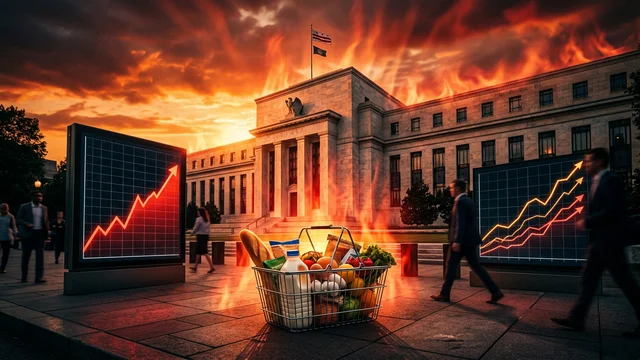
The US inflation rate accelerated to 4.2% in May 2026 from 3.8% in April, according to the Bureau of Labor Statistics. The annual increase was the highest since April 2023, when the post-pandemic inflation cycle was still working through the economy. The May release arrived one week before Kevin Warsh was scheduled to lead his first Federal Open Market Committee meeting as Federal Reserve chair.
The headline number matters because the Federal Reserve's inflation goal is 2% over the longer run. A 4.2% reading leaves policymakers balancing price pressure against employment and growth. It also complicates expectations for borrowing costs, Treasury yields, mortgages, business investment, and household budgets.
This article is dated June 11, 2026, before the scheduled June 17 to June 18 FOMC meeting. It separates the realized BLS data from market expectations and later policy outcomes. A high CPI reading can influence the debate, but it does not mechanically determine the Committee's decision.
What You'll Learn
- What the BLS May 2026 CPI release actually reported.
- Why the inflation result creates a difficult test for the Federal Reserve.
- How energy, housing, and services can affect the headline reading.
- Which market signals matter before and after the June FOMC meeting.
What the May CPI Report Showed
The BLS reported that the all-items consumer price index increased 4.2% for the 12 months ending in May 2026. The index had increased 3.8% for the 12 months ending in April. The change is an annual comparison, not a one-month price increase. It means the average basket measured by the index was 4.2% higher than in May of the previous year.
The historical comparison is also important. The BLS and CNBC described the May rate as the highest since April 2023. That comparison places the release in the context of the earlier inflation surge, but it does not mean current conditions are identical to 2022 or 2023. The composition of price pressure, energy markets, wages, housing costs, and demand can change from one period to another.
| Measure | May 2026 detail | How to read it |
|---|---|---|
| All-items CPI | 4.2% year over year | Headline annual consumer price increase |
| April 2026 CPI | 3.8% year over year | Prior monthly release comparison |
| Long-run Fed goal | 2% | Policy reference, not a monthly forecast |
| Historical comparison | Highest since April 2023 | Context for the annual reading |
Our US economy risk analysis explains why one indicator should not be treated as a complete growth or market forecast. The same rule applies to CPI. The release is important evidence, but it needs to be read with other data.
Why the 4.2% Reading Matters
A 4.2% annual inflation rate is more than twice the Federal Reserve's 2% goal. If the increase reflects persistent price pressure, policymakers may be less willing to lower interest rates. If the increase is driven mainly by temporary energy or supply effects, the policy response may be different. The central task is to identify the persistence and breadth of the increase.
Higher inflation also changes decisions outside the central bank. Households may delay large purchases if financing costs remain high. Businesses may postpone investment or pass higher costs to customers. Investors may reduce the value they assign to long-duration assets when future cash flows are discounted at higher rates.
The result does not tell readers whether the economy is entering a recession. It also does not show that every category rose at the same speed. CPI is an aggregate measure. A household's personal inflation experience depends on its rent, fuel use, food purchases, health costs, travel, and other spending patterns.
How to Read Headline and Core Inflation
Headline CPI includes the full basket measured by the BLS, including food and energy. Core inflation excludes food and energy for analytical purposes. Policymakers examine both because headline prices affect living costs immediately, while core measures can help assess whether broader price pressure is becoming persistent.
Excluding a category does not mean households stop paying that cost. It is a method for studying the signal. Energy can move sharply because of geopolitical events, supply changes, or commodity markets. Housing costs can adjust with a delay. Services may respond to wages, demand, and business operating costs.
The May headline number should therefore be combined with the monthly details, core measures, wage data, inflation expectations, and consumer demand. A single annual percentage is not enough to determine whether inflation is broadening or fading.
Energy, Housing, and Services
The legacy article linked the inflation increase to energy costs connected with conflict in the Middle East. That explanation should be stated carefully. Energy can affect the headline CPI directly through fuel and utility prices, and indirectly through transportation and production costs. The BLS release remains the primary source for the measured index. A causal claim about a particular conflict needs supporting evidence beyond the headline figure.
Housing is another major part of consumer spending. Rent and owners' equivalent rent can change more slowly than market prices for new leases. This lag can make the CPI housing measure behave differently from a current listing website or a single local market. It also means that a cooling housing market may take time to appear in the index.
Services prices can reflect wages, insurance, medical expenses, travel, and business costs. If services inflation remains firm while goods prices move unevenly, the Federal Reserve may view the problem as more persistent. If both goods and services pressure fades, the policy discussion can change even if the annual headline rate remains elevated for a while.
| Category | Possible transmission | Why timing matters |
|---|---|---|
| Energy | Fuel, utility, transport, and input costs | Commodity moves can be rapid |
| Housing | Rent and housing service measures | Contract and survey lags can delay changes |
| Goods | Retail prices and imported inputs | Supply and exchange rates can shift quickly |
| Services | Wages, insurance, medical, and business costs | Persistent pressure can be slower to reverse |
Readers can compare the inflation discussion with our dated earnings and expectation analysis. Both topics show why reported results and forward-looking assumptions must be labeled separately.
The First Warsh FOMC Test
The May CPI release was scheduled to arrive shortly before the June 17 to June 18 FOMC meeting. That timing made the report particularly important for public debate around Kevin Warsh's first meeting as chair. The Committee has a dual mandate involving maximum employment and stable prices, so it must weigh the inflation signal against labor-market and growth evidence.
A first meeting does not create a new policy rule. The chair leads the meeting, but decisions are made by the Committee. The official Federal Reserve calendar identifies scheduled meetings, while the statement and press conference explain the decision after it is made. Before that communication, market expectations remain expectations.
The 4.2% result can raise the cost of an early easing discussion. It can also increase pressure on officials to explain how they judge temporary versus persistent inflation. The meeting may produce a hold, a change in communication, or another policy action. The CPI report alone cannot identify the outcome.
What Rate Expectations Can Tell Us
Interest-rate markets react to new inflation data because the expected policy path affects bonds, currencies, mortgages, and equity valuations. A higher CPI result can move traders toward a higher-for-longer view. A lower future reading can reverse part of that move. Market pricing is not the same as a Federal Reserve promise.
The legacy article cited a 40% market probability of a December rate hike. That figure is a time-sensitive market estimate, not an official forecast, and it can change with every employment, inflation, and policy release. It should not be presented as a fixed fact after the measurement date.
| Signal | What it may indicate | What it cannot prove |
|---|---|---|
| CPI surprise | Change in near-term policy expectations | The Committee's final decision |
| Fed communication | How officials describe risks and options | A guaranteed future rate path |
| Treasury yields | Market view of rates, growth, and inflation | A pure inflation measure |
| Breakeven inflation | Market-implied compensation for inflation | A direct survey of household beliefs |
Our Fed rate expectation comparison provides additional context on why forecasts can differ. The same discipline applies here. A market-implied probability must carry its observation date and source.
Treasury Yields and Financial Conditions
The legacy article cited a 4.15% two-year Treasury yield and a 4.55% ten-year yield. These numbers are market observations that can move throughout the session. They are not BLS data and they do not isolate the effect of the May CPI report. Yields reflect expected policy, inflation, growth, term premium, supply, and demand.
The two-year note is often more sensitive to expected central-bank policy than longer maturities. The ten-year note can reflect a wider mix of growth, inflation, fiscal, and global demand factors. Comparing the two can help readers discuss the curve, but it does not by itself forecast a recession or a rate decision.
When yields rise, borrowing costs can increase for households, companies, and governments. The effect is not instant or uniform. Existing fixed-rate borrowers may not see a direct change, while new borrowers and firms refinancing debt may face different terms.
Household and Business Effects
Consumers feel inflation through the prices they actually pay. A household spending more on fuel may experience a different burden than one using public transport. Renters and homeowners face different housing costs. A 4.2% national index is a statistical average, not a personal bill.
Businesses face a related set of choices. They may absorb cost increases, reduce margins, change suppliers, delay hiring, or raise prices. Demand determines whether price increases can be passed through. If customers become more cautious, a business may not be able to recover every higher input cost.
Higher rates can reinforce that pressure by raising the cost of working capital, equipment finance, and property loans. Yet companies with strong pricing power, low debt, or cash reserves may respond differently from smaller firms with thin margins. The policy debate is therefore linked to distribution across the economy.
| Group | Possible effect of persistent inflation | Variable to watch |
|---|---|---|
| Households | Lower real purchasing power | Income growth against essential costs |
| Borrowers | Higher cost on new or refinanced debt | Loan rate and reset schedule |
| Businesses | Margin pressure or higher selling prices | Input costs and demand |
| Savers | Potentially higher deposit returns | Account rate after fees and inflation |
Our dated inflation coverage should be read with the latest BLS release and current lending terms. The information date matters because prices and market rates can change.
Growth, Jobs, and the Stagflation Question
Inflation becomes more difficult when price pressure stays high while growth or employment weakens. That combination is often discussed as a stagflation risk. The May CPI reading alone does not establish that condition. Readers would need evidence from employment, output, household demand, productivity, and forward inflation expectations.
The Federal Reserve must consider the tradeoff. Tight policy can reduce demand over time, but it can also weigh on hiring and investment. Loose policy can support demand, but if inflation is already high it may delay the return toward the 2% goal. The appropriate balance depends on the full data set and the Committee's assessment of risks.
That is why one monthly release should not be converted into a confident prediction. It is a signal that changes the information set. The next question is whether subsequent releases confirm or challenge the first reading.
What to Watch After the Release
Readers should track the monthly CPI details, core inflation, producer prices, employment data, wages, retail sales, and inflation expectations. They should also read the FOMC statement and press conference when available. The policy communication can explain whether officials see the increase as broad, temporary, or persistent.
Market data should be dated. Treasury yields, futures probabilities, and currency prices can change within minutes. A number captured on June 10 may not describe conditions on June 17. This is particularly important when a headline claims that markets have priced a specific future decision.
Finally, readers should distinguish nominal and real outcomes. If wages rise more slowly than consumer prices, purchasing power can fall even when nominal pay increases. If an investment return is below inflation after fees and taxes, the real result may be negative.
How to Interpret the Next Releases
The next CPI release should be judged against the May baseline, not against a single market forecast. A lower annual rate would not automatically return inflation to the Federal Reserve's goal. A higher rate would not automatically require a rate increase. The direction, breadth, and persistence of price changes will matter.
Investors and households should use the official BLS tables, Federal Reserve communication, and current market data together. The date on each number should remain visible because policy expectations and Treasury yields can change before the next meeting.
Conclusion
The May 2026 US inflation rate of 4.2% was a confirmed BLS result, up from 3.8% in April and the highest annual rate since April 2023 according to the cited reporting. It was more than twice the Federal Reserve's 2% goal and arrived before the June 17 to June 18 FOMC meeting.
The release raised the policy difficulty but did not guarantee a rate hike. Investors should separate the measured CPI data from market-implied probabilities, Treasury yields, secondary commentary, and later Federal Reserve decisions. The most reliable reading will come from the full price breakdown and the sequence of future releases.
Frequently Asked Questions

SK Jabedul Haque
Building India's most trusted finance education platform — simplifying news, schemes and market trends so anyone can understand and invest confidently.
Read full bio

Never miss an update
Get our clearest explainers on schemes, markets and money — read what matters, without the noise.
Explore more articles