US Immigration Crackdown 2026
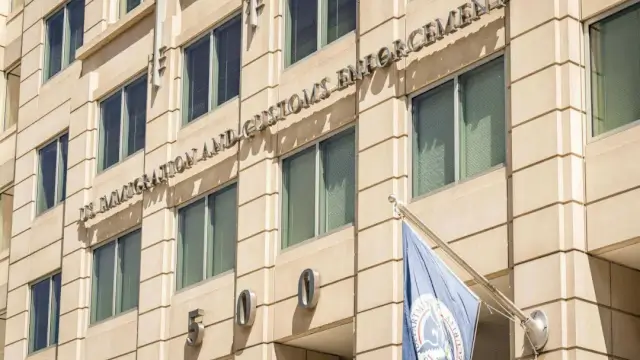
The phrase US Immigration Crackdown 2026 covers several different developments. USCIS changed the H-1B selection process for the FY2027 cap season. The Department of State expanded online-presence review for listed visa categories. ICE publishes enforcement dashboards, but those dashboards use defined categories and reporting periods that should not be turned into unsupported national headlines.
This article is a dated policy explainer, not a case assessment. Immigration eligibility depends on the visa category, the person's documents, location, timing, prior history, and current agency instructions. A government announcement can describe a rule without deciding how it applies to a particular applicant.
Primary references include the USCIS H-1B weighted-selection release, the State Department screening announcement, and the ICE ERO statistics page for the source boundaries used here.
What You'll Learn
- What changed in the FY2027 H-1B selection and registration process.
- How online-presence review differs from a guaranteed visa refusal.
- Why ICE arrests, detentions, removals, and expulsions need separate definitions.
- How Indian applicants can verify current rules without relying on social-media claims.
What the US Immigration Crackdown of 2026 Covers
There is no single legal instrument called the US Immigration Crackdown 2026. The label is used for a set of enforcement priorities, visa-screening instructions, regulatory changes, budget decisions, litigation, and proposed legislation. These developments affect people differently. An H-1B registration rule is not the same as an ICE arrest policy, and a State Department screening instruction is not the same as a removal order.
The safest way to read a headline is to identify the agency, the document date, the affected category, the effective date, and whether the text is a final rule, an announcement, guidance, a proposal, or a court-dependent measure. The original article mixed these categories and presented several figures as settled facts. This rewrite does not repeat figures that the primary sources do not establish.
For broader economic context, readers can compare this policy topic with our 2026 inflation review and our guide to tariffs and crude oil prices. Those articles address different questions and should not be treated as immigration evidence.
H-1B Weighted Selection for FY2027
USCIS says the Department of Homeland Security amended the H-1B selection process to give greater weight to higher-skilled and higher-paid beneficiaries. The final rule is effective February 27, 2026 and is intended for the FY2027 H-1B cap registration season. The change replaces a purely random selection model with a weighted process.
The USCIS release says the process increases the probability that visas are allocated to higher-skilled and higher-paid workers while maintaining opportunity for employers seeking workers at all wage levels. This is a probability change, not a promise that a high salary guarantees selection or that a lower-paid registration is automatically rejected.
| H-1B item | What USCIS states | What it does not establish | Check before acting |
|---|---|---|---|
| Selection method | Weighted selection for the FY2027 cap season | A guaranteed result for any salary level | USCIS registration instructions |
| Effective date | February 27, 2026 | Retroactive treatment of earlier seasons | Rule text and cap-season notices |
| Regular cap | 65,000 visas | A promise that every selected case is approved | Eligibility and petition requirements |
| Advanced-degree exemption | 20,000 visas for eligible US advanced-degree holders | Exemption from all H-1B rules | USCIS category guidance |
FY2027 H-1B Registration Dates and Process
USCIS announced that the FY2027 initial registration period opened at noon Eastern on March 4, 2026 and closed at noon Eastern on March 19, 2026. The stated registration fee was $215 for each registration. USCIS said selection notifications were intended to be sent by March 31 through online accounts.
A registration is not the same as an approved H-1B petition. USCIS states that a petitioner may file a cap-subject petition only when the beneficiary registration was selected, subject to the applicable rules. The employer or representative must still meet the requirements for the petition and the offered specialty occupation.
The process also uses unique-beneficiary rules. USCIS says that if registrations for unique beneficiaries exceed the cap, it will conduct a weighted selection from properly submitted registrations. Readers should use the current USCIS registration page rather than relying on a copied deadline from an older season.
For Indian technology workers comparing labour-market context, our AI model comparison and AI model guide provide technology background, not immigration eligibility.
Online-Presence Review for Visa Applicants
The Department of State announced that, effective March 30, 2026, it would expand online-presence review to additional nonimmigrant classifications. The announcement says H-1B and H-4 applicants and F, M, and J student and exchange-visitor applicants were already subject to the review. It also lists additional categories covered by the expanded instruction.
The State Department instructs applicants in the listed categories to adjust social-media privacy settings to public or open to facilitate vetting. That instruction does not mean that a particular post automatically causes refusal. Visa adjudication remains an assessment of eligibility, purpose, admissibility, and other applicable requirements.
| Question | What the announcement says | What readers should not assume | Verification point |
|---|---|---|---|
| Who is covered? | Listed categories include H-1B, H-4, F, M, J, and added classifications | Every visa category has identical review | Current State Department notice |
| What privacy setting is requested? | Public or open profiles for listed applicants | A public profile guarantees approval | Consular instructions for the case |
| What is reviewed? | Available information as part of visa screening and vetting | One post alone decides the case | Category and admissibility rules |
| When did the expansion take effect? | March 30, 2026 | All earlier decisions are reopened | Notice date and current updates |
How to Read ICE Arrest and Removal Data
ICE's Enforcement and Removal Operations page describes the agency's role in identification, arrest, detention, and removal. It says ERO priorities depend on agency priorities, funding, and capacity. The page also explains that dashboards are updated quarterly and that the presented trends have defined reporting periods.
ICE separates arrests, detentions, removals, and alternatives to detention. It also separates Title 8 removals from Title 42 expulsions. These categories should not be added together without checking the definition, period, and agency responsible for the data.
The ICE page says its dashboards present information and trends as of December 31, 2024 and were updated July 24, 2026. That makes the page useful for definitions and historical dashboard context, but it does not prove the original article's claimed 2026 totals. A number without an as-of date and category definition is not enough for a reliable headline.
| Term | Meaning in ICE material | Why the distinction matters | Safe wording |
|---|---|---|---|
| Arrest | Administrative or criminal enforcement action described by ICE | It does not automatically mean detention or removal | ICE recorded arrests in the stated period |
| Detention | Custody during immigration proceedings or removal activity | A person may be released or transferred | ICE detention count for the defined measure |
| Removal | Return or removal under the stated legal authority | Returns and expulsions can have different bases | ICE removals under the stated period and definition |
| Expulsion | Removal under an authority other than Title 8, such as Title 42 | It should not be merged with Title 8 removals | Expulsions reported separately |
Readers who want an India-focused economic lens can also see our RBI repo-rate guide. It does not measure US immigration enforcement and should not be used as a substitute for ICE data.
What H-1B Workers From India Should Check
The weighted selection rule may change probabilities across wage levels, but it does not create a fixed outcome for Indian nationals, a particular employer, or a particular job title. A worker should distinguish registration selection from petition filing, petition approval, visa issuance, and admission to the United States. Each stage has different requirements.
Employer sponsorship details also matter. The offered role, wage level, worksite, specialty occupation, beneficiary qualifications, and petition evidence can affect the case. A news article cannot determine whether a specific job offer is eligible or whether a worker should change employers.
The USCIS release separately references a presidential proclamation involving an additional $100,000 fee condition for certain H-1B petitions. Because applicability depends on the proclamation and current agency guidance, readers should not treat that figure as a universal fee for every H-1B case. Verify the current rule with USCIS and qualified counsel.
What F-1 Students From India Should Check
F, M, and J applicants are included in the State Department's online-presence review announcement. That means students and exchange visitors should read the current consular instructions and provide truthful information. It does not establish that a particular political view, post, or activity automatically results in refusal or revocation.
Students should keep their school records, passport, visa, I-20 or other relevant documents, and contact details current. If a student receives a notice, faces a status question, or is contacted by an agency, the correct response depends on the facts. A qualified immigration lawyer or accredited representative can review the individual situation.
Our guide to free AI tools for students is about study software, not visa rules. Do not use a productivity article as immigration guidance.
Green Cards, Priority Dates, and Backlog Claims
Indian employment-based green-card discussions often use dramatic wait-time claims. The actual position depends on the employment category, priority date, country of chargeability, visa availability, adjustment or consular route, and the current Visa Bulletin. A headline cannot convert a backlog into a guaranteed number of years for every applicant.
The per-country limit and employment-based categories are legal structures, but an applicant's result can change through category movement, spillover rules, employer action, priority-date changes, or a different petition route. Claims about a 40-year or 70-year wait should be presented as scenario estimates only when the assumptions and source are shown.
| Green-card item | What to identify | Why a blanket claim fails | Current source to check |
|---|---|---|---|
| Employment category | EB-1, EB-2, EB-3, or another category | Each category has different rules and demand | USCIS and the State Department |
| Priority date | The date tied to the petition or labor filing where applicable | A later bulletin can move forward or backward | Current Visa Bulletin |
| Country of chargeability | The chargeability rule that applies to the case | Nationality and chargeability are not always identical | Case documents and agency guidance |
| Processing route | Adjustment of status or consular processing | Different stages and notices apply | USCIS or Department of State instructions |
Can Indians Still Apply for US Visas in 2026?
Yes, visa categories continue to exist, but an applicant must meet the requirements for the specific category and follow the current instructions of the relevant embassy, consulate, USCIS office, or other agency. The State Department's screening announcement makes clear that visa adjudication is an eligibility and national-security decision. It does not create a single approval rate for all Indian applicants.
Interview-waiver rules, appointment availability, document requirements, fees, and social-media instructions can change. Do not assume that an appointment in a third country is always available or always prohibited. Check the relevant embassy or consulate and the official State Department page for the current category.
For readers tracking the economic backdrop rather than visa procedure, our US-Iran and oil-price analysis and AI company valuation guide provide separate finance coverage.
How to Verify an Immigration Policy Claim
Start with the agency named in the claim. A USCIS rule should be checked on USCIS or the Federal Register. A visa-screening instruction should be checked on Travel State Gov or the relevant consular page. An ICE statistic should be read with the dashboard definition, reporting period, and distinction between arrests, detentions, removals, and expulsions.
Then classify the statement. A final rule has an effective date. A proposed bill is not law. A press release can describe agency intent but may not resolve litigation. A court order can change how a policy operates. A media report may be useful for discovery, but the primary document is the better source for a consequential claim.
Keep the as-of date visible. The original article used numbers attributed to different periods and presented them together. A reliable policy article states the date, agency, category, denominator, and uncertainty rather than turning every number into a national forecast.
What This Means for Indians Without Overstating the Risk
The 2026 policy environment may require more careful document preparation and closer attention to official instructions. It does not support a single conclusion that every Indian student, worker, green-card applicant, or permanent resident faces the same outcome. The weighted H-1B process changes selection probabilities. Online-presence review adds a screening step for listed categories. ICE data measures enforcement activity under defined categories.
Readers should not delete records, hide information, change a visa strategy, or make a filing decision based only on this article. Use official agency instructions and qualified immigration counsel for a personal case. The legal consequences of an error can be significant, and the rules may change after publication.
Conclusion: Read the Rule, Date, and Category
US Immigration Crackdown 2026 is not one rule or one statistic. The clearest verified changes in this review are the FY2027 H-1B weighted selection process effective February 27, 2026 and the State Department's expanded online-presence review effective March 30, 2026. ICE publishes enforcement information, but its categories and reporting periods must be preserved.
For Indian students and workers, the practical lesson is to separate policy announcements from case outcomes. Check the agency, effective date, category, current instructions, and source definition. If the question concerns a personal filing, status, arrest, notice, or removal risk, move from a blog article to current official guidance and qualified legal advice.
Frequently Asked Questions

SK Jabedul Haque
Building India's most trusted finance education platform — simplifying news, schemes and market trends so anyone can understand and invest confidently.
Read full bio


Never miss an update
Get our clearest explainers on schemes, markets and money — read what matters, without the noise.
Explore more articles