FICO Score Explainer
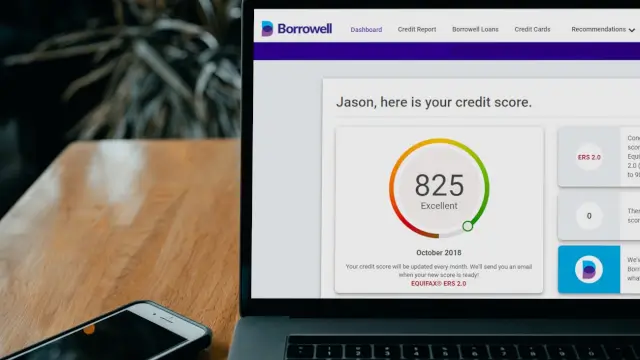
What You'll Learn
- The difference between FICO, CIBIL, and Experian in the Indian market.
- How the new FICO 10T model uses your 24-month payment history.
- The surprising impact of Pay Later apps on your 2026 credit health.
- 7 practical steps to boost your score from 600 to 750+ in under six months.
In the financial world of 2026, your credit score is your most valuable asset. It dictates the interest rates you pay on home loans, the credit limits on your premium cards, and even your eligibility for certain high-paying jobs. While most Indians are familiar with their CIBIL score, the FICO Score has quietly become equally important, especially as global banks and fintechs expand their footprint in India. With the Reserve Bank of India (RBI) introducing stricter reporting rules in April 2026, understanding the nuances of these scores is no longer optional—it's a necessity for financial survival.
What is a FICO Score? The Global Standard Explained
Created by the Fair Isaac Corporation, the FICO score is a three-digit number ranging from 300 to 850 (or 900 in some variants). It summarizes your entire credit history into a single risk profile. Lenders use this number to answer one simple question: "If I lend this person money, what is the probability they will pay it back on time?" In 2026, FICO remains the most widely used scoring model globally, with over 90% of top lenders utilizing it for credit decisions.
FICO vs CIBIL: Which Score Matters More in India?
While CIBIL is the dominant bureau in India, FICO is the mathematical algorithm that many bureaus and banks use to interpret data. This is similar to how different AI models interpret data in the tech world. In India, you actually have scores from four main Credit Information Companies (CICs): TransUnion CIBIL, Experian, Equifax, and CRIF High Mark.
| Feature | CIBIL Score | FICO Score |
|---|---|---|
| Primary Market | India (Local Banks) | Global (Multinational Banks) |
| Score Range | 300 – 900 | 300 – 850 |
| Update Frequency | Monthly | Real-time (FICO 10 Series) |
| Best For | Home Loans in India | Global Credit Mobility |
FICO Score 10 and 10T: How the New Models Work in 2026
The biggest shift in 2026 is the adoption of FICO Score 10T. The "T" stands for Trended Data. Traditional scores were a "snapshot" of your debt at a specific moment. 10T, however, looks back at the last 24 months to see if you are "paying down" your debt or "layering on" more debt. If two people both have ₹1 lakh in credit card debt, but Person A is reducing it by ₹10k every month while Person B is increasing it, Person A will now have a significantly higher FICO 10T score.
5 Pillars of Your Credit Score: How it's Calculated
Understanding these five factors is key to managing your budget using the 50/30/20 rule effectively:
- Payment History (35%): The single most important factor. Even one late payment can tank your score.
- Amounts Owed (30%): Also known as Credit Utilization. Aim to use less than 30% of your total available limit.
- Length of Credit History (15%): Older accounts are better. Don't close that 10-year-old credit card just because you don't use it.
- Credit Mix (10%): A healthy mix of "Secured" (Home loan) and "Unsecured" (Credit card) loans is ideal.
- New Credit (10%): Frequent applications for new loans or cards (Hard inquiries) signal financial distress.
Impact of BNPL and "Pay Later" Apps on Your 2026 Score
As of late 2025, FICO and CIBIL have integrated Buy Now Pay Later (BNPL) data into their models. For millions of Gen Z users in India who use apps like Simpl, LazyPay, or Amazon Pay Later, this is a double-edged sword. While on-time payments for a ₹500 Swiggy order can help build a "thin" credit file, missing a payment on a small "Pay Later" bill now carries the same penalty as missing a massive car loan EMI. Research shows that 85% of consumers see a 10-point shift in their score based on BNPL usage.
Step-by-Step: 7 Proven Ways to Increase Your Credit Score Fast
If your score is below 700, follow this 2026 recovery plan:
- Fix Inaccuracies: Check your report on apps like OneScore. If there's an error, use the NPCI grievance portal or the bureau's dispute tool.
- The 30% Rule: If your limit is ₹1 lakh, never spend more than ₹30,000. Pay off the balance mid-month to lower your reported utilization.
- Set Auto-Pay: Link your credit card to your bank account for minimum due payments to ensure you never miss a date.
- Don't Close Old Accounts: Keep your oldest card active to preserve your "Length of History."
- Limit Inquiries: Don't apply for multiple credit cards in a short window. Space them out by at least 6 months.
- Credit Mix: If you only have credit cards, consider a small "Consumer Durable" loan (e.g., for a phone) to show you can handle different debt types.
- Monitor Monthly: Use free tools to track your progress. In 2026, many banks offer this natively in their mobile apps.
New RBI Rules 2026: Your Rights with Credit Bureaus
From April 1, 2026, the RBI has empowered Indian consumers with new rights. Credit bureaus are now required to compensate users (₹100 per day) if a dispute is not resolved within 30 days. Additionally, lenders must now notify you via SMS or email every time they pull your credit report. This transparency is part of the RBI's digital push to protect citizen data.
Conclusion: Why 800+ is the New 750
As AI-driven lending becomes the norm, banks have become more selective. While 750 was the "safe" mark in 2020, an 800+ FICO or CIBIL score is now required to unlock the most competitive interest rates (9.5% or lower for home loans). By maintaining a disciplined budget and understanding how trended data works, you can position yourself as a low-risk borrower. Remember, your credit score isn't just a number—it's your financial reputation in a digital world.
Last Updated: May 25, 2026 | Source: FICO Official, TransUnion CIBIL, and RBI Notifications (2026 Regulatory Guidelines)
Frequently Asked Questions

SK Jabedul Haque
Building India's most trusted finance education platform — simplifying news, schemes and market trends so anyone can understand and invest confidently.
Read full bio


Never miss an update
Get our clearest explainers on schemes, markets and money — read what matters, without the noise.
Explore more articles