
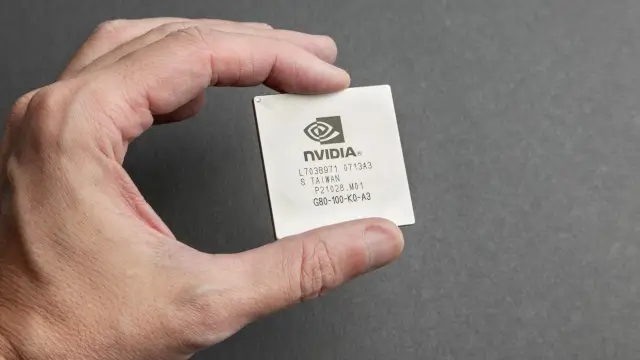
SK Hynix, Micron, and Samsung have all crossed $1 trillion in 2026, with Micron and SK Hynix hitting the milestone within 48 hours in late May. The catalyst: high-bandwidth memory has become the tightest chokepoint in AI infrastructure, and the three suppliers controlling it are reshaping the entire memory industry.
What You'll Learn
- How SK Hynix, Micron, and Samsung each crossed $1 trillion in market cap within a single quarter.
- Why the HBM market share battle is now the most important contest in semiconductors.
- What SK Hynix's record 405% operating profit surge and UBS's $1,625 Micron target mean for investors.
- The HBM4 roadmap, Nvidia Blackwell's memory appetite, and the top Wall Street memory stocks to buy.
The $1 Trillion Memory Club: All Three Winners in Two Weeks
The first week of May 2026 will be remembered as the moment the AI memory trade graduated from a thematic story into a full-blown valuation re-rating. On May 6, Samsung Electronics became the first of the three memory superpowers to cross the $1 trillion mark. Three weeks later, on May 26, Micron Technology (NASDAQ: MU) closed above $1 trillion for the first time in its history, jumping 19% in a single session to $895.88 with an intraday high of $916.69. Less than 24 hours after Micron's milestone, SK Hynix (KRX: 000660) joined the club, rallying 9% on May 27 to take its market cap above $1 trillion.
That makes memory chipmakers the only sector in 2026 where three competitors have all crossed $1 trillion in the same quarter. For comparison, only two US chipmakers had ever reached the milestone before this year. The rally did not happen in a vacuum. According to Yahoo Finance, SK Hynix shares have risen more than 250% year to date, while Micron shares have rallied 184% on a year-to-date basis. Measured over the trailing twelve months, the picture is even more dramatic: SK Hynix is up roughly 1,000% and Micron is up more than 1,000% as well, with Samsung catching up on the back of memory pricing rather than its broader consumer franchise. The base case for the rally is no longer speculative, it is visible in operating margins, customer commitments, and product roadmaps.
HBM Market Share: SK Hynix Still Dominates, Micron Closing Fast
High-bandwidth memory is the 3D-stacked DRAM that sits next to a GPU and feeds it data fast enough to keep trillion-parameter AI models fed. The technology was invented in 2013 by SK Hynix and first shipped in AMD's Fiji GPUs in 2015, but it is only in the last 24 months that HBM has become a defining chokepoint of the AI buildout.
According to Counterpoint Research, SK Hynix held 57% of the global HBM market by revenue at the end of Q4 2025, with Samsung at 22% and Micron at 21%. That three-supplier structure is unusual for memory, which has historically been more crowded. It is also unusually durable, because HBM requires stacking 8 to 12 DRAM dies on top of a logic die using through-silicon vias, a process that takes roughly 18 months to qualify with a customer like Nvidia.
The share data is not static. As the Astute Group and Counterpoint note, the share of Micron has crept up over the trailing four quarters, helped by aggressive capex in Idaho and a tight partnership with Nvidia. The real question for 2026 is whether HBM4, the next generation, will preserve SK Hynix's lead or whether Micron and Samsung will close the gap. For now, the answer is unambiguous: SK Hynix is still the only supplier shipping HBM3E in volume to Nvidia's Blackwell platform, and that advantage is the single biggest reason the stock is up 1,000% over the past year.
SK Hynix Q1 2026 Earnings: 405% Operating Profit Explosion
The financial proof that the HBM supercycle is real arrived on April 23, 2026, when SK Hynix reported record first-quarter results. Revenue came in at 52.58 trillion won ($35.55 billion), narrowly missing the 53.55 trillion won consensus. Operating profit, however, was 37.61 trillion won ($25.42 billion), up 405% year over year and 96% quarter over quarter, with operating margins around 72%. Net profit hit 40.35 trillion won ($27.3 billion), up 398% year over year.
To put those numbers in perspective, an operating margin of 72% in DRAM is almost unheard of. The historical average for the memory industry is closer to 20-30%, and even Nvidia, the gold standard of AI economics, runs operating margins in the low 60% range. SK Hynix's Q1 2026 print is closer to what software companies earn, except this is hardware that costs tens of billions of dollars to build.
SK Hynix's management said HBM demand is expected to exceed supply over the next three years, language that essentially guarantees pricing power for the foreseeable future. The company has earmarked $13 billion for additional memory chip capacity, with the bulk earmarked for HBM3E and HBM4 production lines. For more on how AI demand is reshaping enterprise capex, see our related coverage of NVIDIA Q1 FY2027 earnings: $81.6B revenue and $75.2B data center.
Related Article
NVIDIA Q1 FY2027 Earnings: $81.6B Revenue, $75.2B Data Center, $80B Buyback — the GPU side of the same AI memory thesis, and the buyer of every HBM chip these three memory makers make.
Micron's Trillion-Dollar Moment: UBS's $1,625 Price Target Explained
Micron's journey to the trillion-dollar club came on a single UBS note published on May 26, 2026. UBS analyst Timothy Arcuri raised his Micron price target to a Street-high $1,625, more than tripling the prior $535 target and implying 116% upside from where the stock had been trading. According to Bloomberg, the note projected that Micron could be on track to a near $2 trillion market value if execution holds.
UBS also forecasted that Micron would earn $45 per share in 2026 and more than $60 per share in 2027, driven by higher pricing, expanding margins, and unprecedented demand visibility. Wall Street consensus already had Micron's earnings per share surging 906% year over year in the next reported quarter, versus 549% growth at SK Hynix. That is not a typo: the smaller US player is expected to grow EPS faster than the Korean leader, because Micron is starting from a much lower base and because it has just one product category, memory, levered to the AI cycle.
Goldman Sachs has independently come to a similar conclusion. A 24/7 Wall St. report from May 27 noted that Goldman named Nvidia and Micron the biggest AI winners of the next earnings cycle. The combination of UBS's $1,625 target, Goldman's endorsement, and Micron's first-ever $1T close has set up the stock as one of the most-watched trades on Wall Street for the rest of 2026.
HBM3E vs HBM4: The Roadmap Reshaping AI Memory
The roadmap question matters as much as the current quarter. HBM3E is the generation shipping today inside Nvidia's Blackwell B200 and B300 GPUs, and it is the SK Hynix share leader. HBM4 is the next generation, and it is the source of the most important question in the memory industry: will the current market-share order hold?
Originally, HBM4 was scheduled for mass production in late 2025, but the timeline has slipped. According to TrendForce and YIC Electronics, HBM4 mass production was pushed to late Q1 2026, then to Q2 2026, and most recently to the second half of 2026, as Nvidia raised the memory specifications for its next-generation Vera Rubin platform. The reason for the delay is technical, not commercial: HBM4 uses a 2048-bit interface and a base die built on a more advanced logic process, and getting yield and thermal performance right has taken longer than expected.
At CES 2026, Samsung signaled that it would ramp HBM4 production aggressively at its Pyeongtaek facility, targeting 250,000 wafers per month by the end of the year. On May 29, 2026, Samsung announced it had started shipping HBM4E samples to customers, the first time any supplier has gotten an HBM4E product out the door. Reuters reported that the announcement sent Samsung shares higher that day. If Samsung can deliver HBM4E in volume ahead of SK Hynix, the market share map could shift significantly in 2027.
| Memory Maker | HBM Market Share (Q4 2025) | Key Customer | 2026 HBM Roadmap |
|---|---|---|---|
| SK Hynix | 57% (revenue) | Nvidia, AMD, Broadcom | HBM3E shipping; HBM4 H2 2026 |
| Samsung | 22% | Nvidia (qualified 12-Hi HBM3E), AMD, Google | HBM3E shipping; HBM4E sampling; HBM4 H2 2026 |
| Micron | 21% | Nvidia, AMD | HBM3E ramping; HBM4 samples to customers |
Why Nvidia's Blackwell Architecture Makes HBM the New Oil
None of this matters without a customer with an insatiable appetite for memory bandwidth. That customer is Nvidia, and its Blackwell platform is the most memory-hungry compute architecture ever shipped. The standard Blackwell B200 GPU carries 192 GB of HBM3e and 8 TB/s of memory bandwidth, compared with 80 GB and 3.35 TB/s on the prior-generation H100. The B300, or Blackwell Ultra, ships with 288 GB of HBM3e, a 50% increase over the B200, and is on track for volume in 2H 2026.
At the rack scale, the GB200 NVL72 pairs 36 Grace CPUs with 72 Blackwell GPUs in a liquid-cooled configuration, supporting up to 13.5 TB of high-bandwidth HBM3e memory per rack and a total memory bandwidth of 576 TB/s. A single GB200 NVL72 rack consumes more HBM than the entire data-center memory of most enterprises. According to the Intuition Labs supply chain analysis, each Blackwell GPU wraps eight 24 GB stacks of HBM3e memory, totaling 192 GB per GPU. With Nvidia, AMD, and the hyperscalers all building out Vera Rubin, Helios, and MI400 platforms, the unit volume of HBM3E and HBM4 required for the 2026-2027 buildout is multiples higher than what shipped in 2024-2025.
For an explainer on how Nvidia's consumer-facing AI bets tie back into the same memory story, see our Nvidia N1X at Computex 2026 coverage and the broader Apple WWDC 2026: iOS 27 and the AI bet analysis, which is forcing the entire silicon supply chain to commit to multi-year memory contracts.
The AI Memory Shortage: Pricing Power Through 2027
The reason SK Hynix, Micron, and Samsung have all crossed $1 trillion within months of each other is not coincidence. It is the same story: there is a structural shortage of AI memory, and the shortage is going to last for at least 18 more months. Synopsys CEO Aart de Geus told CNBC on January 26, 2026 that price rises and memory shortages are likely to continue through 2027. IDC's separate forecast calls for 2026 DRAM supply growth of just 16% year over year and NAND supply growth of 17%, well below historical norms. Gartner estimates that total memory revenue could triple in 2026, with DRAM contract prices rising 72% quarter on quarter in Q1 2026 alone.
DigiTimes has reported that DRAM prices could surge another 70% in Q2 2026 on the back of AI server demand. UBS raised its contract-price forecast accordingly. The result is a memory industry that is no longer cyclical in the traditional sense, it is a supply-constrained bottleneck with multi-year pricing power.
Some of that pricing is being passed through to the consumer. Micron recently announced it would shut down its 30-year-old Crucial consumer memory brand, freeing up capacity for higher-margin HBM and data-center DRAM. The combination of consumer capacity reallocation, HBM capacity additions taking 18-24 months to come online, and AI demand growing 70% year over year points to a tight market through at least 2027. The bull case does not require another ChatGPT moment. It requires the existing demand wave to continue.
Wall Street's Top AI Memory Stocks to Buy
With the entire memory complex now inside the trillion-dollar club, the question is no longer whether the HBM supercycle is real, but which specific stocks offer the best risk-reward from here. Below is a consolidated view of the Street's most-cited memory plays for the second half of 2026.
| Ticker / Company | Why It Is on the List | Wall Street View |
|---|---|---|
| MU (Micron) | US-listed pure-play on HBM3E; UBS sees 906% EPS growth next quarter | UBS $1,625 target (Street high); Goldman top AI pick |
| 000660.KS (SK Hynix) | 57% HBM share; only supplier shipping HBM3E to Nvidia Blackwell at scale | Nomura 4M won target (~110% upside); Bloomberg reported top tech fund buy on June 1 |
| 005930.KS (Samsung) | HBM4E sampling ahead of peers; sold out 2026 HBM supply | Nomura 590,000 won target; +750% Q1 op profit growth |
| WDC / STX (Storage) | HDD and NAND exposure to AI data-center buildout | +65% YTD as NAND pricing firms; Blayne Curtis positive on the group |
| AVGO / MRVL / NVDA | HBM buyers, not suppliers; benefit indirectly from HBM scarcity | Curtis prefers this trio; Goldman top AI winners list |
The standout is still Micron, because it offers US investors the cleanest exposure to HBM without the Korean-listing friction. For a broader read on the week ahead that frames the HBM rally in the context of the macro tape, see our Stock Market Week Ahead June 1-5 2026 outlook.
Risks: Are Memory Stocks Priced for Perfection?
The bull case is strong, but it is not without risk. Baird equity strategist Tristan Gerra told CNBC on May 29, 2026 that memory chip stocks are priced beyond perfection and that the current setup is a "dicey game" for new buyers. Tom Lee of Fundstrat echoed that caution, warning that the market's most-crowded trades are vulnerable to a sharp pullback even in a bull market. The HBM complex has historically been boom-bust: the 2017-2019 memory cycle ended with a brutal 50%+ drawdown when oversupply hit, and the 2021-2023 cycle repeated the pattern.
Specific risks to monitor include: (1) AI capex slowdown if hyperscaler earnings disappoint in 2H 2026, (2) HBM4 ramp faster than expected from Samsung or Micron, compressing SK Hynix's share and pricing, (3) macroeconomic shock that drives a risk-off rotation out of high-multiple AI names, and (4) export-control escalation that could limit Chinese access to advanced memory and reduce the addressable market. For context on the macro path, see our analysis of US National Debt at $39.5 Trillion, which is shaping the 2026 fiscal backdrop.
None of these risks invalidate the structural HBM thesis, but they do suggest that position sizing matters. Investors who bought Micron at $50 are sitting on life-changing gains; investors buying at $900 are paying for the next three years of execution, not the last three. The bull case requires the memory shortage to persist, the AI buildout to continue, and at least one of the three suppliers to extend its lead into HBM4. That is a higher bar than the one the market cleared in 2024.
Conclusion: The Memory Supercycle Has Just Begun
The trillion-dollar memory club is not a 2026 anomaly. It is the visible result of a multi-year shift in the silicon supply chain, where the bottleneck has moved from compute to memory bandwidth. SK Hynix, Micron, and Samsung each crossed $1 trillion because Nvidia, AMD, and every hyperscaler on the planet have committed to multi-year HBM contracts at prices that did not exist 24 months ago. UBS's $1,625 Micron target, Goldman's top AI winner call, the Nomura targets on SK Hynix and Samsung, and the first-ever tech fund SK Hynix buy all converge on the same conclusion: the HBM supercycle has another 18-24 months to run, and the three suppliers controlling the technology will print record cash for the duration.
Whether investors should chase the stocks at these levels is a separate question. The risk-reward from here is asymmetric: the easy money has been made, and the next leg requires execution on HBM4. But for investors who want exposure to the most concentrated, most supply-constrained sub-sector of the entire AI economy, HBM remains the cleanest expression of the AI infrastructure trade. The memory supercycle has just begun.
Related Article
Claude Opus 4.8 Pricing and Cost Analysis: Fast Mode, Effort Control, and Enterprise Value in 2026 — the demand side of the same AI memory thesis, and a look at how the largest AI labs are using up HBM supply as fast as the three memory makers can produce it.
Last Updated: June 01, 2026 | Source: CNBC, Reuters, Bloomberg, Counterpoint Research, SK Hynix IR (Official)