
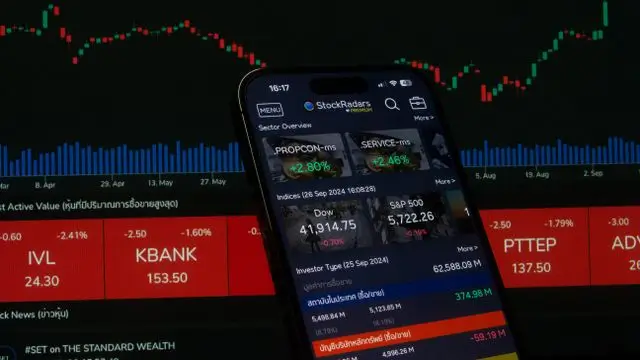
Wall Street roared back on Monday as the Dow Jones Industrial Average surged 300 points to close above 52,000 for the first time ever, powered by a surprise US-Iran agreement to halt hostilities and resume negotiations. The S&P 500 and Nasdaq snapped five-day losing streaks, with technology shares leading the rally after a weekend of escalating strikes in the Strait of Hormuz gave way to diplomatic de-escalation.
What Happened
The Dow Jones Industrial Average climbed 301 points (0.58%) to close at 52,042, marking its first close above the 52,000 milestone. The S&P 500 advanced 0.8% to 6,240, while the technology-heavy Nasdaq Composite jumped 1.2% to 20,150. All three major benchmarks snapped five consecutive sessions of declines.
The catalyst was a joint US-Iran statement released Sunday evening confirming both nations would immediately cease all military operations in the Persian Gulf and Strait of Hormuz. The agreement follows a weekend of tit-for-tat strikes that saw Iranian drones target commercial vessels near the Strait and US forces respond with precision strikes on Iranian missile batteries. Oil prices, which had spiked above $78 per barrel on Friday, retreated to $72.50 as supply disruption fears evaporated.
Technology megacaps led the rebound: Nvidia gained 3.1%, Microsoft rose 2.4%, and Apple added 1.8%. The Magnificent Seven collectively added over $400 billion in market capitalization. Energy stocks pared early gains as crude reversed, with Exxon Mobil flat and Chevron down 0.4%.
Why It Matters
The ceasefire marks a pivotal inflection point for markets that have been pricing in a widening Middle East conflict. With the Strait of Hormuz — through which roughly 20% of global oil supply transits — no longer under immediate threat, the risk premium embedded in energy prices and equity valuations begins to unwind. The S&P 500 forward P/E multiple, compressed to 20.5x during the height of tensions, now has room to re-rerating room.
For the Federal Reserve, the de-escalation removes a key upside risk to inflation forecasts. Chair Jerome Powell had flagged geopolitical oil shocks as a wildcard for the July policy meeting; with Brent crude back below $73, that variable is neutralized. Treasury yields reflected the relief, with the 10-year yield easing 4 basis points to 4.28%.
Crucially, the agreement includes a commitment to technical talks in Doha on June 30 to resolve the underlying dispute over commercial shipping rights — suggesting the pause could evolve into a durable framework.
What's Next
All eyes now turn to Doha on June 30 where US and Iranian technical teams will negotiate the terms for reopening the Strait of Hormuz to unrestricted commercial traffic. The talks will address Iran's demand for sanctions relief on energy exports and US requirements for verifiable limits on Iranian drone and missile deployments near shipping lanes.
Markets will also watch for any statement from the OPEC+ meeting scheduled July 2. Saudi Arabia and Russia have signaled they may accelerate output hikes if Iranian barrels return to market legally, potentially capping crude's downside. Meanwhile, earnings season kicks off this week with major banks reporting — JPMorgan, Goldman Sachs, and Citigroup all due before July 4 — providing the next fundamental test for the rally.
For equities, the key level is S&P 500 6,250 resistance. A clean break could open the door to 6,350, while failure to hold above 6,200 would signal the bounce was purely geopolitical relief rather than sustained buying conviction.