
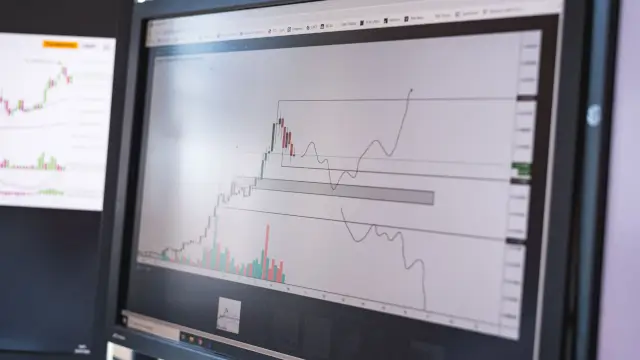
The S&P 500 Cyclically Adjusted Price-to-Earnings (CAPE) ratio closed May 2026 at 42.66, approaching the all-time high of 44.19 set in December 1999 before the dot-com crash erased nearly half the index's value. The 155-year historical average stands at 17.4, meaning current valuations are more than 2.4 times the long-term mean.
Valuation Warning Flashes at Levels Last Seen in 1999
Robert Shiller's CAPE ratio, which smooths earnings over a 10-year window to remove cyclicality, has only exceeded 40 twice in history: during the dot-com bubble and now. According to GuruFocus data, the median CAPE value is 16.06 with a typical range of 28.35 to 35.0. The current 42.66 reading sits at the extreme upper bound of historical norms.
Goldman Sachs recently raised its 2026 U.S. IPO forecast to 25 billion from 60 billion, while total corporate equity issuance -- including follow-ons and convertibles -- is projected at 75 billion, approximately 1% of Russell 3000 market capitalization. This surge in new share supply coincides with the Nasdaq 100 trading at the very top of its 20- and 30-year valuation ranges. Similar Wall Street crypto embrace trends show institutional appetite for risk assets.
AI Boom Fuels IPO Pipeline and Index Concentration
The rapid inclusion of AI-driven companies into major indices has amplified concentration risk. Fortune reported that Goldman Sachs' U.S. portfolio strategy team sees the current issuance pace as reminiscent of 1999, when a flood of technology IPOs preceded a 49% decline in the S&P 500. The Shiller P/E cleared 40 for the first time since the dot-com bubble in September 2025, and has continued climbing through 2026. This mirrors the AI spending surge seen across major tech companies.
Analysts note that CAPE ratios above 30 have historically been unsustainable over multi-year periods, with previous instances leading to significant market drawdowns. The influx of AI-related IPOs and the potential addition of companies like SpaceX to major benchmarks have raised structural concerns about whether traditional valuation frameworks remain applicable. The AI stock selloff in early June demonstrated how quickly sentiment can shift.
Fed Uncertainty Adds to Downside Risk
Federal Reserve policy uncertainty compounds valuation concerns. The nomination of Kevin Warsh as Fed chair has introduced a potential hawkish shift that could delay anticipated rate cuts. With the Shiller P/E at 42.66, even a modest increase in discount rates would pressure equity multiples disproportionately. U.S. inflation reached 4.2% in May 2026 -- the highest since April 2023 -- presenting Warsh with an immediate policy test, as detailed in US inflation analysis.
Markets currently price two 25-basis-point cuts in 2026, but dissenting FOMC members have argued for maintaining restrictive policy. A scenario where rates stay higher for longer would disproportionately impact high-multiple growth stocks that have driven index gains. The record blockchain funding also reflects abundant liquidity chasing risk assets.
The S&P 500 Shiller P/E ratio at 42.66 represents a valuation extreme that has historically preceded significant corrections. While AI innovation may justify some premium, the convergence of dot-com-level multiples, record equity issuance, and Fed policy uncertainty suggests elevated risk for global investors. Geopolitical oil shocks could further destabilize markets.